
PHOTO SPOT GUIDE
Chiba's Sunset Coast — Chasing the Sun into Tokyo Bay
Along Chiba's Tokyo Bay coast, there is an hour at the close of each day when the sea itself shifts colour — from gold to crimson, and at last to violet. As the sun drops beyond the far shore, the shadow of Mt. Fuji can rise, unexpectedly, above the distant hills. And yet, within that one phrase — a sunset over Tokyo Bay — change the shore and what you can photograph changes entirely. I walked all four, and set down here what each of them gives you. Use it as a map for deciding where to go.
The sun goes down into Tokyo Bay
A sunset over Tokyo Bay — the image may not come easily at first. This is an inland sea: the water is calm, and city lights glimmer on the opposite shore. Yet on a clear winter evening, that quiet surface turns to a single sheet of gold, and the silhouette of Mt. Fuji rises above the horizon. In the emergency room, time is measured, pressing, never still. Here on the shore, for once, there is nothing to do but wait for the sun to fall. It always surprises me a little, how differently the same passing of time can feel.
Four shores, four kinds of dusk
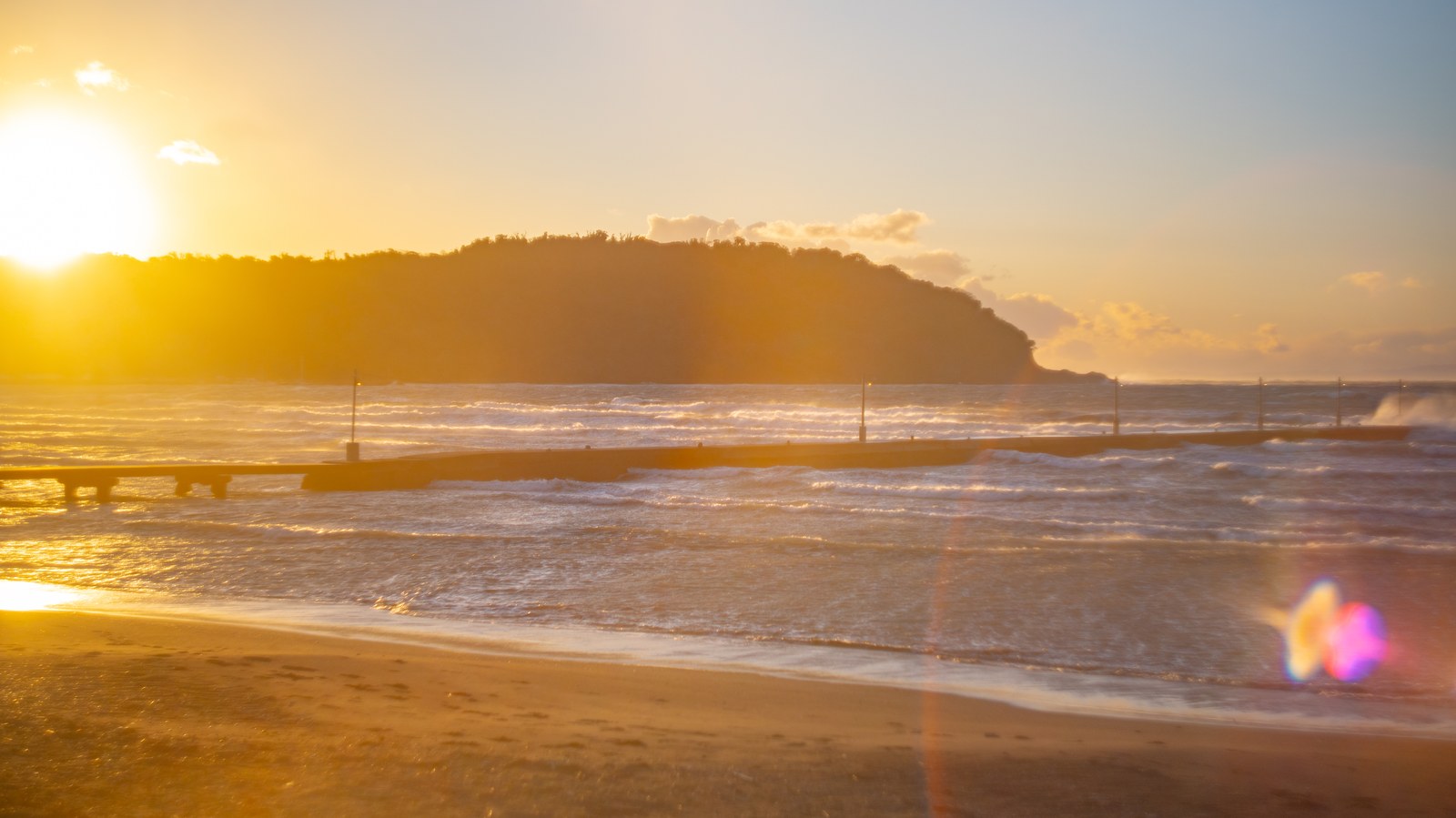
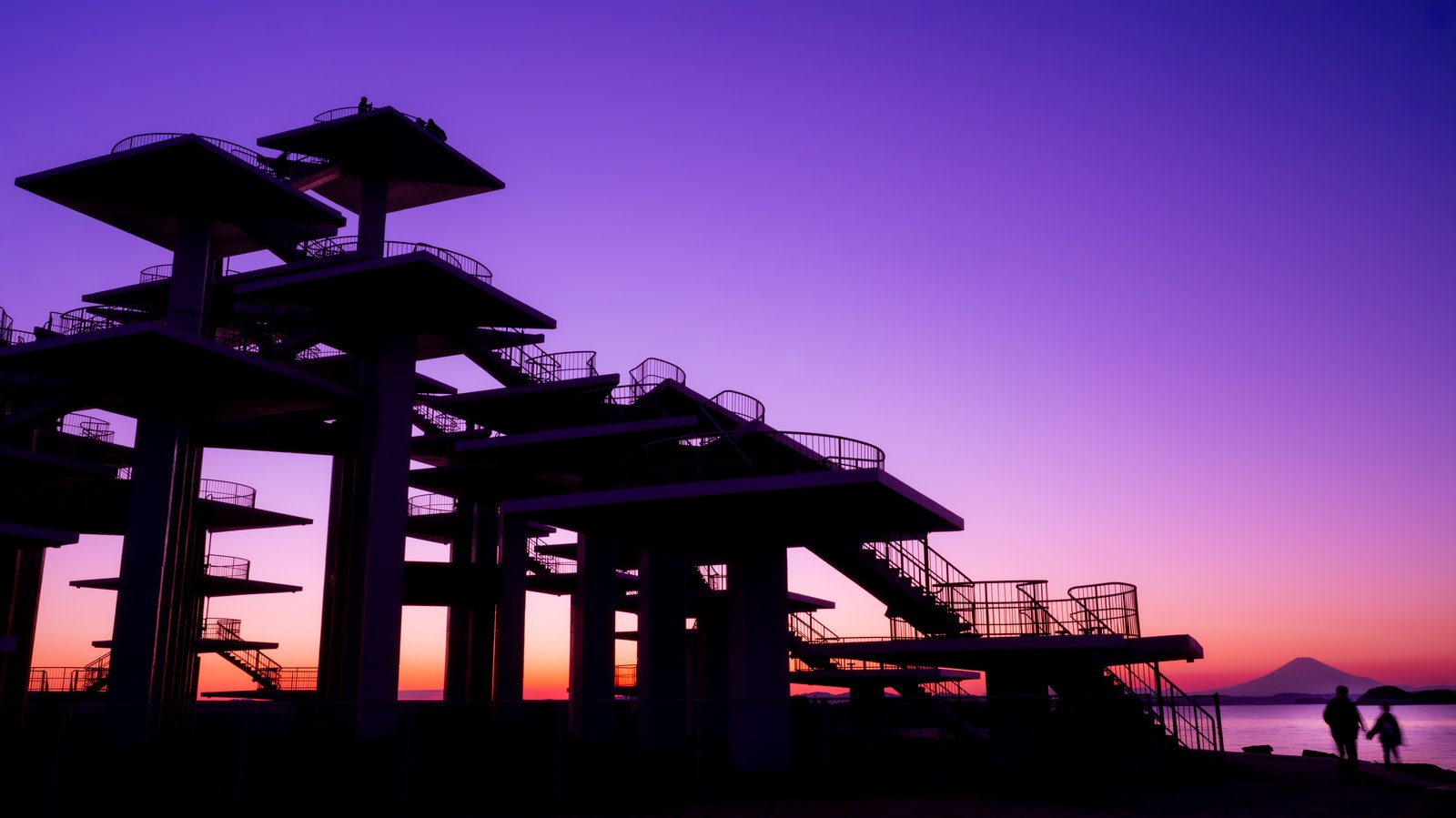
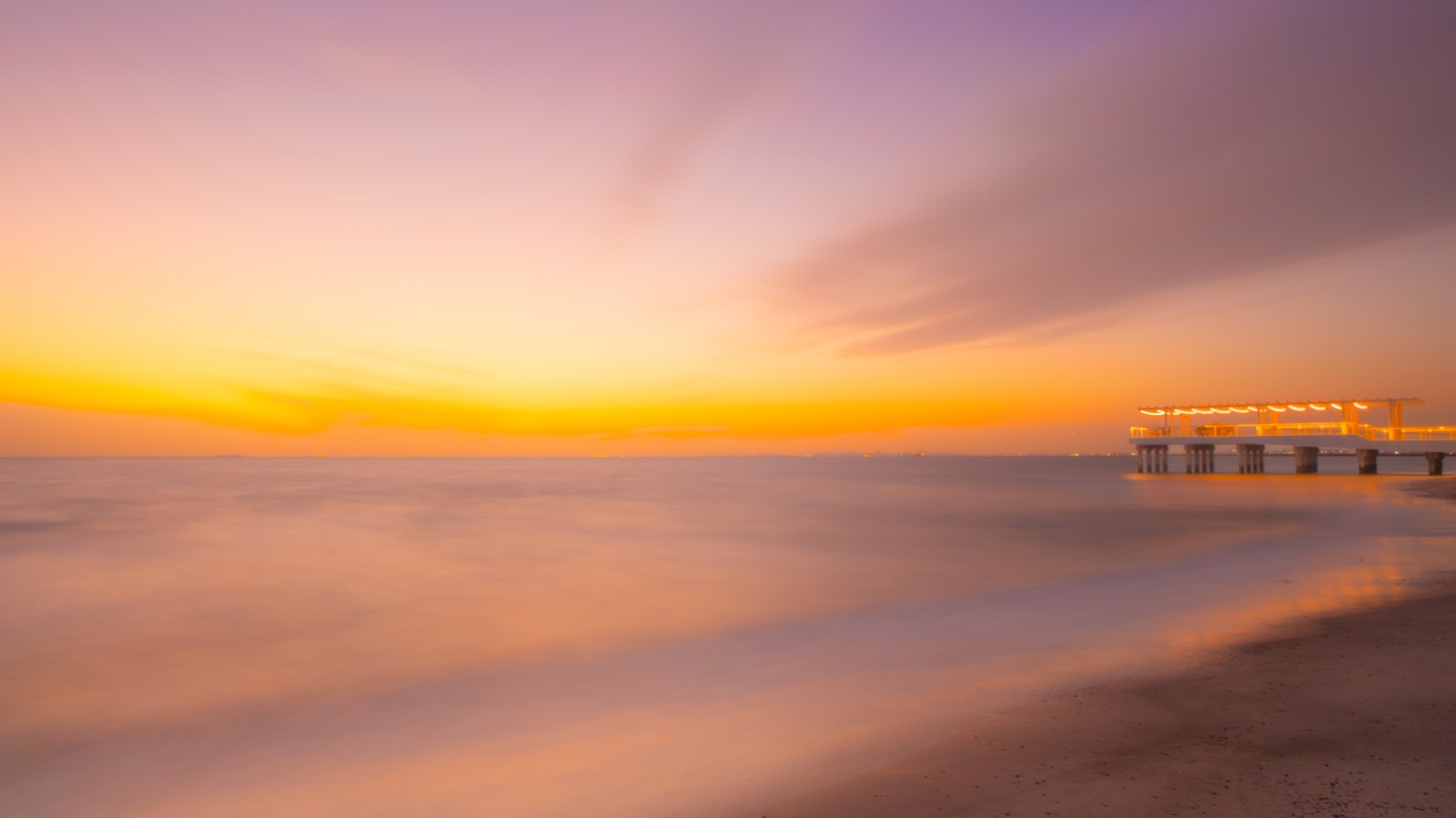
Even along the same bay, each sunset spot wears its own expression. In Minamiboso, Haraoka Pier (also called Okamoto Pier) is an old wooden jetty that reaches thin into the sea; at the far end of that plank path, running straight out towards open water, Fuji stands small. At the tip of Cape Futtsu rises the Meiji Centennial Memorial Observation Tower, shaped like a five-needle pine; from its upper deck the bay opens wide, and on clear days the view reaches all the way to Fuji. At Makuhari Beach in Chiba City, the rocks left by the low tide mirror the golden sky, scattering small sunsets around your feet. At Inage Seaside Park, a wooden boardwalk reaches some ninety metres out to sea, drawing you towards a sky deepening into violet.
The sun drops beyond the bay,
and sea, pier, and Fuji all become one gold.
Guides to each location
The season, access and shooting tips for each shore are gathered in a guide of its own.
Deciding where to go — season, and choosing your shore
This sunset coast is at its finest in winter, when the air runs clear.
It is on dry winter evenings that the view most often carries all the way to Mt. Fuji across the bay. From around December through February, look for a clear day when the wind has settled. Each shore has its own character. For Fuji as the subject, go to Haraoka Pier — the mountain stands exactly at the vanishing point of the plank path. For the sheer width of the bay, go to Cape Futtsu — a large frame that takes in the silhouette of the observation tower along with the First and Second Sea Forts. For texture at your feet, go to Makuhari Beach — the rocks left by the low tide mirror the sky just as it is. For stillness by long exposure, go to Inage Seaside Park — the lit boardwalk and a sea drawn out like silk are waiting. Whether Fuji appears depends entirely on the day's weather, so it is worth checking for clear skies and clean air before you set out.
Getting there
The four shores lie well apart, and touring them in a single day is not realistic. A car makes the journey far easier, yet even so, Haraoka Pier in Minamiboso and Inage Seaside Park in Chiba City are more than an hour apart. Broadly: Haraoka Pier is within walking distance of Tomiura Station on the JR Uchibo Line; Cape Futtsu is a bus ride from Aobori Station on the same line; Makuhari Beach is within walking distance of Kaihin-Makuhari Station on the JR Keiyo Line; and Inage Seaside Park is a bus ride from JR Inage or Inage-Kaigan Station. Detailed access, parking and the requests made by each neighbourhood are set out in the individual photo spot guides, so decide where you are going first, then read on there.
Tips for photographers
What all four shores share is that a sunset is a subject whose light changes very fast. From the moment the sun nears the horizon, review your exposure often. To set a pier or a tower as a clean silhouette, meter from the brightest part of the sky and let the frame run a touch darker; to keep the shimmer on the water, open up slightly instead. When composing with Fuji, look for a height where the mountain does not overlap the line of the pier or the horizon, so that the distant peak stands clear. And one more thing. The magic hour after the sun has gone — those ten or fifteen minutes as the sky sinks from indigo to violet — holds the deepest colour of all. Do not go home at sunset: it is the single most important tip, and it holds for every one of the four shores.
While you're in the area
If you travel down to Minamiboso, Mt. Nokogiri is close at hand, known for its sheer rock faces and sweeping views from the summit. Pair the sunsets with local seafood, flower fields and a hot spring, and an overnight stay lets you take in the evening light twice over. Coming from the Kanagawa side, the Tokyo Bay Ferry between Kurihama and Kanaya offers a chance to watch the sun and Fuji from the water itself. Take one route by land and the other by sea, and the same Tokyo Bay will look new again on the way home.
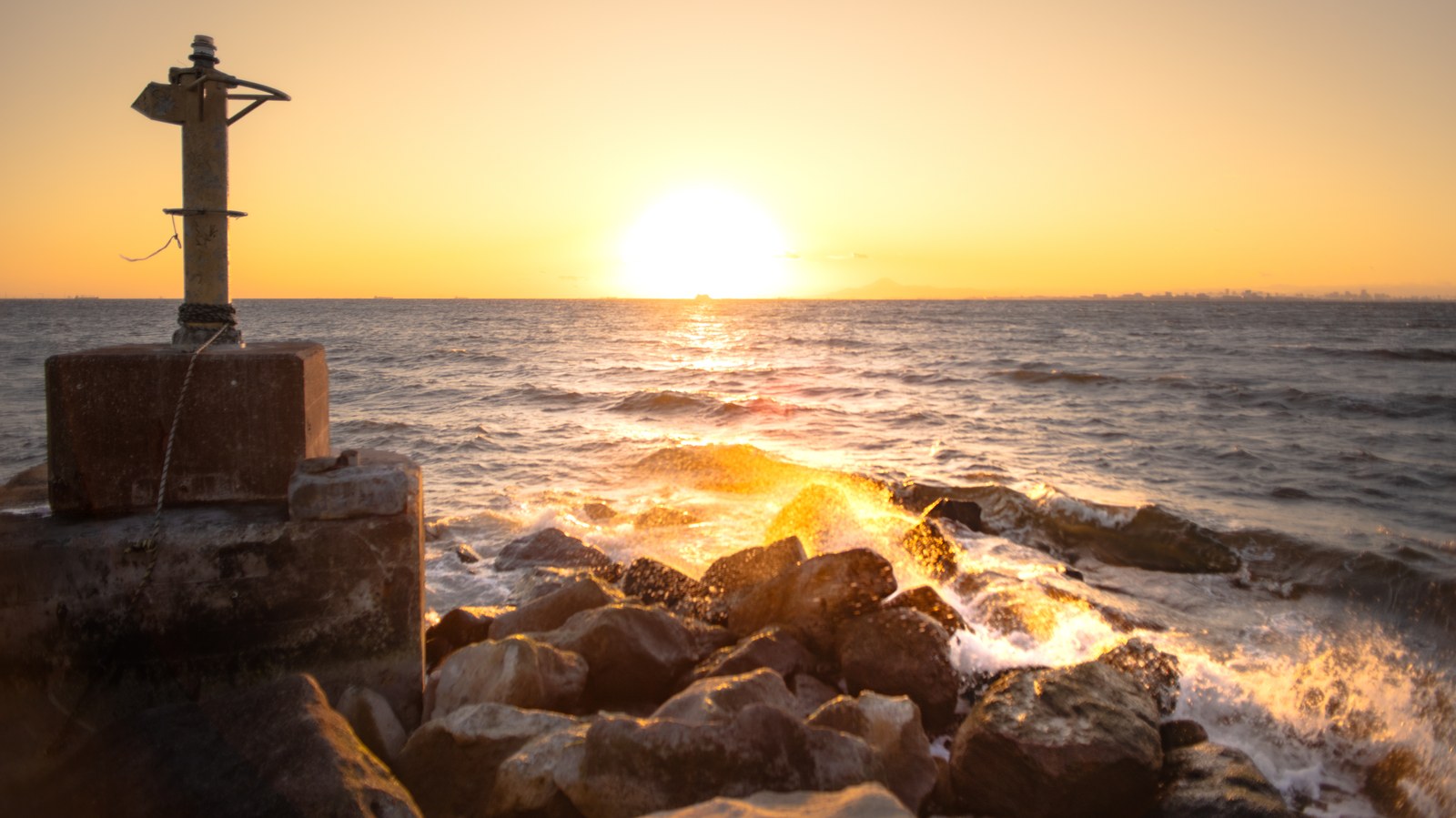
The sun falling towards the horizon turns sky and sea to gold and sets the spray on the tidal rocks glittering like jewels — a burning dusk you meet only in the clear air of a cold sky, delivered as a true silver-halide print on FUJICOLOR's finest photographic paper. Framed for your wall, and shipped anywhere in the world.
💾 A digital download is also available ($7.00 each). Bundles cost less: 3 for $17.84, 5 for $26.23 ($5.25 each) — mix any photographs you like.
View the print →