
IKEBANADOCTOR ・ GEAR
The Gear Behind These Photographs
THE TOOLS I CARRY WHEN I STAND BEFORE THE FLOWERS
It is the photographer, not the tool, who makes a photograph. And yet people often ask, "What do you shoot with?" So here, honestly, are the tools I actually pick up and carry with me into the field — long-used companions I have come to trust.
The Gear I Use
The tools I genuinely shoot with, the ones behind each frame.
Nikon Z f (with 40mm f/2 SE lens kit)
Ikebanadoctor's main camera. Beyond its classic, handsome looks, what's inside is first-rate — the image quality and the feel in the hand are both faultless. With the 40mm prime included, this kit lets you start shooting the day it arrives. If you asked me for one camera to begin with, this would be it, without hesitation.
View on Amazon →Nikon Z f (body only)
Already have a lens you love? Choose the body alone, and pair the same Z f with your own favourite glass.
View body only →Nikon Extension Grip Z f-GR1 (for Z f)
The Z f is a beautiful camera, but its grip is shallow. Mount something heavier like the 24-70 and your fingers tire over a long shoot. Add this genuine grip and the hold becomes far deeper and steadier — and it stays usable even with a tripod plate attached, which is quietly wonderful.
View the grip →NIKKOR Z 24-70mm f/2.8 S II
My everyday lens. With this mounted, the image quality climbs to another level. From a wide landscape to a single flower up close, its steady rendering wide open at f/2.8 and beautifully melting bokeh quietly carry an Ikebanadoctor frame. My standard zoom.
View on Amazon →SLIK Lite Carbon E64 II
Compact and light enough to carry anywhere, yet it extends to a genuinely useful height — two things that usually pull against each other, balanced beautifully in one. It makes the most of both sides of that trade-off, and comes along easily on travels and shoots alike. A favourite carbon tripod.
View on Amazon →L-Bracket Quick-Release Plate (Arca-Swiss compatible)
Shooting vertical by tipping the head to the side throws off both your framing and the balance. With an L-bracket fitted, you simply swap the camera to portrait without tilting it at all. For someone like me who shoots upright subjects — a single flower, a falling waterfall — it's indispensable. Arca-Swiss compatible, so it drops straight onto most tripods.
View the L-bracket →Adobe Creative Cloud Photography Plan (Lightroom + Photoshop)
Every Ikebanadoctor photograph is finished with this. I tune the light and colour in Lightroom, then polish the details in Photoshop. From a phone snapshot to a camera RAW, it lets you express freely with an easy, intuitive feel. And buying it on Amazon costs less than Adobe's own site — for exactly the same thing.
If You're Just Starting Out
Ikebanadoctor's pick — a first step toward "one day, a proper camera."
Nikon Z fc (with 16-50mm lens kit)
For those watching their budget, or still hesitating to take the leap — this one, without hesitation. Light, lovely, and a first-rate performer. With the 16-50mm zoom included, it becomes your walking companion the day it arrives. The perfect first camera for anyone who has been thinking, "one day, a proper camera."
View on Amazon →What I Pack for a Shoot
The small things that make shooting so much easier — my standbys.
Nextorage High-Speed SD Card
Just as important as the camera is what records the image. The Z f supports fast UHS-II, so cutting corners here will trip you up in continuous shooting. I use Nextorage's fast cards. Choose the large capacity if you shoot a lot, or the smaller one to start out affordably.
MARUMI Soft Fantasy II (DHG soft-effect, made in Japan)
"What is that soft light?" — people ask it often. One part of the answer is this soft filter. Highlights bloom gently, and hard light softens as if wrapped in air — a texture that's hard to reproduce in post, born only in front of the lens. I use the 77mm for the standard zoom and the 52mm for the 40mm prime.
MARUMI M100 Square Filter System (full set)
Landscape photography is a dialogue with the sun. Backlight, harsh midday glare, a sky washing out to white — what answers every kind of light is the MARUMI M100 square-filter set I use. Pair the magnetic holder with a C-PL (to cut reflections) and graduated NDs (to balance a bright sky against darker land), and this one set covers almost everything.
Kenko ZX Circular PL, 77mm
For the days when there's no time to set up a square filter and I'm shooting flowers like snapshots, this is what I reach for. Screw it onto the lens and it tames the sheen on leaves and petals, deepening the colours. Kenko's ZX is a high-quality circular polariser with minimal impact on image quality.
View on Amazon →F-Foto HF-52 Metal Lens Hood
The Z 40mm f/2 and 28mm f/2.8 SE don't ship with a hood. Shooting into the light as often as I do, a hood that tames ghosting and flare is essential. This screw-in metal hood also suits the SE lenses' classic looks beautifully. A small part, but it makes a real difference to peace of mind.
View the hood →Nikon Genuine Battery (EN-EL15c)
For batteries, only genuine will do — for performance, of course, but for safety too. With third-party batteries making the news for catching fire lately, genuine is the way to go for long-term peace of mind. And always carry a spare, so you never run dry mid-shoot.
View on Amazon →Nikon ARCREST II Protect Filter
A single sheet that guards your precious front element from scratches, dust, and the occasional fingerprint. Nikon's own ARCREST II keeps its effect on the image to a minimum, with high clarity and suppressed reflections. I leave it on and carry the lens with confidence. Choose the diameter to match your lens.
View on Amazon →Glass Screen Protector for Z f / Z5 (9H hardness)
It's not just the front element worth protecting — the rear screen too. The Z f's tilting screen scuffs easily, so I keep a 9H glass protector on it. Touch sensitivity is unchanged, and ever since, I've handled the camera freely without worrying about scratches. Inexpensive, with outsized peace of mind.
View the protector →For Shooting in the Rain
Hydrangeas after the rain, rain-soaked greens — the most beautiful moments are often found mid-shower.
Etsumi Rain Bracket EX (umbrella holder)
Flowers are breathtaking in the rain. But an umbrella in one hand and a camera in the other means a shaky tripod. Clamp this umbrella holder to the tripod and both hands come free — you stay dry, the gear stays dry, and you can chase the composition at your own pace. A small supporting actor that turns rainy shoots from a chore into a joy.
View the umbrella holder →Nikon Rain Cover Handy Type 3
For light rain, just slip it on. Being genuine Nikon, it fits the Z f and standard zoom neatly and stays easy to operate. The reassurance to keep shooting, unflustered, through a sudden passing shower. A piece for shooting with the rain, rather than hiding from it.
View the rain cover →thinkTANKphoto Hydrophobia 24-70 V3.0
For heavy rain, or long shoots when you truly want to protect your gear. A professional waterproof cover on another level for both handling and protection. It costs a little more, but think of it as insurance for expensive equipment, and it's reassuring indeed.
View the pro cover →At-Home Care & Storage
For keeping your gear in good shape between shoots — everyday care, and storage at home.
HAKUBA Hi-Power Blower Pro 02 L
Dust on a lens or sensor should be blown away, never wiped. This large blower puts out a strong blast and stands upright, so it won't topple on the desk. One puff before shooting saves you the later "ah, there was a speck in the frame."
View the blower →Kenko Cleaning Kit Pro 5
A five-piece set with cleaning fluid, cloth, brush and more, all in one. Left alone, fingerprints and water spots can damage the coating. With the right tools, you wipe gently and properly. With this one kit, both lens and body always feel fresh to use.
View the cleaning kit →Kenko LUCINAGE Lens Cloth (made in Japan)
For the finishing wipe. A fine-fibred, made-in-Japan cloth that lifts oils and water spots away without scratching the lens. Tuck one in your bag and it earns its keep the moment a lens fogs up out in the field.
View the cloth →HAKUBA Dry Box AG+ 15L (silver-ion antibacterial)
In Japan's heat and humidity, mould is a camera's worst enemy. Damp fogs a lens far faster than beginners expect. A full electronic dry cabinet is costly, but this HAKUBA dry box (silver-ion antibacterial, 15L, made in Japan) offers plenty of protection at an approachable price. The simplest insurance for making your gear last.
View on Amazon →For Fun ― Shooting with Old Lenses
Sometimes, a lens that doesn't render too perfectly. A day to enjoy the bloom and the aberrations as flavour.
HELIOS-44-2 58mm F2 (M42 mount, serviced and overhauled)
A Soviet-era lens, famous for its swirling bokeh. What I love is the generous flare it blooms into against the light, and a rendering that melts like an impressionist painting. There is no new one — every copy is secondhand — so I chose a listing explicitly described as stripped, cleaned and reassembled. For a fraction of a current prime, it adds a completely different way of seeing.
Note: this is a single secondhand item on Amazon Japan, so it can go out of stock.
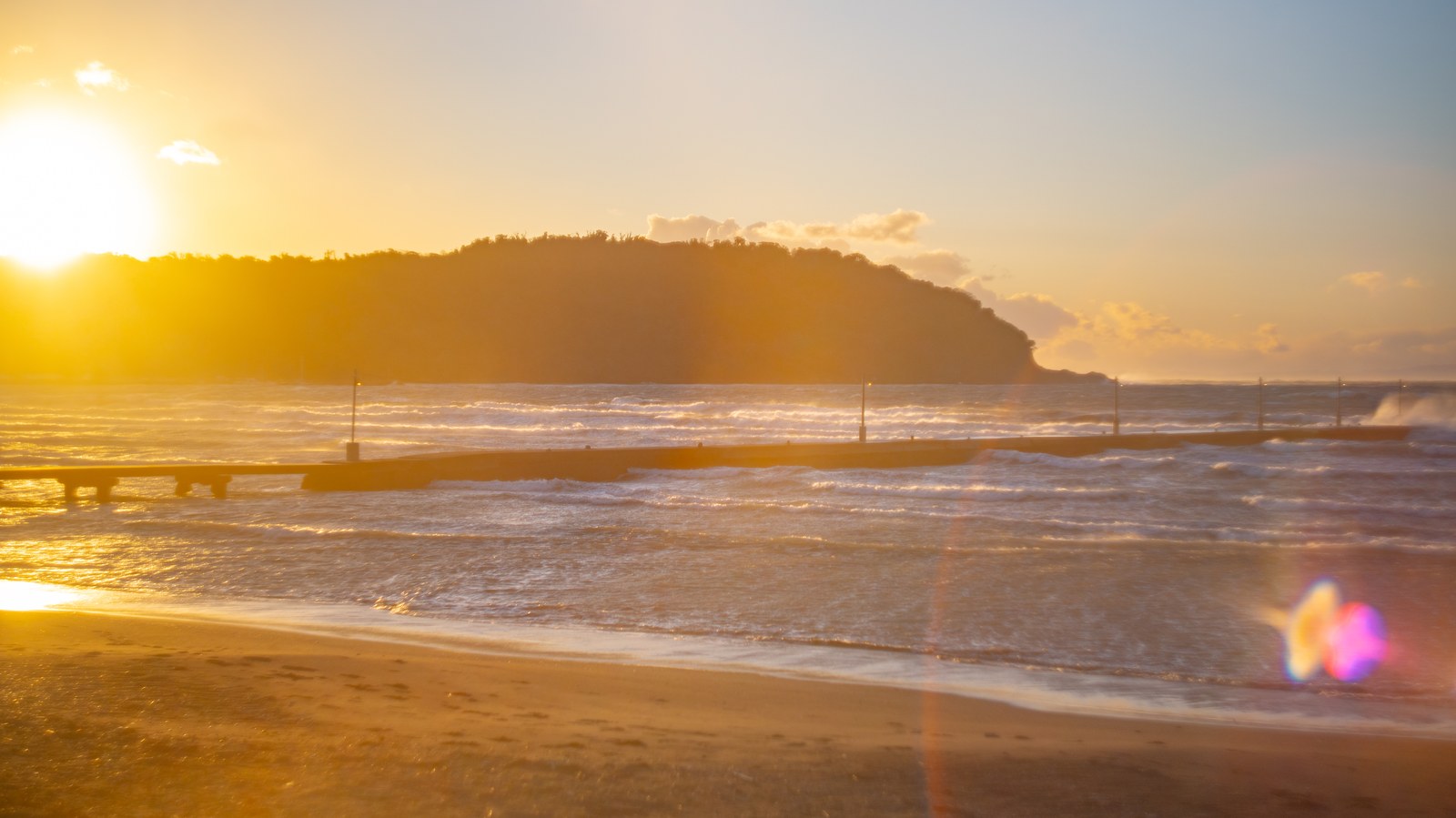
HELIOS-44-2 58mm F2 — Sharp Is Not the Only Right Answer
Ten prints made with this lens, plus how to use its flare, how the swirl happens, what to look for in a used copy, and which adapter to pair it with.
🎞️ Old lens ・ gear guideSHOTEN M42-NZ Mount Adapter
An adapter for mounting old M42-mount lenses on the Z f. The HELIOS-44-2 above rides on a modern camera thanks to this one piece of metal, and since M42 is a shared standard, it carries over to whatever old glass catches your eye next. There's something dear about a rendering that isn't perfect.
View the adapter →HAKUBA Metal Lens Hood (49mm, KMH-49)
An all-metal screw-in hood that suits an old lens. It tames backlit flare while making the look that bit more classic. A small thing, but it lifts the mood of shooting.
View the metal hood →Aside ― A Little Video, Too
Stills are the main act, but some days I want to keep the wind and the water's sound from a location.
GoPro HERO13 Black
The spray of a waterfall, flowers swaying in the wind, the trail to a location — the GoPro captures the "motion" and "sound" that stills can't, with ease. Powerful stabilisation, and small enough for a pocket. My YouTube location guides are filmed with this. Even as a stills-first shooter, I find myself taking it along.
View the GoPro →📚 The Books Behind the Learning
Composition, exposure, finding a subject — the books picked up while thinking about how to photograph. All are Japanese-language editions, sold on Amazon.co.jp.
名画から学ぶ 写真の見方・撮り方 — "Learning How to See and Shoot from Master Paintings"
Uses master paintings — Vermeer, Hokusai and others — as the material for explaining composition, colour pairing, leading the eye and depth, all of which carry over to photographs. By Tokyo Camera Club / Hideo Tsukazaki (Shoeisha). Japanese text.
View on Amazon.co.jp →実践講座! 名画から学ぶ写真の見方・撮り方 — the practical companion volume
The hands-on follow-up by the same author, built around four steps: meeting a subject, drawing out its appeal, building the composition, and going beyond the painting. By Hideo Tsukazaki (Nikkei BP). Japanese text.
View on Amazon.co.jp →写真を撮りたくなったら読む本 — Japanese edition of Henry Carroll's "Read This If You Want to Take Great Photographs"
128 pages covering five fundamentals — composition, exposure, light, lenses and point of view — through the work of 50 master photographers. Translated into more than 20 languages; this is the Japanese edition (Born Digital).
View on Amazon.co.jp →ナショナル ジオグラフィック プロの撮り方 完全マスター 新装版 — "Complete Photography" (new edition)
The overview volume of National Geographic's Japanese photography series: light, colour, composition, exposure, lenses, filters and finishing, plus chapters by subject. By James P. Blair. Japanese translation.
View on Amazon.co.jp →ナショナル ジオグラフィック プロの撮り方 完全マスター ベーシック — the beginner's volume
The entry-level counterpart to the volume above, covering handling the camera and the basics of shooting for those just starting out. By Joel Sartore and Heather Perry. Japanese translation.
View on Amazon.co.jp →ナショナル ジオグラフィック プロの撮り方 構図の法則 — "The Rules of Composition"
A whole volume devoted to composition: how elements sit within the frame, and why, set out alongside example photographs. By Richard Garvey-Williams. Japanese translation.
View on Amazon.co.jp →ナショナル ジオグラフィック プロの撮り方 露出を極める 改訂新版 — "Understanding Exposure" (revised)
How aperture, shutter speed and ISO combine to set an exposure, explained through worked examples. By Bryan Peterson. Japanese translation.
View on Amazon.co.jp →ナショナル ジオグラフィック プロの撮り方 シャッター速度 新装版 — "Understanding Shutter Speed" (new edition)
Freezing motion, streaking it, letting it blur — choosing a shutter speed, shown through examples. The theme behind flowers moving in wind and falling water. By Bryan Peterson. Japanese translation.
View on Amazon.co.jp →ナショナル ジオグラフィック プロの撮り方 クローズアップ 新装版 — "Understanding Close-Up Photography" (new edition)
The macro volume: where to place focus up close, how aperture behaves, and how to handle light on small subjects — the territory of a single flower filling the frame. By Bryan Peterson. Japanese translation.
View on Amazon.co.jp →ナショナル ジオグラフィック プロの撮り方 色彩を極める — "Understanding Colour"
A volume on colour: how colours pair, and how light changes them, approached from the photographer's side. By Bryan Peterson and Susana Heide Schellenberg. Japanese translation.
View on Amazon.co.jp →ナショナル ジオグラフィック プロの撮り方 風景を極める — "Extraordinary Everyday Photography / Landscape"
The landscape volume. Alongside the basics of composition and exposure, much of the book is given to reading light and weather, and to how one looks at a scene. By Brenda Tharp. Japanese translation.
View on Amazon.co.jp →ナショナル ジオグラフィック プロの撮り方 オリジナリティーを極める — on making the frame your own
How to arrive at your own photograph from the same place and the same subject — a volume about widening your point of view. By Bryan Peterson. Japanese translation.
View on Amazon.co.jp →🖼️ Frames for the Print
After the photograph, the wall. Frames that genuinely fit each print size.
Choosing a Frame, Size by Size
From L-size up to A3-equivalent, we keep a dedicated page listing frames that genuinely fit all eight Ikebanadoctor print sizes. The print size each frame holds, the mat window and the outer dimensions are all given in millimetres, so you can work backwards from the wall you have in mind. Where the frame edge covers a little of the print, we note how much, size by size.
See how to frame a print →As an Amazon Associate, Ikebanadoctor earns from qualifying purchases. If you buy through these links, a small part of the sale helps support our work — at no extra cost to you. We only feature tools we genuinely use and can wholeheartedly recommend. The book links above are Amazon affiliate links as well.