
PHOTO SPOT GUIDE
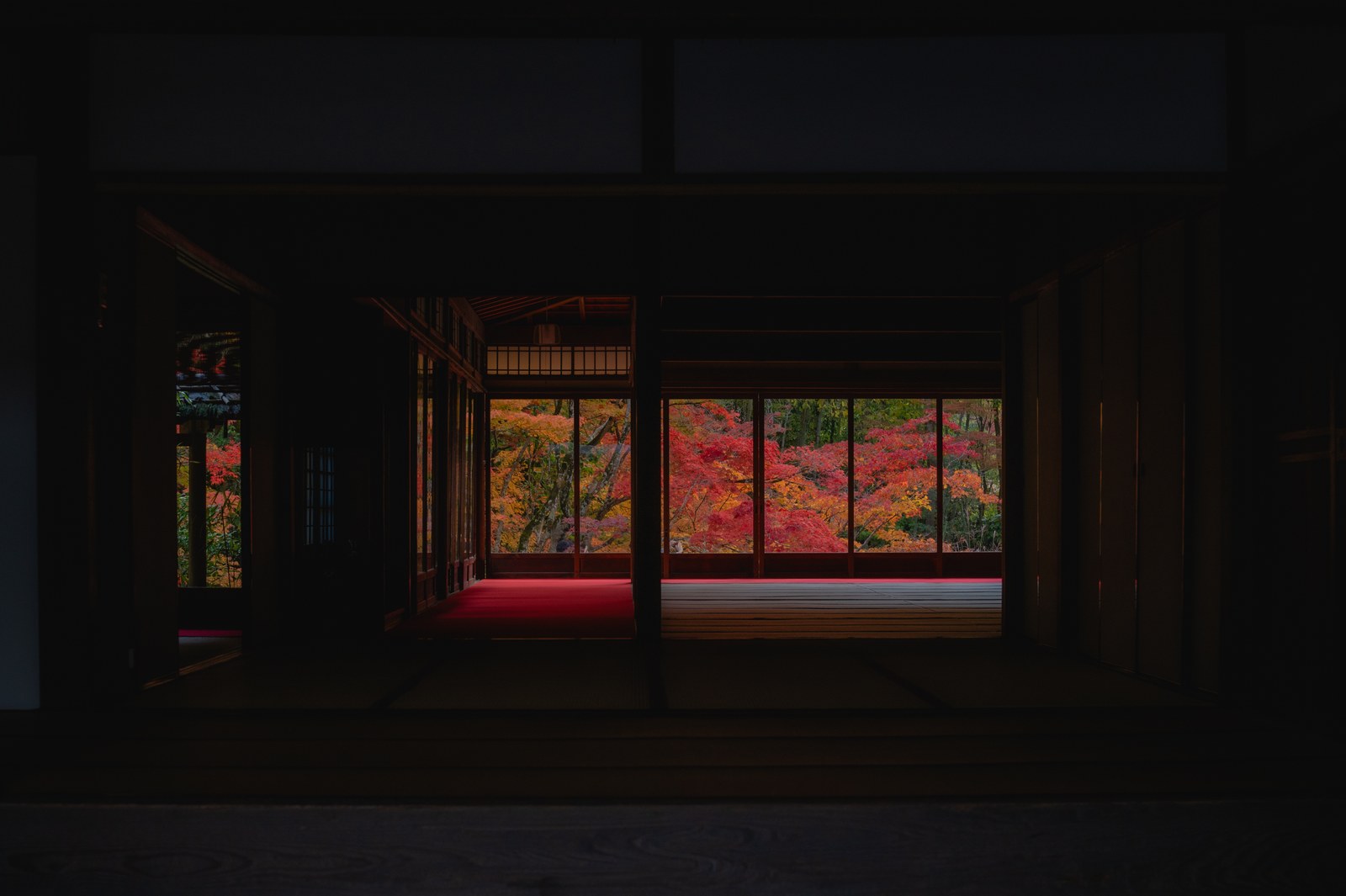
The Framed Maples of Nanzen-in ― Autumn, Cut to Size by the Pillars of the Study Hall
Higashiyama, Kyoto. Pass beneath the great Sanmon gate of Nanzen-ji, slip under the brick arches of the aqueduct, and Nanzen-in waits quietly beyond. Built on the grounds of Emperor Kameyama's old palace, it holds the only Kamakura-era garden of its rank in all of Kyoto. Sit down in the study hall, and between two pillars the autumn maples and the pond appear, composed like a single painting. It is a place where, just here, time seems to slip gently out of the city's noise.
Autumn, Framed by the Pillars
When you sit in the study hall of Nanzen-in, the first thing you notice is not the garden but the pillars. Two columns of old wood, and the white lattice of the shoji screens. Together they become a frame, cutting the maples and the pond beyond into something that looks, exactly, like a hanging scroll. You do not lean in close; you draw back, and let the pillars enter the picture with the garden. Then the scene stops being a landscape and becomes a painting someone has made. Each time the wind crosses, the maples inside the frame stir faintly, and you can see the painting quietly breathing. It was here, I think, that I first understood what 'borrowed scenery' truly means.
The Stillness of a Former Palace, and the Water's Mirror
At the heart of the garden lies Sogen Pond, and on its surface the maples are mirrored. On a windless morning the water becomes a single sheet of glass, the maples above and the maples below dissolving into each other until, for a moment, you cannot tell which is real. More than seven centuries have passed since Emperor Kameyama took the tonsure here and turned his villa into a temple. For someone who spends his days in the emergency room, counting in seconds, to sit before this mirror of water and simply wait for one leaf to fall is something close to a luxury. Early in the day the crowds are thin, and the pond's stillness seems to pass directly into the heart.
Between two pillars, a single autumn settles.
And in the pond's mirror, another.
Planning your visit — season
Nanzen-in is one of the subtemples of Nanzen-ji. Tucked deep in the grounds beside the brick aqueduct, it draws fewer visitors and offers a calm, unhurried viewing of the garden.
The maples are usually at their best from around mid-to-late November, though it shifts a little from year to year — do check the official sources for the current colour. Admission is charged, and in recent years the adult fee was roughly 400 yen as a guide. Please note that conservation or repair work can occasionally lead to closures or changes to the opening period, so it is wise to confirm the latest details on the official Nanzen-ji / Nanzen-in information before you set out.
Getting there
The nearest station is Keage on the Kyoto Subway Tozai Line. Leave by Exit 1 and pass through the 'Nejiri-manpo,' a spiralling brick tunnel that makes a handy shortcut into the Nanzen-ji grounds. From there it is about a ten-minute walk; go past the Sanmon gate and the aqueduct, and Nanzen-in lies just beyond. From Kyoto Station the simplest route is the subway, changing to the Tozai Line at Karasuma Oike. Eikan-do and the Philosopher's Path are both within walking distance.
Tips for photographers
The aim is to bring the pillars and shoji boldly into the frame as a frame of their own. Pull back a little wide so the columns work as vertical edges, and the maples beyond turn distinctly painterly. To make the most of the water mirror, an early morning before the wind picks up is ideal: wait for the surface to settle, and apply a polarising filter only gently, so that both the reflection and the real scene remain. The study hall is a quiet place of prayer and contemplation, so follow any on-site guidance about tripods, keep clear of other visitors' sightlines, and compose low and quietly out of courtesy.
While you're in the area
The grounds of Nanzen-ji hold other celebrated subtemple gardens too, such as Tenju-an and Konchi-in, and in autumn the whole precinct turns to brocade. A little further on lies Eikan-do, famed for its maples; follow the Philosopher's Path north and you reach Ginkaku-ji, the Silver Pavilion. The Keage Incline and the banks of the Lake Biwa Canal make a fine walk in the season as well. Give it half a day, and stroll slowly through the autumn of Higashiyama.
Bring home the borrowed scenery and mirrored maples seen from Nanzen-in's study hall as a single fine print. Made as a silver-halide print on FUJICOLOR's finest photographic paper, it carries the quiet of autumn breathing inside its frame. Shipped worldwide.
💾 A digital download is also available ($7.00 each). Bundles cost less: 3 for $17.84, 5 for $26.23 ($5.25 each) — mix any photographs you like.
View the print →