
PHOTO SPOT GUIDE
Ice Tulips ― A Spring of Ice in Midwinter
In Funabashi, Chiba, on a January morning so cold the air seems to bite, I stood at the edge of a flower field and found spring waiting there. Red, white, yellow, pink — tulips of every colour rising straight and steady from the frosted ground. They had not mistaken the season. These are ice tulips, the curious flowers that show you the true colours of spring in the very depth of winter.
A glow of spring in the cold
We think of tulips as flowers of April — swaying in soft sunlight against a blue sky. So to find that same flower blooming in a January field, with snow drifting down, is at first hard to believe. But step closer and you see that the cold has only deepened the colour of the petals, that the stems stand taut and upright. There is a crispness to this beauty that the warmth of spring never quite gives. In air cold enough to turn your breath white, the flowers alone burn like small lanterns of colour. It is a contrast that moves you, quietly.
Flowers that bloom through ice
Ice tulips are not a special variety. Ordinary tulip bulbs are kept in cold storage through summer and autumn, made to feel winter's chill ahead of time. Planted outdoors, the bulbs are fooled into thinking spring has come, and they open in the heart of winter. A human hand simply borrows the season forward a little. And because they bloom in the cold, the flowers last far longer — close to a month. Stepping into this field on a freezing morning after a night shift, I feel as though I have borrowed a spring not yet arrived, and my chilled fingers seem, somehow, to loosen.
One spring set down in the snow.
Through the ice, the flowers bloom.
Planning your visit — season
Deepest colour, clearest air — winter truly is this flower's season.
Ice tulips are usually at their best from around December through February. At Funabashi Andersen Park in Chiba, some twenty varieties and tens of thousands of tulips fill the winter field, typically peaking around January (admission is charged). In Tokyo, Ueno Park sometimes offers winter-blooming tulips in the beds around its fountain plaza, and there admission is free. Flowering shifts from year to year with the weather, so do check each park's official information before you set out.
Getting there
Funabashi Andersen Park is usually reached by bus from stations such as Misaki on the Shin-Keisei line, or from nearby JR and Toyo Rapid Railway stations. Ueno Park sits right beside Ueno Station on the JR, Tokyo Metro, and Keisei lines — close enough to drop into on your way through the city. Routes and times can change, so please confirm the latest access details before you go.
Tips for photographers
Winter light is low and soft, and renders colour with great clarity. In the crisp air, the reds and yellows of the petals come out especially vivid. The morning is your moment: a thin frost lingers on the flowers and the ground, and with luck you may find a single bloom dusted with snow. Throw the background far out of focus to crown one flower, or crouch low and look up across the field to take in the winter sky as well. Leave a little white breath or frozen earth in the frame, and the wonder of a flower blooming in midwinter rises quietly within the picture.
While you're in the area
Beyond its flower field, Andersen Park offers a Nordic landscape with a windmill, bare winter woods, and grounds wide enough to fill a slow half-day with the family. At Ueno, you might follow the flowers with a museum or two, or a walk along the edge of Shinobazu Pond. In the cold season the crowds ease, leaving more quiet time alone with the flowers. Take a warm drink in hand, and give the winter park your unhurried time.
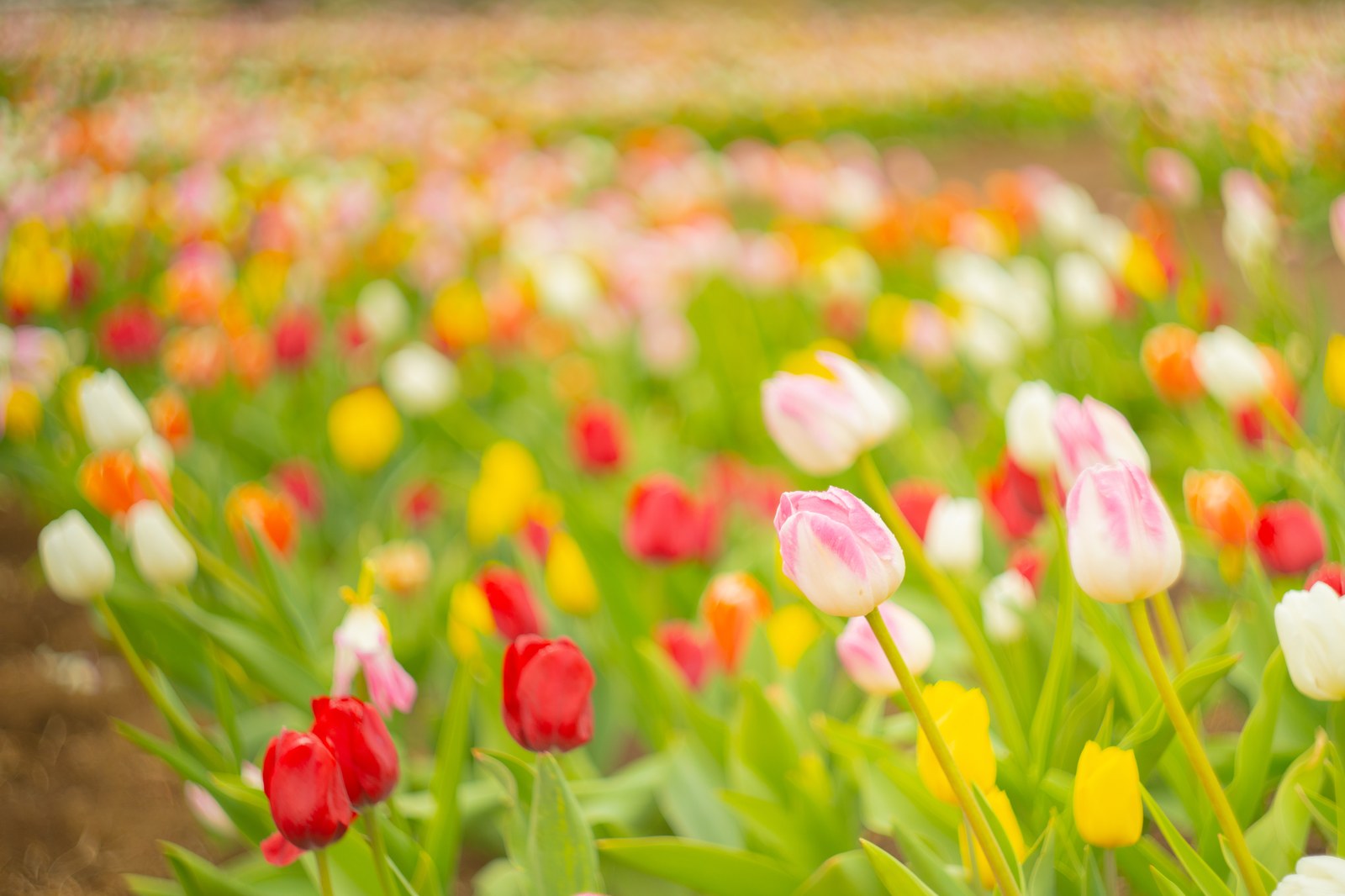
Bring home the ice tulips that bloom so bravely in the snowy season, as a silver-halide print on FUJICOLOR's finest archival paper. Each piece is finished with care and shipped worldwide.
💾 A digital download is also available ($7.00 each). Bundles cost less: 3 for $17.84, 5 for $26.23 ($5.25 each) — mix any photographs you like.
View the print →