
PHOTO SPOT GUIDE
The Daffodils of Kyonan — White Lamps in the Heart of Winter
Kyonan, in southern Chiba. Near the tip of the Boso Peninsula, in the hills just back from the sea, there is a season still coloured in winter brown. Yet as you draw closer to the slopes, a sweet fragrance rises around your feet, and you notice that small white flowers are blooming everywhere. Japanese daffodils — the flower that opens most quietly, just as the cold reaches its deepest.
Blooming Whitest on the Coldest Day of Winter
There are plants that go to the trouble of flowering in the year's darkest, least generous season. The Japanese daffodil lights one white blossom after another across the winter hills, while every other flower is sleeping. Seen in the cold, clear air, that white is somehow dignified, yet never strained. The little flowers, blooming slightly downturned, look less like they are enduring the cold than quietly keeping it company. Perhaps that is why they move us. In a season when nothing should be blooming, something is blooming all the same. In the depth of winter, that simple fact can feel like a very large thing.
The Fragrance First, the Flowers After
Walking through the daffodil country of Kyonan, you notice the scent before you ever see a flower. Sweet, faintly cold and clear, it travels on the wind to well below the slopes. Along the Egetsu Daffodil Road, daffodils run for some three kilometres beside the town lane, and at Okuzure the white flowers cover an entire hillside. On the way home from a long night on the emergency ward, walking slowly through this fragrance, I can feel something tightly held begin to loosen, little by little. The flowers bloom with no regard for our circumstances — and that indifference is, strangely, a kind of gentleness.
White flowers bloom in a whisper.
Only their fragrance announces the coming spring.
Planning your visit — season
Deep winter is the finest time. The colder the day, the deeper the fragrance.
The Japanese daffodils of Kyonan are usually at their best from late December to around early February. The Kyonan Daffodil Festival is held to coincide with the season; local produce and cut flowers are sold along the Egetsu Daffodil Road, and in some years you can see the daffodils dreamily illuminated at night by Lake Sakuma Dam. The Egetsu Daffodil Road is a gentle hiking course, while Okuzure offers great drifts of flowers across a slope — each with its own character. Because blooming depends on the weather, please check the latest conditions through official sources before you set out.
Getting there
The JR Uchibo Line is the easiest way to reach Kyonan. The Egetsu Daffodil Road is about a fifteen-minute walk from JR Hota Station to its entrance, from where you stroll slowly along the daffodil-lined lane. For Okuzure, a well-known route is to take the town circular bus from Hota Station and get off at Okuzure. The neighbouring Hamakanaya Station is the gateway to Mount Nokogiri, and many visitors use it as a base for exploring the town. As all of these involve a fair amount of walking, do bring comfortable shoes and warm winter clothing.
Tips for photographers
White flowers are a subject to handle with care for brightness. Under the clear light of midwinter, the blossoms easily blow out to pure white, so dialling the exposure down a little — keeping the shadows and texture of the petals — gives a finer result. The soft light of an overcast day also suits daffodils well. You cannot photograph the fragrance itself, but by using the depth of the massed flowers and leaning gently in toward a single bloom in the foreground, you can convey the quiet density of the air. These are hillside slopes near the sea, so try changing the angle and time of the light, and gather the gradations of white with patience.
While you're in the area
From Hamakanaya, next to Kyonan, you can climb Mount Nokogiri. The old quarry faces near the summit and the cliff-top views over Tokyo Bay offer a winter scene quite different from the daffodil fields. Go down to the coast at Hota, or further on into Minamiboso, and you will find the sea's bounty for which warm Boso is known, even in winter. The scent of white flowers, and the wind off the winter sea — here in the south of the peninsula, even in deep winter, time flows softly, as if spring had already been quietly let in early.
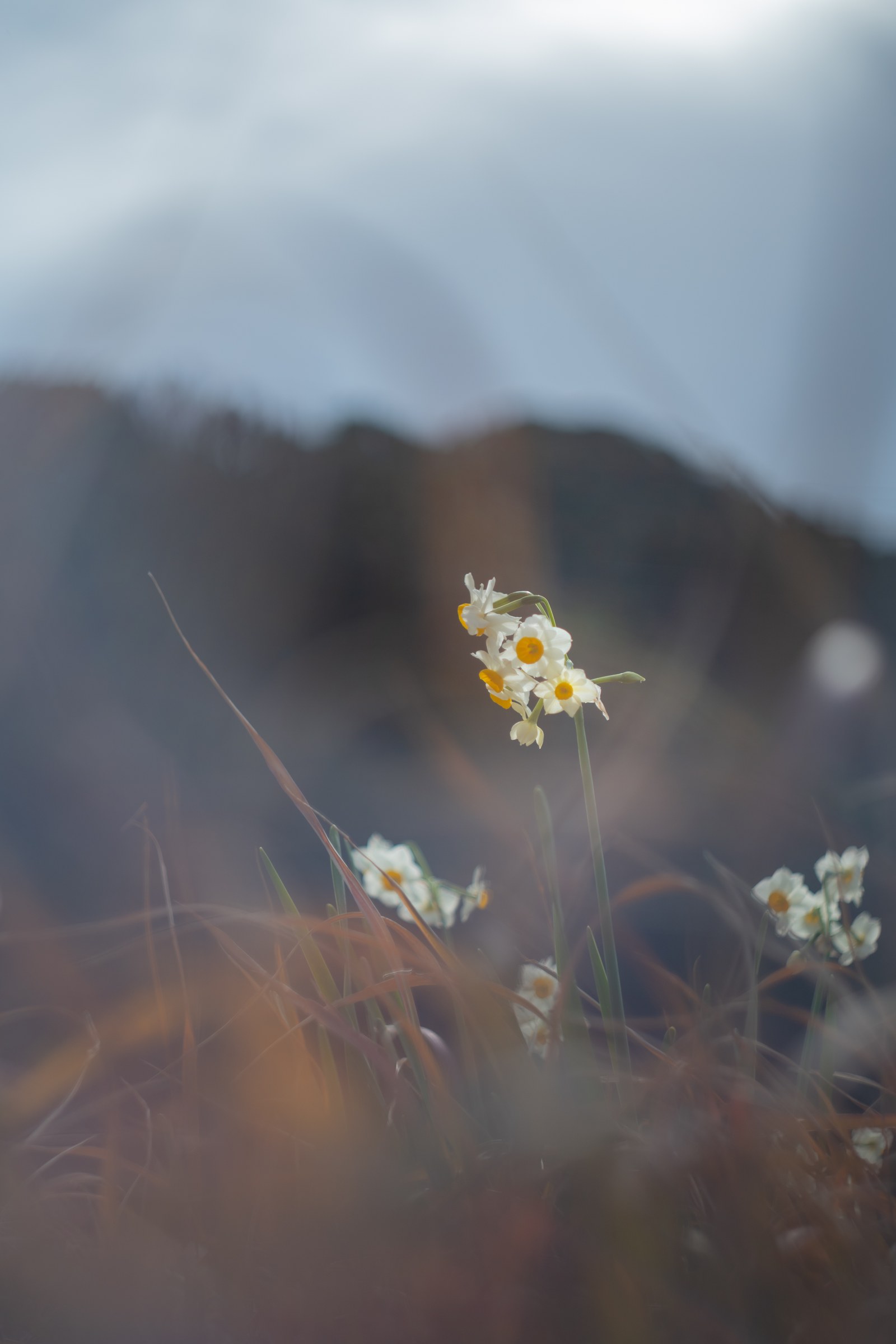
We deliver this winter scene of Kyonan as a silver-halide print on FUJICOLOR's finest photographic paper. Each one is carefully finished and shipped worldwide.
💾 A digital download is also available ($7.00 each). Bundles cost less: 3 for $17.84, 5 for $26.23 ($5.25 each) — mix any photographs you like.
View the print →