
PHOTO SPOT GUIDE
The Weeping Cherry of Rikugien ― A Waterfall Falling Through the Spring Night
In Bunkyo, Tokyo, only a few minutes' walk from a station on the Yamanote loop, a garden built by an Edo-era lord still breathes quietly to this day. This is Rikugien, a strolling garden of hills and ponds. Step through its inner gate and a single weeping cherry rises before you. Almost fifteen metres tall, it pours pale-pink blossom from high overhead down to your feet — for a few days each spring, like a waterfall made of flowers.
From every branch, spring spills downward
The first time I stood beneath this tree, I could not move for a while. It feels less like looking up than like being rained upon. Countless branches drop from the sky, each one clothed in pale-pink blossom, tracing soft curves toward the ground. Each time the wind crosses the garden the flowers tremble, and the cherry waterfall stirs quietly, like the surface of water catching a breeze. A single tree, it turns out, can hold this much spring within it. Said to be around seventy years old, it has spread its branches little by little over the decades to become the grand, cascading form it shows today. For only a handful of days each year, a current of spring is born in this one spot.
In the night's stillness, a pale-pink waterfall appears
This cherry shows its most unforgettable face after the sun goes down. Most years, special evening viewings are held to coincide with full bloom, and the tree is lit from below. The pale pink of daytime becomes another flower entirely; set against the dark, the blossom rises up deeper and far more quietly. The old lord's garden sinks into deep shadow around it, and only the pond's surface holds a faint reflected light. For someone like me, who spends working hours chased by the clock in the emergency room, the quiet of this garden at night feels like a different kind of time from the one I usually live in. Voices naturally drop low, and only the waterfall of cherry stands there, soundless, within the light. A moment like that waits here, after dark.
A single pale-pink waterfall in the dark.
Without a sound, spring is falling.
Planning your visit — season
For those coming for the first time, here is the easiest season to visit.
The weeping cherry blooms a little earlier than the Somei-yoshino, with the best season usually arriving in late March. The exact timing shifts with each year's temperatures, so it is wise to check the bloom status before you set out. In many years, special evening viewings are held to match full bloom; during that period the garden opens specially from dusk into the night and the cherry is illuminated. Ordinary admission is around 300 yen, but the evening viewing carries a separate fee, and advance and same-day tickets are usually priced differently. Whether the event is held, the dates, and the prices all change from year to year, so please always confirm the latest details through the official information. Weekends in the best season and the evening-opening hours grow very crowded, so visiting on a weekday or just after opening, with time to spare, is the gentler choice.
Getting there
The nearest station is Komagome. Served by the JR Yamanote Line and the Tokyo Metro Namboku Line, it lies about a seven-minute walk from Rikugien's main gate. Follow the residential streets a short way and the quiet, wall-enclosed entrance to the garden appears. From Sengoku Station on the Toei Mita Line it is about a ten-minute walk. Standing in the heart of the city yet so close to the station is one of this garden's quiet pleasures.
Tips for photographers
Cherry blossom at night is not a kind subject for the photographer. The light is scarce, the blossom sways in the wind, and the shutter naturally slows. That is exactly why the small efforts to steady your camera decide the frame. A tripod is ideal if you can use one, but during the special evening viewings tripod use is often restricted out of consideration for the crowds, so please be sure to check the garden's rules before bringing one. Shooting handheld, raise your sensitivity, steady your breath, and wait for the instant the blossom holds still. For composition, let the cascade of branches run boldly down the frame from top to bottom, and that pale-pink current settles straight into the photograph. Leaving plenty of the dark background makes the glowing cherry stand out all the more.
While you're in the area
The Komagome neighbourhood around Rikugien is a place made for garden walks. On the far side of the station lies the Kyu-Furukawa Gardens, where a Western mansion, roses, and a Japanese garden share the same grounds. Walk a little further and you reach Koishikawa Korakuen, the lordly garden of the Mito Tokugawa family. Though all are gardens of old Edo, each has its own character, and spending a spring day wandering from one to the next is a luxury particular to this part of the city.
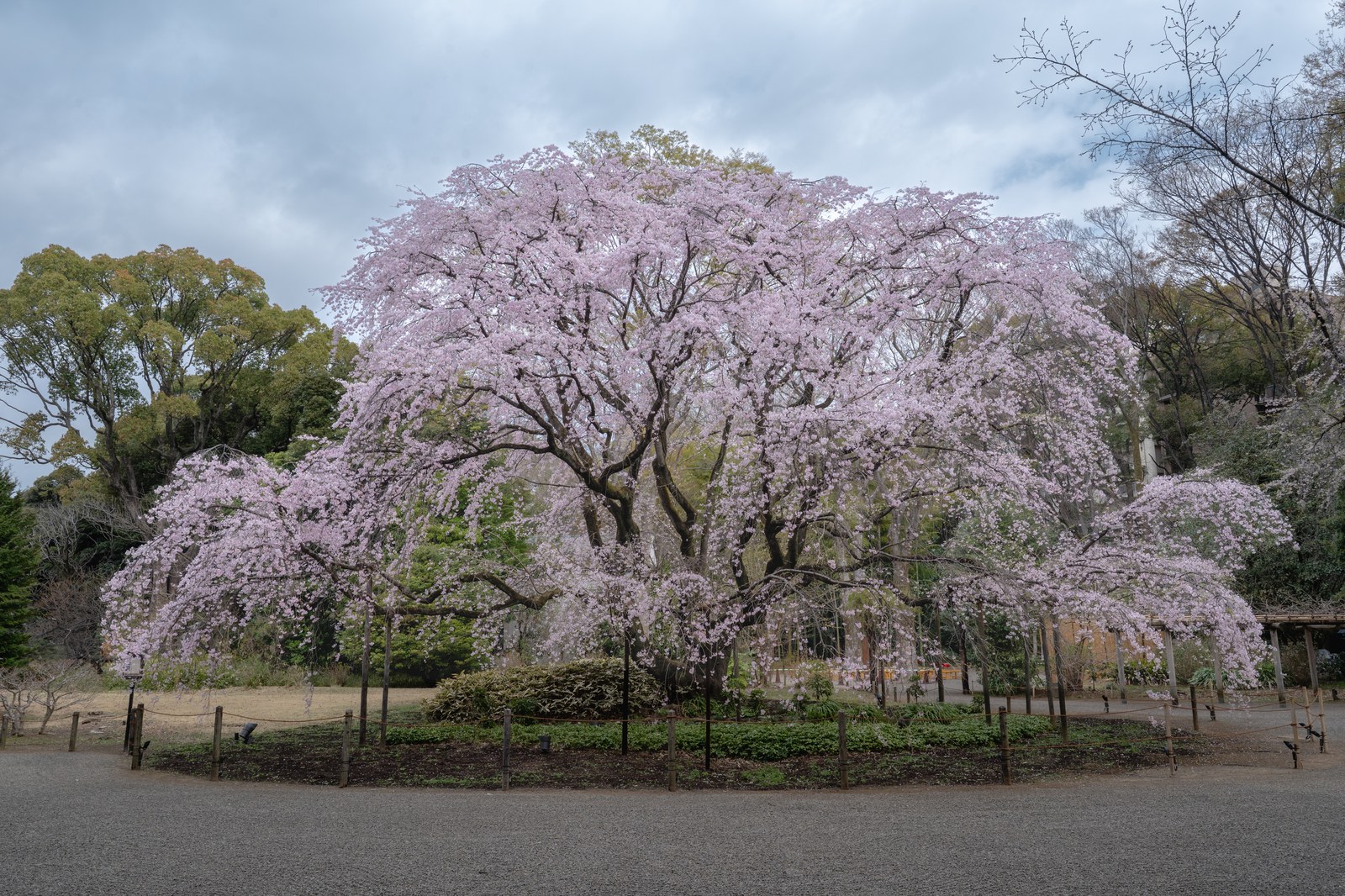
We deliver Rikugien's weeping cherry, glowing in the dark, as a silver-halide print on FUJICOLOR's finest photographic paper. Each one is printed with care for the deep black of night and the faintest gradations of pale pink, and shipped worldwide.
💾 A digital download is also available ($7.00 each). Bundles cost less: 3 for $17.84, 5 for $26.23 ($5.25 each) — mix any photographs you like.
View the print →