
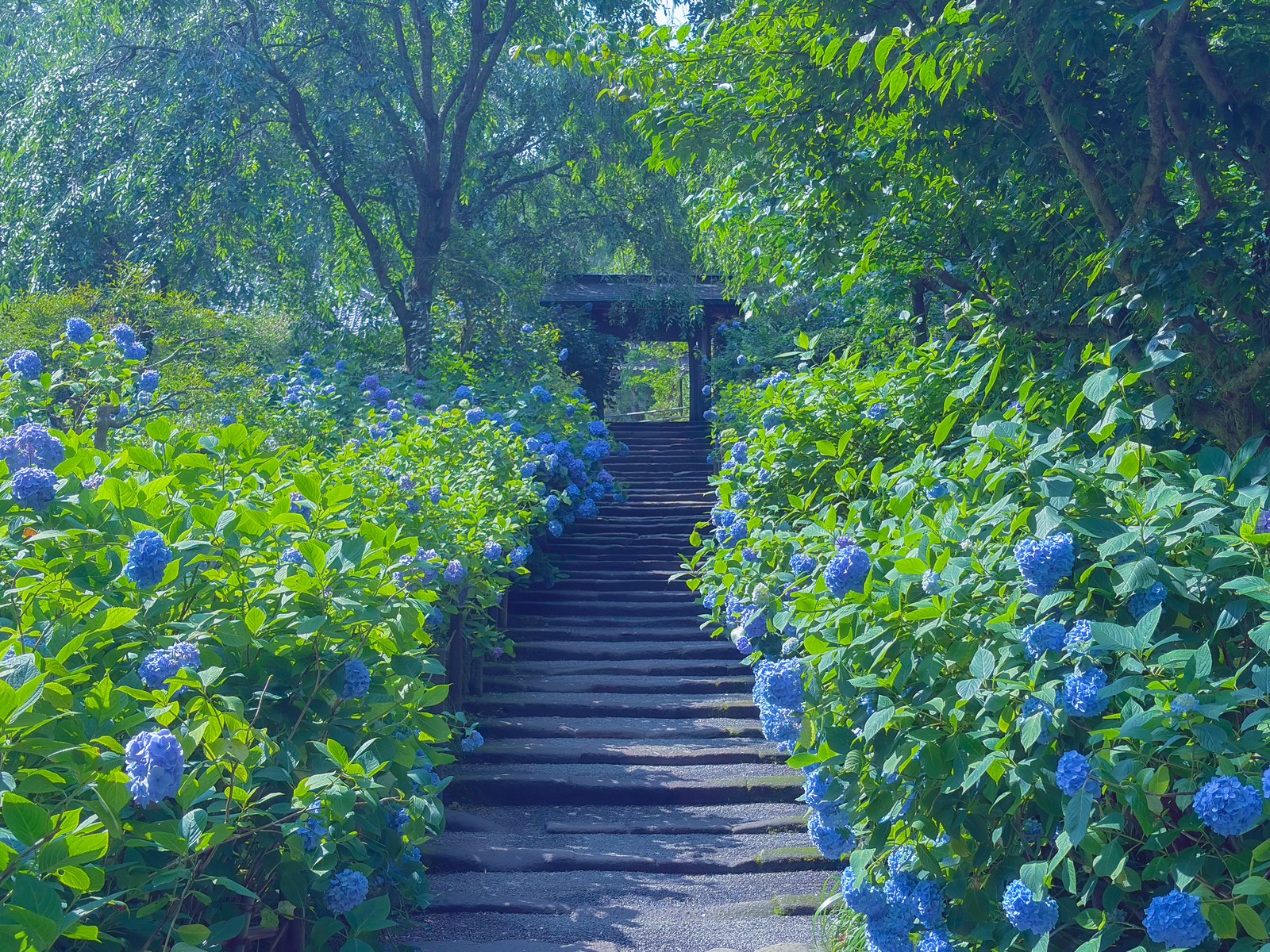
Hydrangeas at Meigetsuin deepening to blue in the rain

FEATURE

A Guide to Kanto's Hydrangeas ― Flowers of the Rainy Season

💠 Season: June to July 🗾 Around Kanto

The rainy season is often thought poor for photography. Yet the hydrangea, alone among flowers, shows its true colour only in the rain. Blue deepening as it soaks, blooms set afloat on water, pure-white pompoms against the buildings of an old downtown ― this is a record of seeking the flower that shines brightest under a grey sky, across the hydrangea places of Kanto.

Deepening in the rain ― Kamakura's hydrangea temple

Say hydrangea, and Kamakura comes first to mind. At Meigetsuin in Kita-Kamakura, Kanagawa, some two thousand five hundred Hime-ajisai fill the grounds, their clear blue so loved it has a name of its own ― 'Meigetsuin Blue.' The wetter the rain, the deeper the colour, until simply walking the approach feels like sinking into a sea of blue. Hydrangeas change colour with the acidity of the soil, so hunting for the subtly different blue of each temple and each plant is a pleasure only the rainy season offers.

The three places in this guide, at a glance

Hydrangea season in Kanto runs from the beginning of June to the middle of July, and unlike the cherries it is generous: the flowers hold for weeks rather than days, and rain improves them. The table below gives the season, the walk from the station, and whether an official evening illumination has been announced.

↔ The table scrolls sideways on a narrow screen.

SpotPrefecturePeakFrom the nearest stationEvening illumination
Meigetsuin, Kita-KamakuraKanagawaEarly – late June (peak mid-June)About 10 min on foot from Kita-Kamakura Sta. (JR Yokosuka Line)None announced
Amabiki Kannon (Rakuhoji)IbarakiEarly June – mid JulyAbout 15 min by taxi from Iwase Sta. (JR Mito Line); about 10 min by car from Sakuragawa-Chikusei IC, free parkingYes — illuminations during the Ajisai Matsuri (dates vary by year)
Annabelle and the Skytree, KotoTokyoAround JuneWithin Koto City — check the current information for the nearest stationNone announced

Admission, opening hours and festival dates change from year to year, and Meigetsuin in particular runs a special schedule during the June hydrangea period, with a separate fee for the rear garden. Please check each temple's own information before you travel.

Bring a scene from this guide home

Each is a real photograph from this guide’s season, printed in Japan on FUJICOLOR professional paper.
Sponsored

Blooming on water ― the floating flowers of Ibaraki

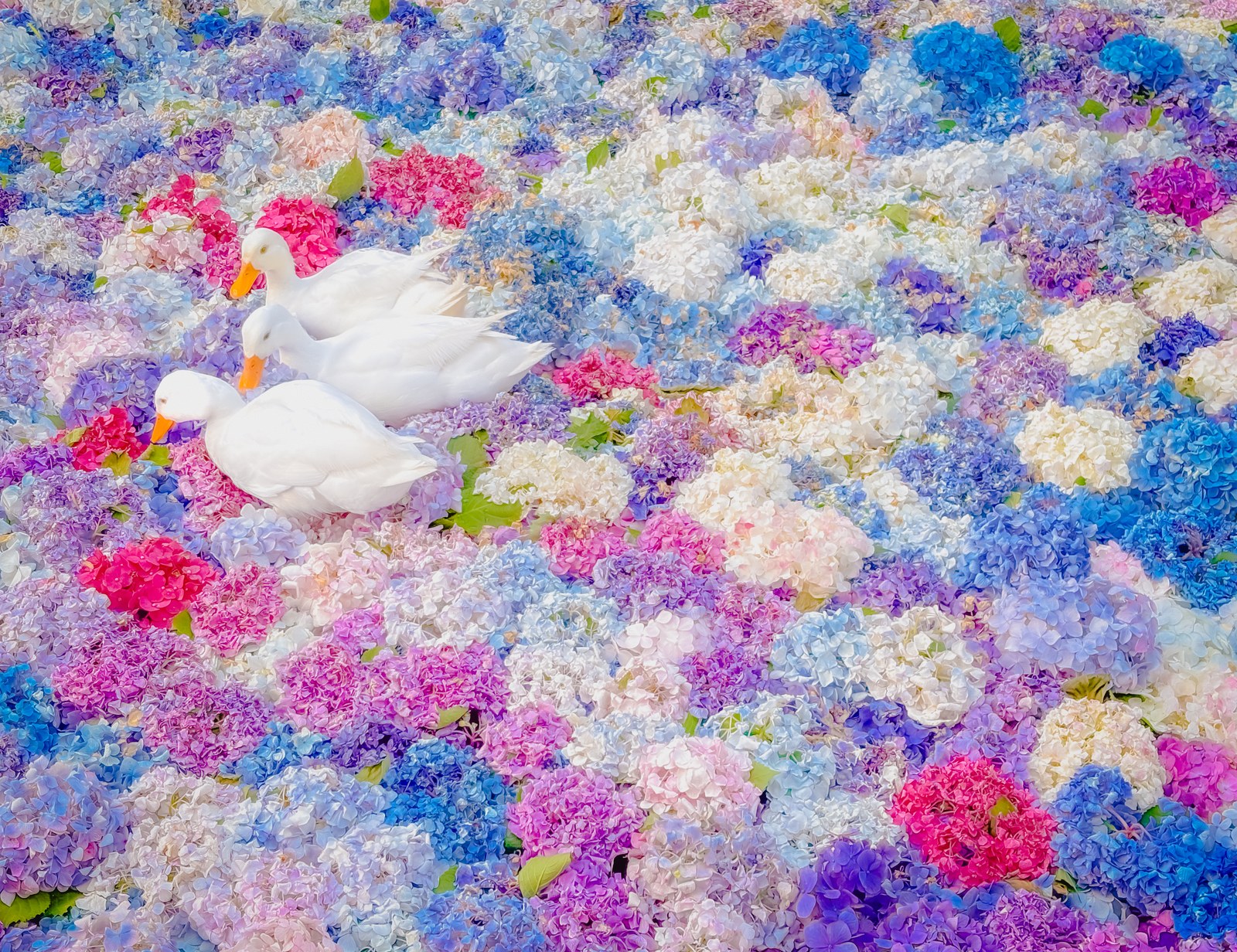
At Amabiki Kannon in Sakuragawa, Ibaraki, hydrangeas in many colours are floated across the stone basins and the Benten pond. Locals call it suichuka, and the water itself seems to bloom. Where hydrangeas on land grow heavy with rain and bow their heads, the flowers set free on the water are weightless. Ducks drift lazily between the blooms ― a gentle early-summer day, found here.

Blooming downtown ― Annabelle and the Skytree

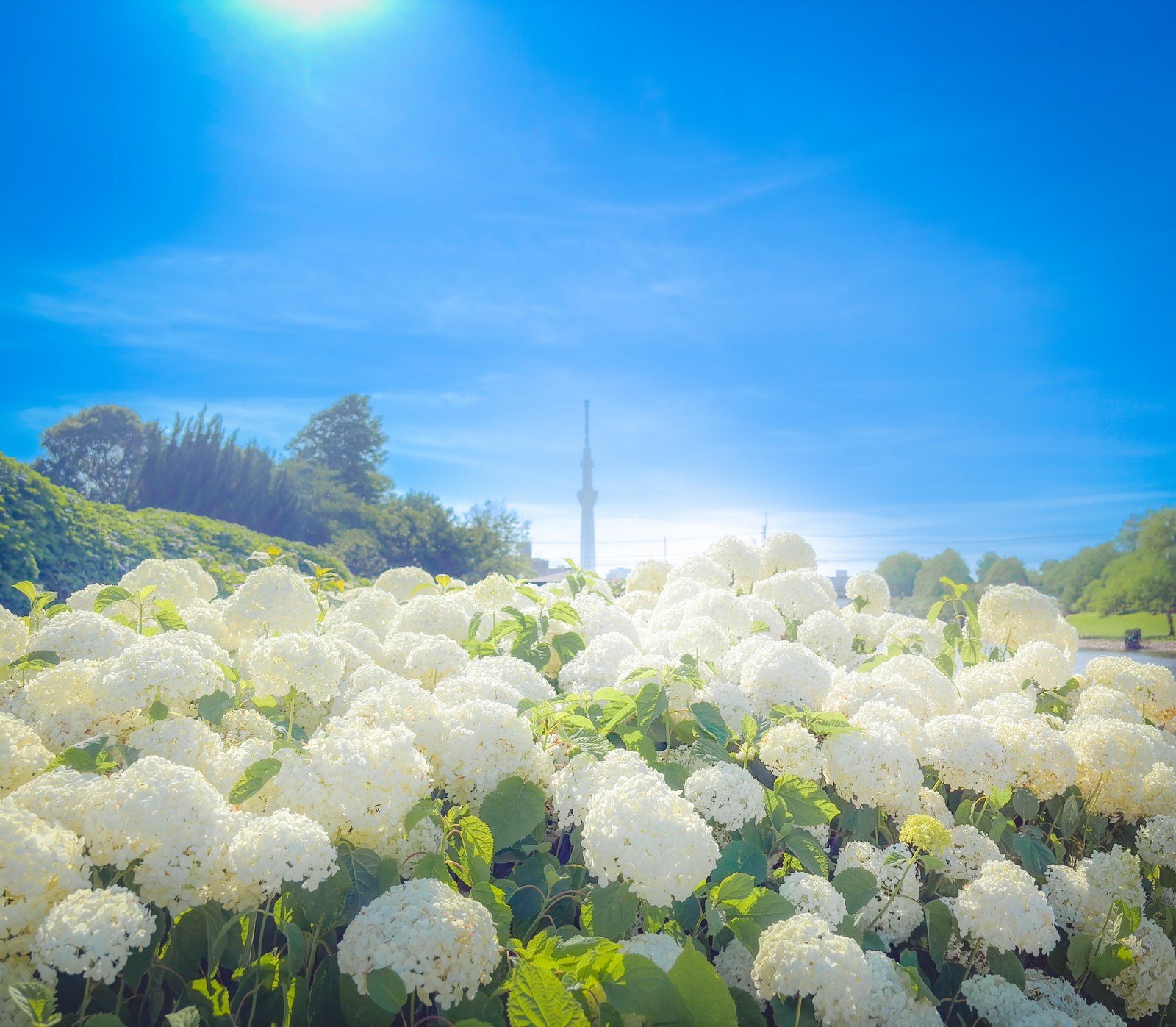
The hydrangea is not only a flower of old temples. In Koto, Tokyo, pure-white pompom 'Annabelle' hydrangeas bloom in drifts, with the Tokyo Skytree rising beyond them. White hydrangeas and a modern tower ― such a cool early-summer scene, in a familiar downtown. The loveliest frame comes at dusk after rain, in the hour when the white takes on a hint of blue.

On a rainy day, the hydrangea is loveliest.
From under the umbrella, go looking for blue.

Three blues, and why they differ

Hydrangeas take their colour from the acidity of the soil, which is why three places an hour apart give three different pictures. At Meigetsuin some 2,500 Himeajisai fill a small hillside temple in Kita-Kamakura, and the blue is consistent enough to have earned its own name. The approach and the stone steps are the picture everyone comes for, and ten minutes' walk from the station is all it takes ― which is also why it is crowded. During the June hydrangea period the temple runs special hours and fees, and the rear garden is charged separately.

At Amabiki Kannon in Sakuragawa the flowers are cut and floated: blooms across the stone basins and out onto the Benten pond, a practice locally called suichuka. It is the one place in this guide where the hydrangea is arranged rather than found, and the difference shows ― the flowers on the water are weightless where the ones on the bank are heavy with rain. The Ajisai Matsuri runs roughly from mid-June to mid-July, with illuminations on dates that are set each year. Getting there is the least convenient part: about fifteen minutes by taxi from Iwase Station, or ten minutes by car from the Sakuragawa-Chikusei interchange, where parking is free.

And in Koto, the Annabelle ― a pure-white mophead that fades to pale green as it matures ― grows in drifts with Tokyo Skytree standing behind it. White hydrangea against a modern tower is a picture no temple can give you, and the best of it comes in the half hour after rain at dusk, when the white starts to take on blue.

The rest of the rainy season

June and July are not only hydrangea. The same riverside I walk for Kawazu cherries in February ― the Kyu-Nakagawa in Edogawa ― is worth a dawn walk again in hydrangea season, when the tower comes back in the water on a windless morning. And from the middle of July the season hands over to the lotus: at Shinobazu Pond in Ueno the flowers open between about seven and nine in the morning and close again by midday, which makes it the strictest appointment in the whole flower year.

Practical notes ― rain, gear and the light

Rain is the point, not the obstacle. Under an even grey sky the specular glare disappears and the colour sinks in; the hour after rain stops, when the light lifts a little but the leaves are still wet, is better still. Bring a towel for the lens as well as an umbrella, and expect the ground to be soft ― the approach at Meigetsuin and the pond edge at Amabiki are both places where footing matters more than focal length.

For the technique, water drops on the petals reward getting close, and a soft filter suits the flower unusually well: the handling is set out in how to photograph flower landscapes and in shooting dreamy flowers with a soft filter. If you want the wet, low-contrast light of early morning rather than midday, morning mist and the magic hour covers it.

Photographing hydrangeas ― tips for the rain

Kanto's hydrangeas are usually at their best from early June to mid-July. The finest conditions come not on clear days but in rain or just after: a soft overcast kills the glare and lets the true colours sink in deep. To make the most of droplets on the petals, move in close, almost to macro. Don't forget to protect your lens and camera from the rain ― a single towel in the bag brings peace of mind. Handling light on a rainy day is covered in how to photograph flower landscapes.
💠 SeasonUsually early June to mid-July (the rainy season)
💠 Main spotsMeigetsuin (Kita-Kamakura), Amabiki Kannon (Ibaraki), Annabelle (Koto, Tokyo)
📸 Best lightRainy or just-rained overcast ― glare gone, colour deepened
☂️ What to bringUmbrella, a towel for the lens, good shoes; watch for muddy ground
ℹ️ Before you goPlease check each location's official information for bloom and festival dates
Hydrangeas at Meigetsuin (Kanagawa — Kita-Kamakura Meigetsuin)
💠 The blue of a rainy day, always at hand

From Meigetsuin Blue to the floating blooms of Amabiki Kannon, bring home the stillness of the rainy season as a true silver-halide print on FUJICOLOR's finest professional paper. Deep blue gradation, shipped worldwide.

💾 A digital download is also available ($7.00 each). Bundles cost less: 3 for $17.84, 5 for $26.23 ($5.25 each) — mix any photographs you like.

See the 6 hydrangea prints →
Sponsored
← Back to Photo Spot Guides