
GEAR ・ HOW-TO
HELIOS-44-2 58mm F2 ― Sharp Is Not the Only Right Answer
The HELIOS-44-2 58mm F2 is a very cheap standard lens made in the former Soviet Union. It is known for its swirly bokeh — but that is not why I keep reaching for it. Bloom, flare, ghosting: everything modern lenses have worked so hard to eliminate is still alive in this one. And because of that, there are moments when a photograph edges closer to a painting.
What the HELIOS-44-2 actually is
It is an M42 screw-mount standard lens, made at several Soviet optical plants — Krasnogorsk (KMZ), Minsk (MMZ/BelOMO) and Valdai — from roughly the late 1960s to the early 1990s. Two lenses both stamped "44-2" can differ noticeably depending on which factory and which year they came from. That is part of the charm of old glass.
The optical formula is a double-Gauss, six elements in four groups, descended from the Carl Zeiss Jena Biotar 58mm f/2 — a consequence of German optical design passing into Soviet hands after the Second World War. Whether it is a straight copy or a simplified Soviet reworking is described differently from source to source, so I will only say it descends from the Biotar.
Above all, there are a lot of them. It shipped as the kit lens on Zenit SLRs, and the Zenit-E alone is reported to have been produced in over twelve million units including variants. That is why the lens is still remarkably easy — and cheap — to find secondhand.
Why I keep using it
The swirl is genuinely fun. But it is not what I go looking for. Here is how I would put it in my own words, unedited:
Of course the swirly bokeh is fun, but what I love most is a rendering with the air of an impressionist painting. Flare and ghosting, the things people generally call faults, strike me as genuinely interesting weapons for making work. Beautiful, well-rendered — I don't think that is the one absolute right answer.
― IkebanadoctorModern lenses are sharp corner to corner, hold contrast against the sun, and show no ghosting. That is an engineering triumph. But somewhere in the process of erasing every "defect", something of the presence of light itself can get erased along with it.
The HELIOS-44-2 is an old single-coated design. Let the sun into the frame and it flares generously, contrast collapses, and a chain of coloured ghosts marches across the picture. By any normal standard, that is a failed exposure. I want to use it like paint. The veil of bloom, the small round ghost sitting where it landed — to me these are brushstrokes that carry the air of the place.
Rendering beautifully and
moving someone are not the same thing.
Examples 1 ― Flare and ghosting as the subject
From here on, everything is a real photograph made with this lens and offered as a print. First, three frames where I met the backlight head on.
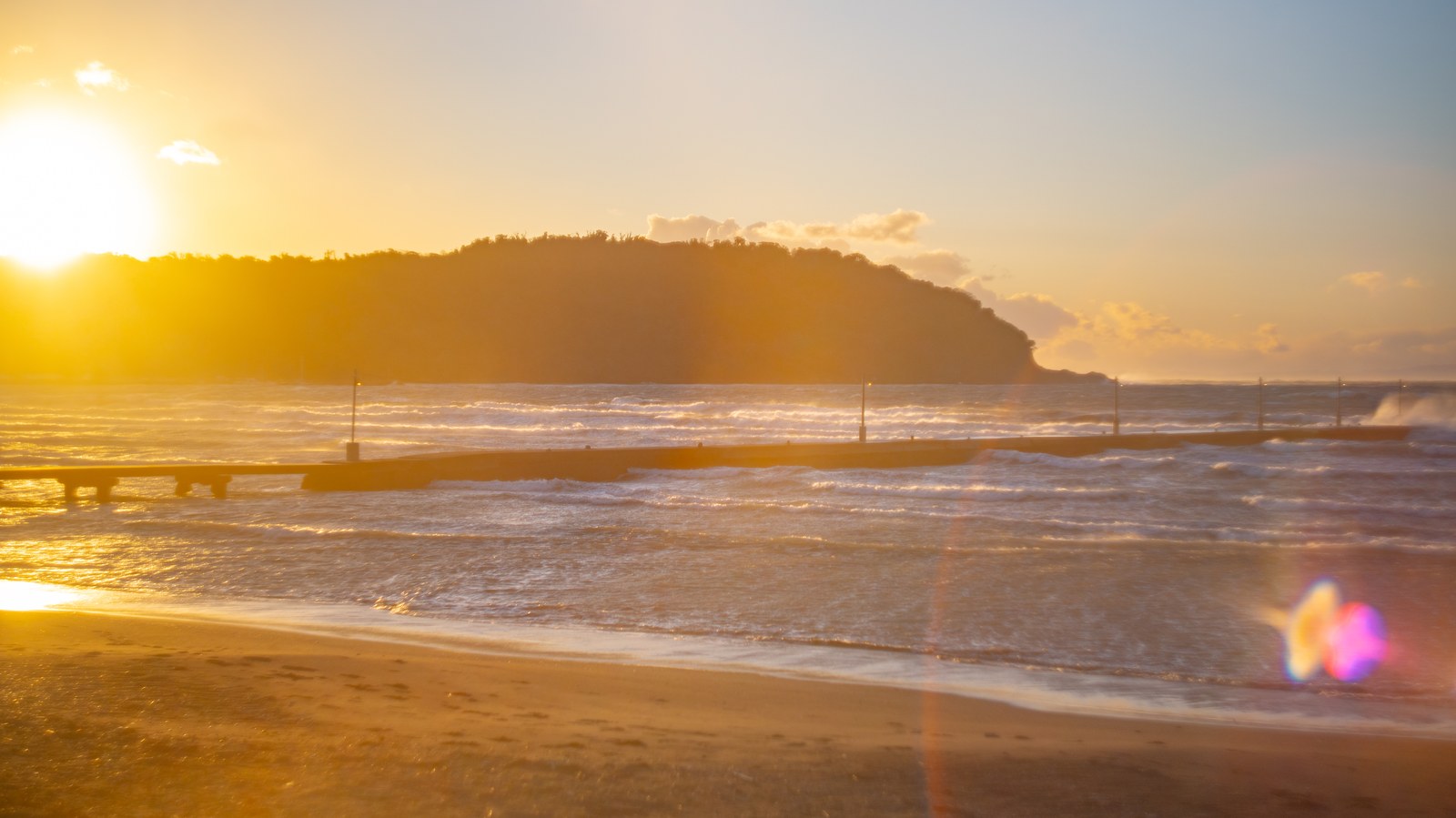
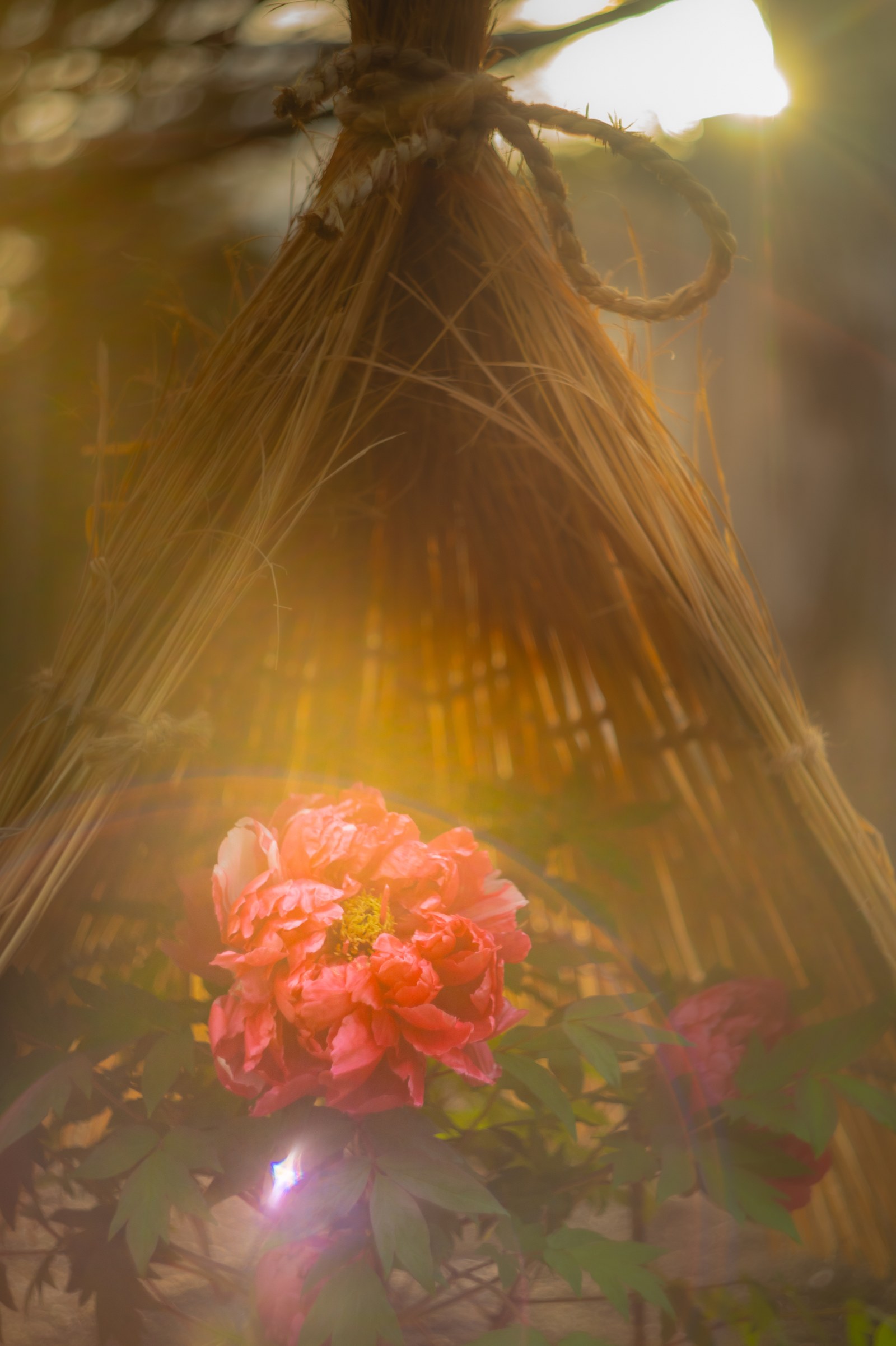
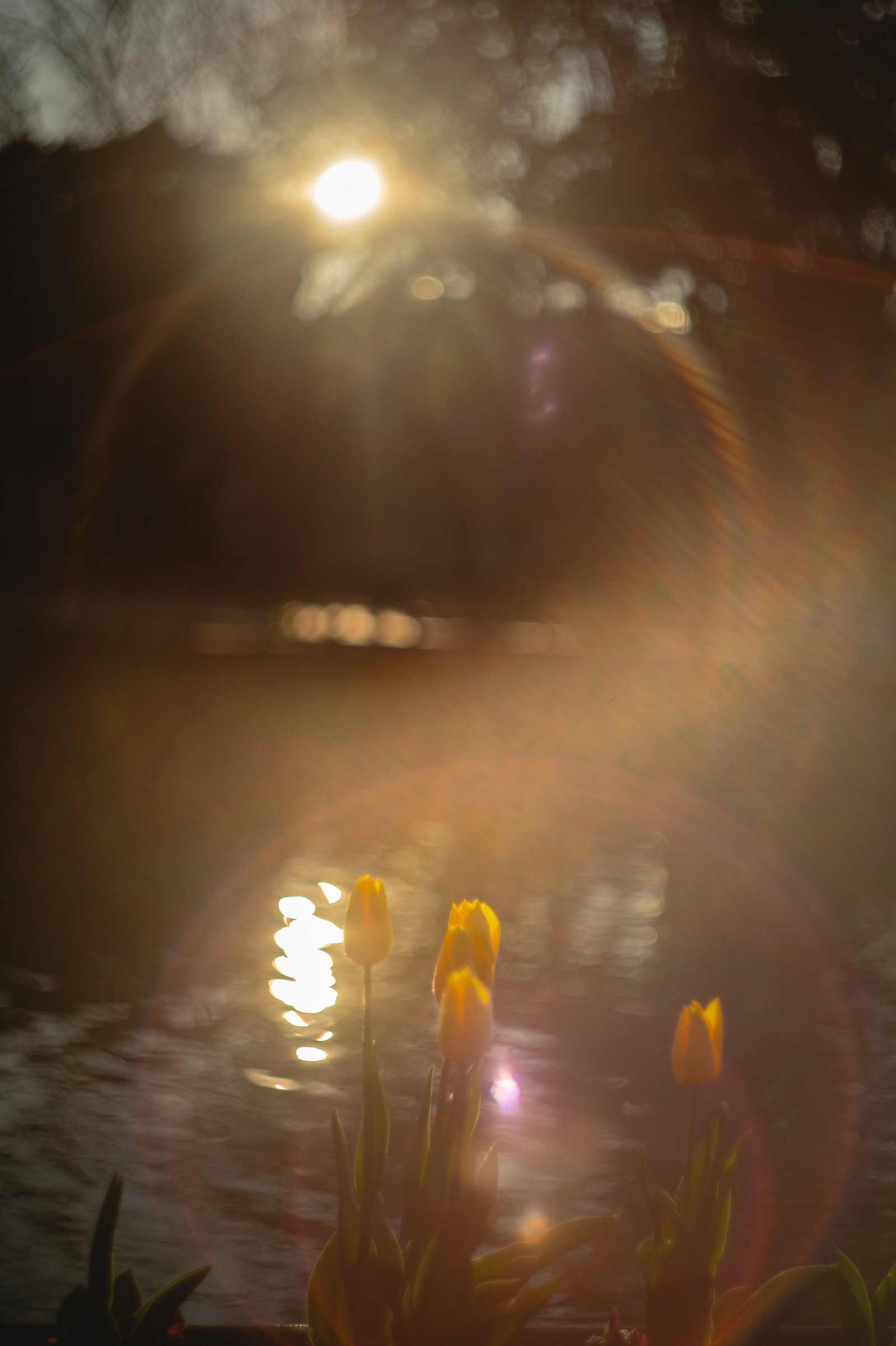
At Haraoka Pier in Chiba, the sun in the upper left spreads a film of light across the whole frame while orange and magenta ghosts line up in the lower right. What a modern lens would have removed became the temperature of that seaside evening. In Winter Peony Under Straw Shelter at Ueno Toshogu, morning sun pushing through the straw broke into rays, and a small iridescent bead settled just below the flower. And in Winter Ice Tulips at Ueno Park, a single street lamp threw out rays and an arc of ghosting that turned a midwinter pond into a lit stage.
Three frames that use flare
All shot on the HELIOS-44-2 58mm F2, printed in Japan on FUJICOLOR professional silver-halide paper.
More on technique and gear
The same tools, the same light. Read on and the craft joins up.
Examples 2 ― Dissolving, like an impressionist
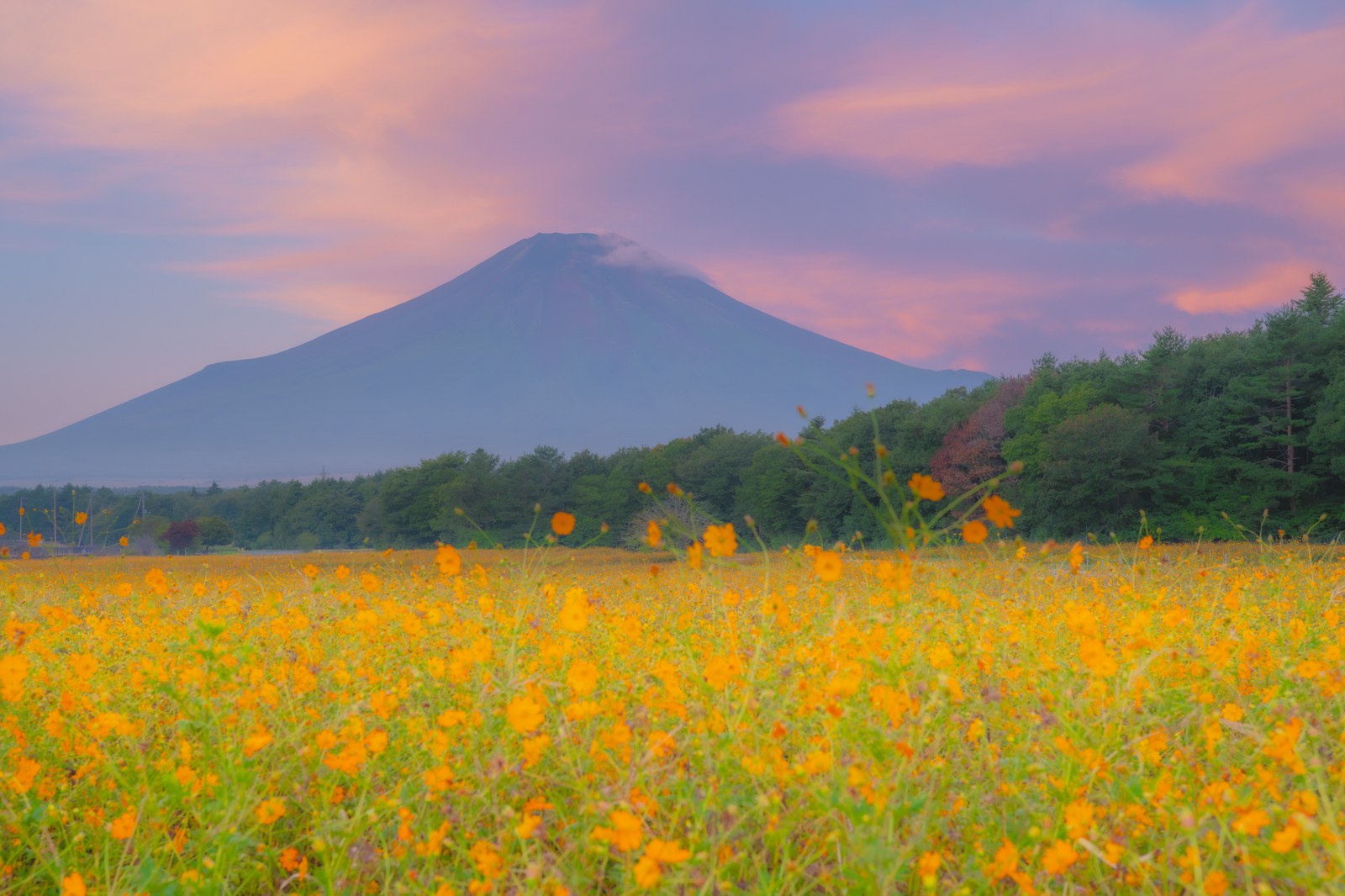
This is the direction I love most. Wide open at F2 and close in, everything but the one plane of focus melts, and edges start to look like brushwork. Ice Tulip Field at Funabashi Andersen Park dissolves both foreground and background into bands of colour — red, pink, yellow, white and orange simply dancing. Not description, but impression.
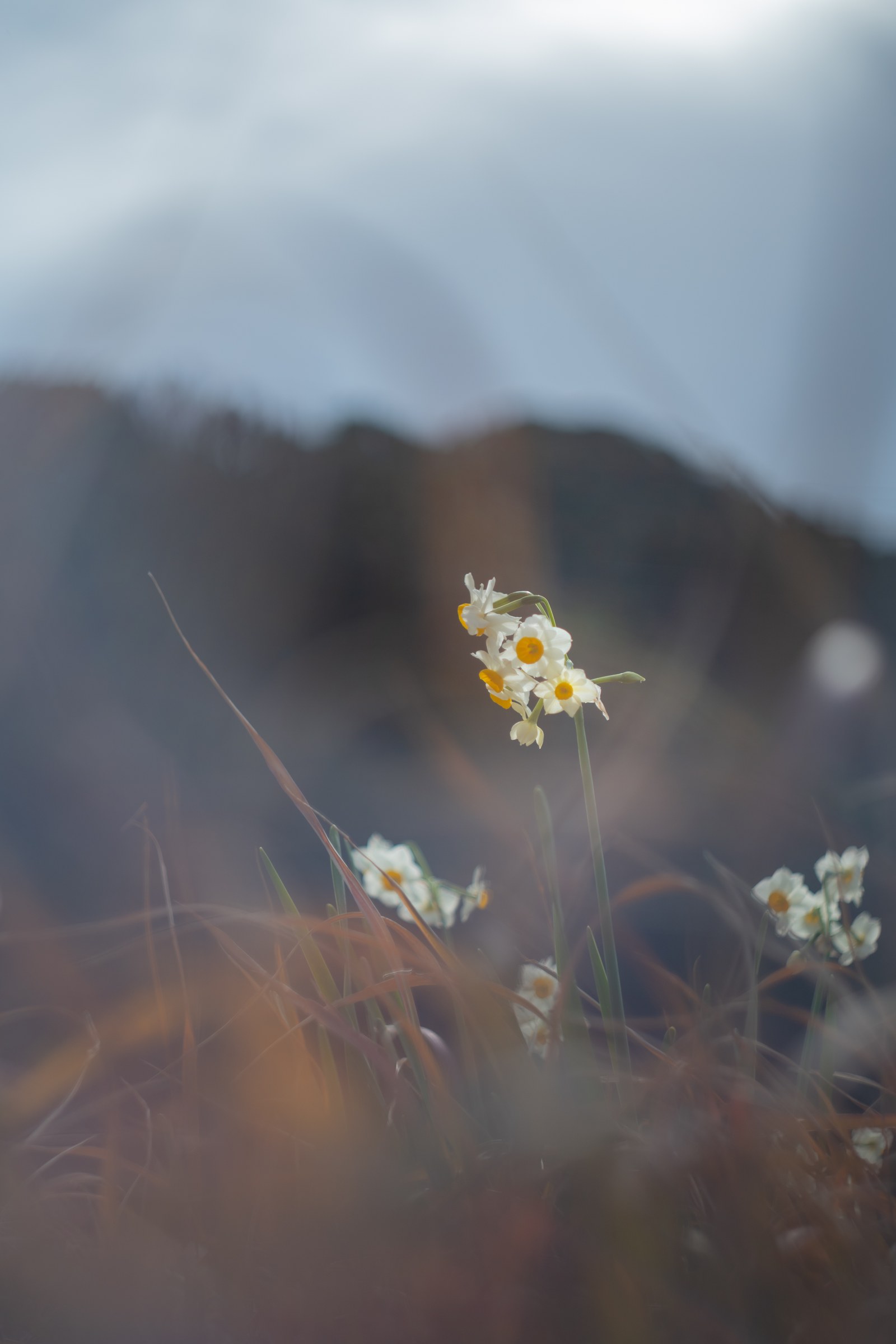
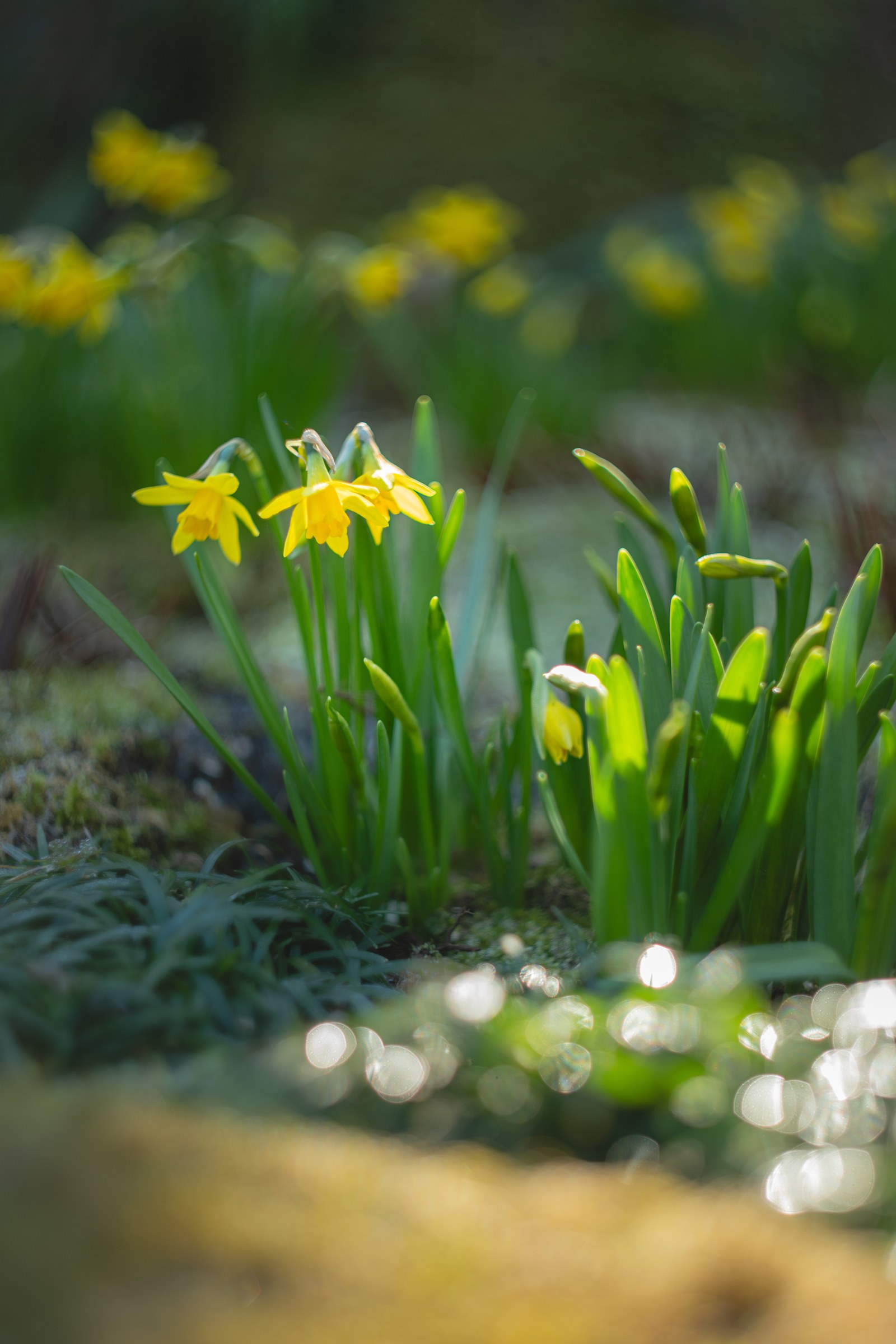
In Daffodils at Ueno Toshogu, the background highlights flatten into cat's-eye shapes as they approach the edges of the frame. That is the swirl, in its raw form. Kyonan Daffodil Festival picks a single bloom through dead winter grass; foreground and background both haze over, and only that one standing flower remains.
Three frames that melt
Wide open at F2 — the painterly side of the very same lens.
Examples 3 ― White blossom, and the night
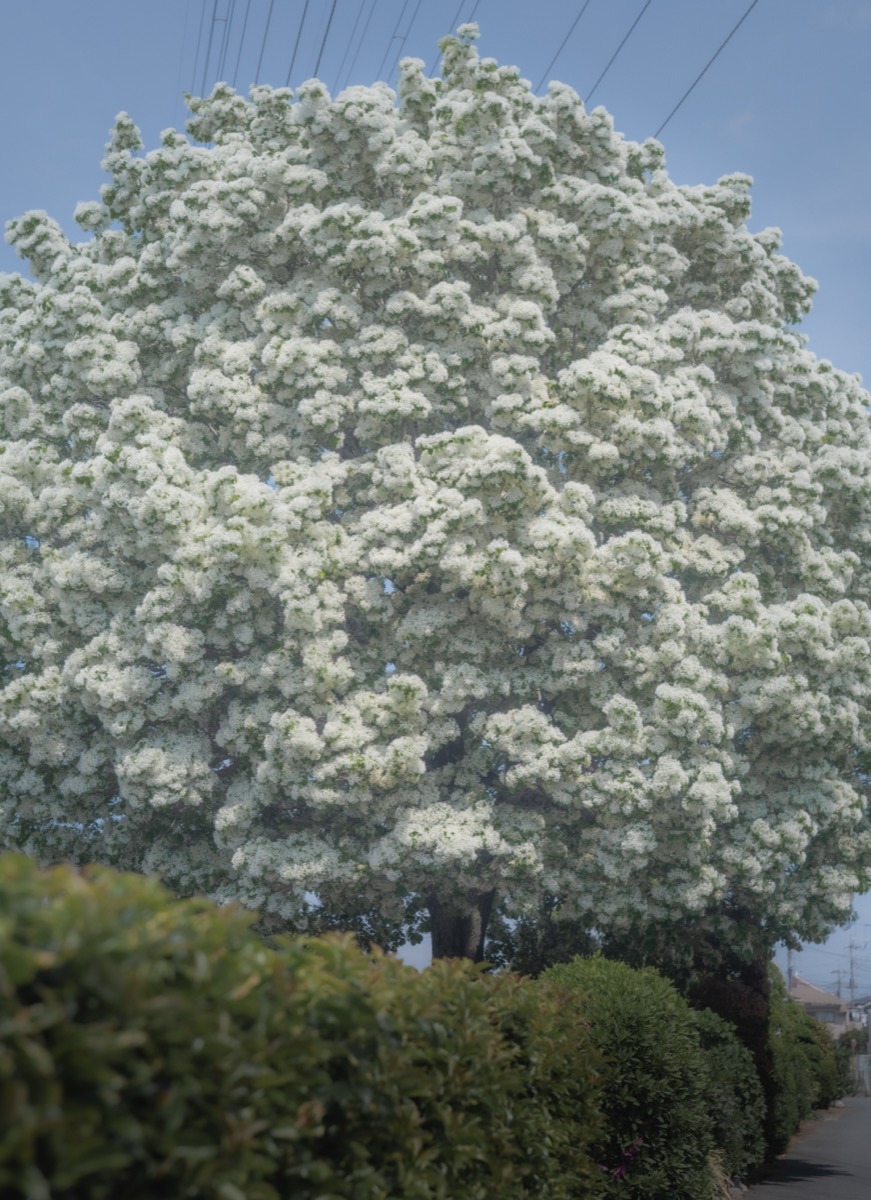
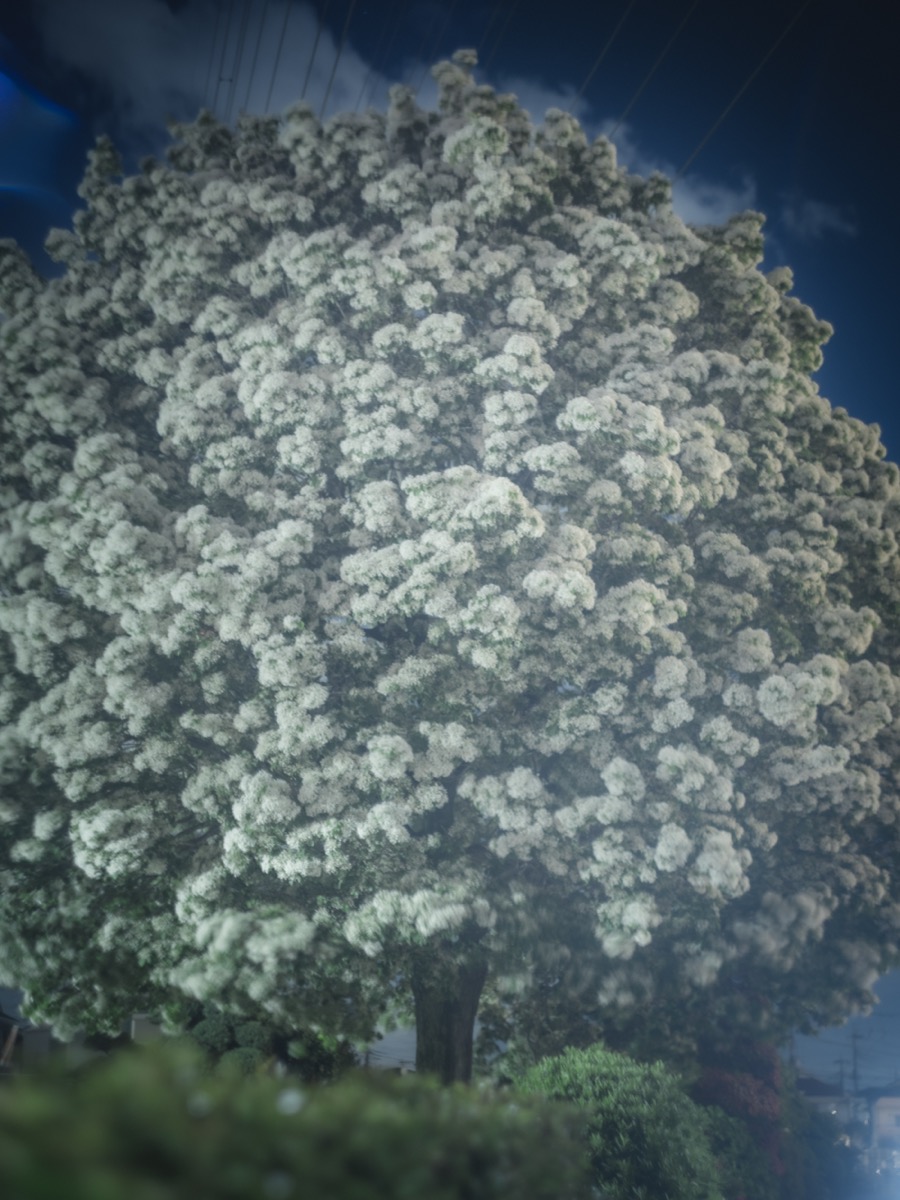
Nanjamonja in Niiza, Saitama is the photograph more people have seen than any other of mine. A mass of pure white blossom can render harshly on a modern lens; here the white blooms outward just slightly, and takes on the texture of snow. Photographed at night, Nanjamonja Night lets that same white float against a deep blue sky.
Fireworks may sound like an odd use for this lens, but they are shot on it too. In Shosanshakudama over Nagaoka, golden rays fill every corner of the frame. In Crimson Night, a white burst opens inside crimson and orange smoke, with the shell's own climbing trail left below it as two thin lines. Point it straight into a violent light source and it does not fall apart — the bloom actually helps carry the texture of the smoke. I count that as the lens's doing.
White blossom and night sky — four frames
Day and night, flowers and fireworks. All from the same single lens.
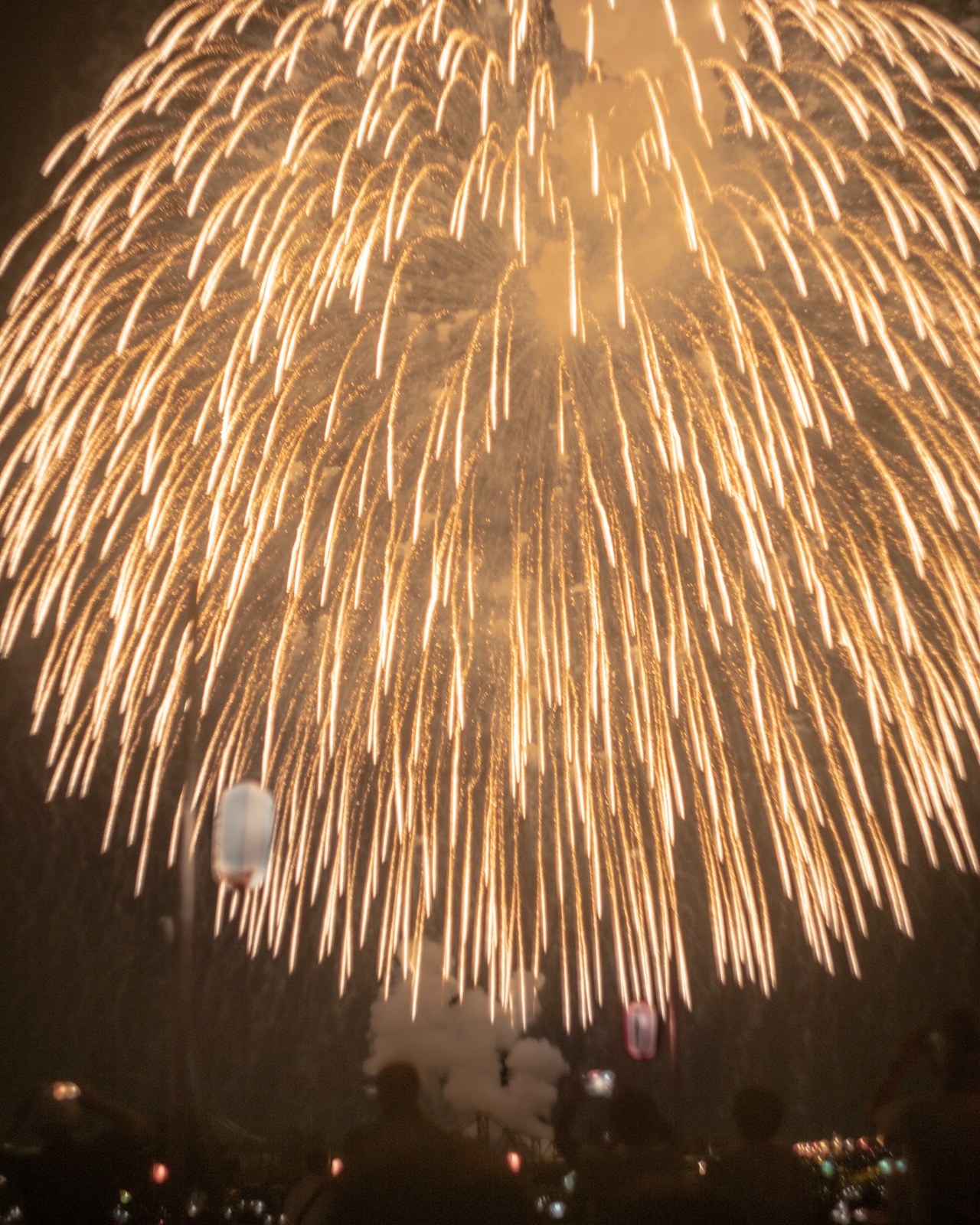
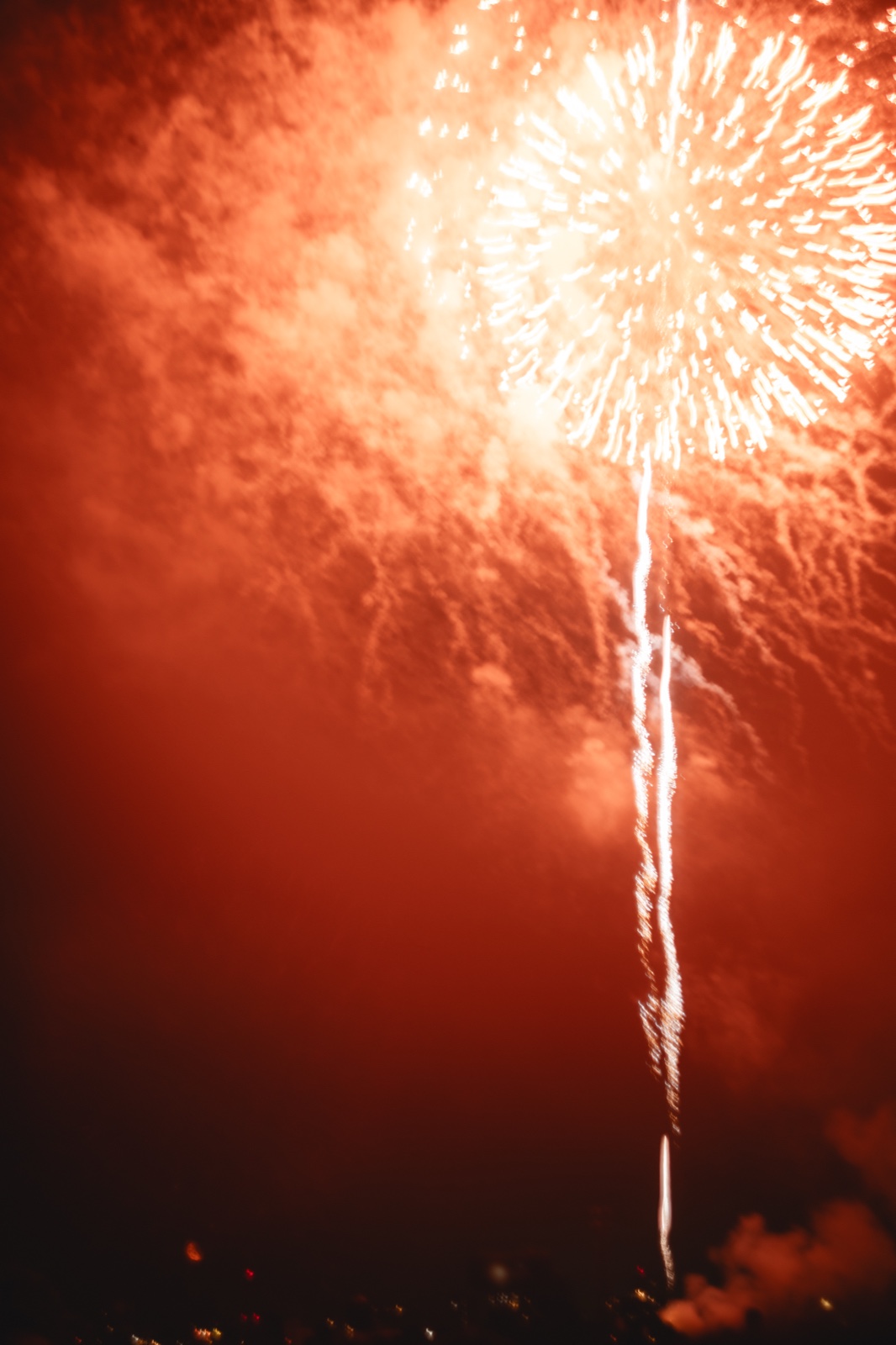
For the fireworks themselves — dates, access and how to shoot them — see the Nagaoka Fireworks Festival guide and How to Photograph Fireworks. For how this lens’s bloom differs from a soft filter, see Two Roads to a Dreamy Look.
How to actually get the swirl
The swirl does not appear on demand every time. Knowing the mechanism raises your odds considerably.
The main cause is mechanical vignetting at the edges of the image circle. The further from centre, the more the light cone is clipped by the barrel, so a highlight that should be a circle is squashed into a cat's eye. Those ellipses tilt around the centre of the frame, and the background reads as if it were rotating. That is the swirl.
You will notice that few of my prints put the swirl front and centre. Learning to produce it on demand, and then choosing not to — that feels like the right distance to keep from a party trick.
Buying one
There is no new HELIOS-44-2. Every one is secondhand, and every one is in a different state. That is exactly why I chose a copy explicitly described as fully overhauled.
HELIOS-44-2 58mm f/2, M42 mount — serviced and overhauled
This is the listing I bought from. It arrives stripped, cleaned and reassembled, and the copy I received was in good condition — a genuinely satisfying lens to shoot with. Secondhand old glass is a lottery, so a seller who services the lens before shipping it makes a real difference.
Note: this is a single secondhand item on Amazon Japan, so it can go out of stock.
Before you buy another modern lens
Part of why I keep recommending this lens is simply what it costs. A current autofocus prime, even in the most affordable class, is a multiple of a clean Helios; a fast modern prime can be ten times as much or more. A Helios in ordinary used condition sits at the low end of the secondhand market, and a properly serviced copy still comes in at a fraction of one new lens. Prices move with condition and with the market, so check the actual listings rather than trusting a number in an article.
You do need an M42 adapter once. But that is not a Helios-only expense. M42 is a shared standard, with an enormous number of Soviet, Japanese and German lenses behind it, so one adapter carries over to whatever old glass catches your eye next. Mine — a SHOTEN M42-NZ — simply lives on the Z f while I swap lenses through it.
What you give up is real. There is no autofocus. The aperture turns under your own fingers. With no electronic contacts, neither the lens name nor the aperture is written into the file (six months later, wondering what a photograph was taken with, is quietly annoying).
Even so, I know of few cheaper ways to add a genuinely different way of seeing to your bag. Before adding another modern lens, trying one that renders nothing like the others is about as light a step as photography offers. It is secondhand glass, though, so copies vary — which is why I look at the following before buying.
What I look at in a used copy
Whether it has been serviced. These are machines around half a century old. The grease stiffens, focus rings turn gritty, or go slack. A serviced copy has that first chore already done.
The aperture blades. Oil migrating onto the blades makes them stick and the aperture stops moving. Look for wording confirming the blades are dry and move smoothly.
Fungus, haze and separation. A little dust barely affects the image, but internal haze drops contrast even further. Even as someone who uses flare deliberately, I avoid haze. Bloom you chose and an image that is simply dull are two different things.
That it really is a 44-2. This lens has many siblings — 44M, 44-3 and others. The 44-2 uses a preset aperture, so it has two rings, which is the easiest visual tell. The 44M family has an automatic aperture pin and handles differently.
Putting it on a modern camera
M42 will not mount on any current camera directly; you place an adapter in between. I shoot a Nikon Z f, so mine is an M42-to-Nikon-Z adapter. M42 adapters exist for Sony E, Canon RF, Fujifilm X and every other current mount — pick the one that matches your camera.
SHOTEN M42-NZ Mount Adapter (M42 → Nikon Z)
The adapter I use. It puts an M42 old lens on the Z f, and with this one piece a modern camera can breathe old air. There are no electronic contacts, so focus and aperture are entirely manual — which also means there is nothing in it to break. It is listed in the old-lens section of the gear guide as well.
HAKUBA Metal Lens Hood (49mm, KMH-49)
The HELIOS-44-2 takes 49mm filters, so this screw-in metal hood fits straight on. It may sound contradictory after everything above about flare being a tool — but the point is being the one who decides whether it appears. Fit the hood and you cut the stray light; take it off and you take all of it. That it looks right on an old lens is, honestly, part of the appeal.
As an Amazon Associate, Ikebanadoctor earns from qualifying purchases. If you buy through these links, a small part of the sale helps support our work — at no extra cost to you. We only feature tools we genuinely use and can wholeheartedly recommend. These links point to Amazon Japan, where these items are sold.
There is something dear about a rendering that isn't perfect
A fifty-year-old Soviet lens that costs less than dinner for two. No autofocus, no electronic aperture. Weak against backlight, smeared at the edges, low in contrast. On a spec sheet there is not one reason to choose it.
And yet ten of the photographs I sell as prints were made with it. The goal was never to render beautifully; it was to keep how the light looked to me, standing there. Flare, ghosting, bloom — those are the tools for that. If something still feels missing from what your camera gives you, try this one lens. I think you will find the idea of a "correct" photograph loosens by a notch.
The developing approach behind the photographs in this article is gathered into 30 presets for Lightroom / Camera Raw ($15.00 — a ZIP download straight after purchase).
View the presets →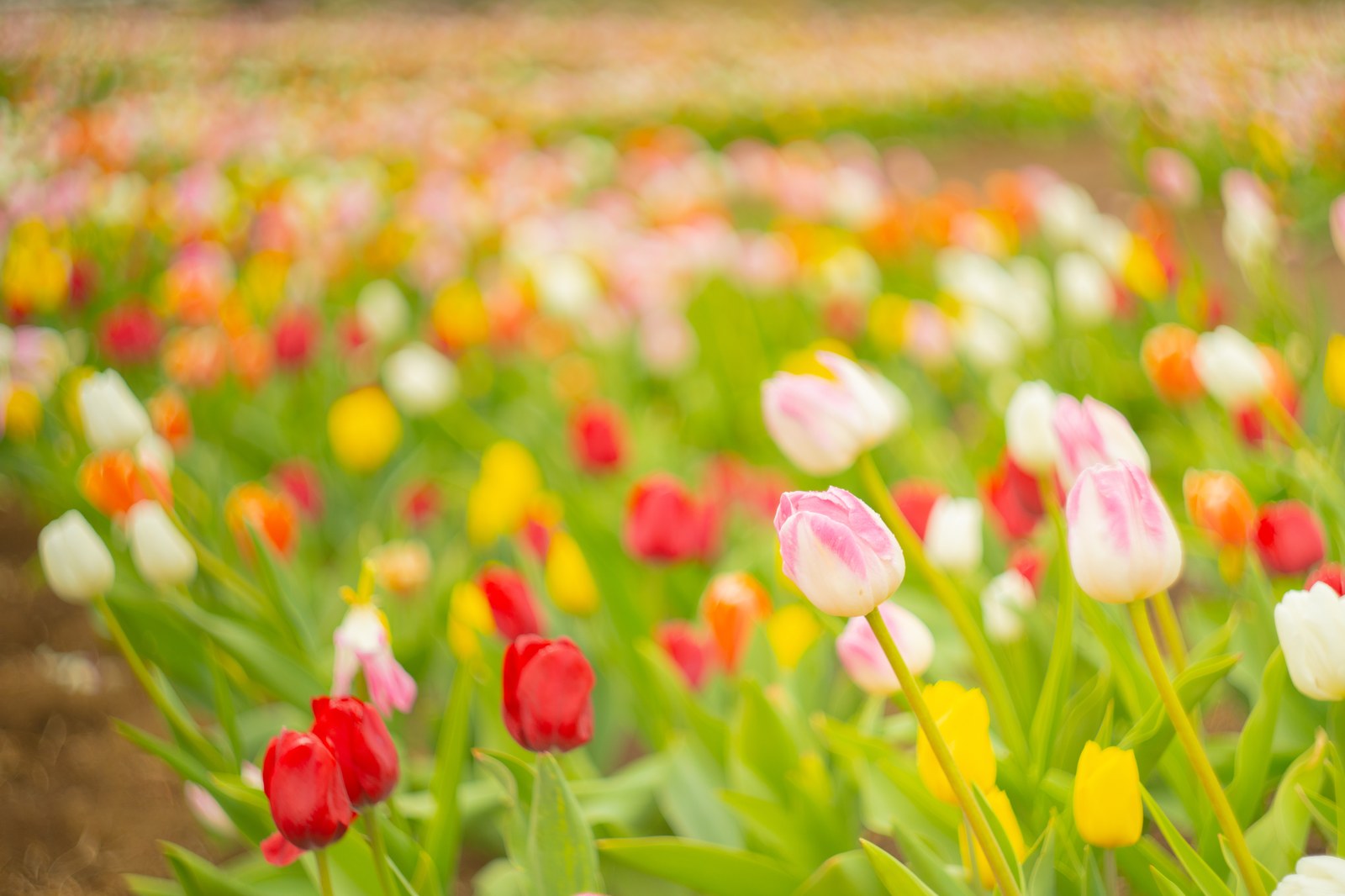
All ten photographs in this article are real prints we ship worldwide, made on FUJICOLOR professional silver-halide paper. The rest of the kit is listed in the gear guide.
🖼️ Choosing a frame (with inner and outer dimensions)
💾 A digital download is also available ($7.00 each). Bundles cost less: 3 for $17.84, 5 for $26.23 ($5.25 each) — mix any photographs you like.
See the 14 prints shot on this lens →