
PHOTO SPOT GUIDE
Sunrise over the Atami Cherry — The First Blossom of Spring
In Atami, Shizuoka, there is a flower that begins spring early — while most cherry trees still sleep as tight buds in the depth of winter. Along the promenade beside the Itokawa river bloom the atami-zakura, deep-pink early cherries said to be the first to flower anywhere in Japan. On a cold January morning, these blossoms drank in the light of the rising sun and slowly turned a warm, living colour.
Blooming Early, While Winter Still Sleeps
Just as the sun rose from the sea and drew a thin golden path across the water, the atami cherries lined along the Itokawa lit up all at once. In the heart of winter, when the surrounding trees still stood bare, these cherries alone had opened their deep-pink blossoms in full. That contrast loosened something in my chest as I watched. Even in the cold air, spring had already arrived this far. Hunching against the chill and looking up, I saw each flower as a small, glowing lantern. That morning, the atami cherry quietly proved that calling it Japan's earliest cherry is no exaggeration at all.
The Single Moment the Light Reaches the Flowers
I made this frame in the few short minutes when the dawn light reached right into the petals. Once the sun climbs higher, the pink becomes merely a bright colour; but in the low light of early morning, the flowers seem to glow from within. I am grateful that this photograph went on to receive a prize in a competition. Yet what I remember is not the award itself, but the quiet hour spent setting up a tripod with a body tired from a night shift, my breath white in the air, waiting for the right instant to release the shutter. The emergency room is a place that races against the second; that morning, all I had to do was wait for the light to fill. That stillness was the truest reward.
On a midwinter morning, a single grain of spring is lit.
The earliest cherry-light in all of Japan.
When to go — atami cherries and the Itokawa festival
The atami cherry is a blossom you can enjoy for a long while.
The atami cherry usually reaches its peak from late January to early February, according to the City of Atami. Its great distinction is that it blooms in deep winter, far ahead of the familiar somei-yoshino. Because each branch carries two tiers of buds — some opening early and some late — the flowers usually last for more than a month. The timing can move a good deal: the city's bloom survey found the trees almost in full bloom on 20 January in 2026, but not in full bloom until 17 February in 2025. There are 58 atami cherry trees along the Itokawa promenade, and the Atami Cherry Itokawa Festival is held here. It is next scheduled for 9 January to 7 February 2027 (Atami City Tourism Association). The 16th festival ran from 10 January to 8 February 2026, with the trees lit up every evening from 16:30 to 23:00, showing a lustrous face quite different from daytime. Details of the next festival will appear in the official listing once they are decided. Bloom timing shifts with the weather, so please check the latest conditions before you set out.
Getting there: Atami Station to the Itokawa promenade
The Itokawa promenade is within walking distance of JR Atami Station. Pass through the shopping street in front of the station, head down the slope, and you will arrive in about 20 minutes on foot. If the slope is a concern, take a bus via Omiya-no-Matsu from the station (bound for Atami Port or Momijigaoka, among others) for about 10 minutes and get off at the Ginza stop. The promenade is open for anyone to walk at any time. There is no car park, so if you drive, use one of the paid car parks nearby. During the 2026 festival, the stretch from Onari Bridge to Sakura Bridge was closed to vehicles from 9:30 to 15:30 on weekends and holidays. If you are after the sunrise, arrive while it is still dark, choose your spot, and wait for the sky to pale.
How to photograph atami cherries in low morning light
Aim for the low-light window just after the sun lifts above the horizon. Stand so the light comes from behind the flowers, or strikes them at an angle, and the petals will turn translucent and seem to glow. The atami cherry is a very saturated colour, so keep the exposure slightly down to stop the pink from blowing out to white. Placing the river surface or the promenade railing in the foreground adds depth. On a windless morning, try gathering the reflection of the blossoms on the water as well. The light changes from moment to moment, so it helps to decide your composition in advance, so as not to miss the most beautiful few minutes.
While you're in the area
The plum festival at Atami Plum Garden overlaps neatly with the atami cherry season: it is next scheduled for 9 January to 7 March 2027. The grounds hold 469 plum trees of 60 varieties, some over a century old, which flower in turn from early to late, and a footbath opens during the festival so you can warm your chilled body and linger a while. To tour early cherries and plums in a single day is a luxury particular to Atami in deep winter. Soak well in a hot spring, taste the gifts of the sea, and you can savour this early spring to your heart's content. After the shoot, do take time to wander the streets of Atami.
Questions photographers ask
When do the atami cherries reach their peak?
The City of Atami says the atami cherries on the Itokawa promenade usually peak from late January to early February. The timing varies: the city's bloom survey found them almost in full bloom on 20 January in 2026, and in full bloom on 17 February in 2025.
Source: City of Atami: Itokawa promenade atami cherries (checked 1 November 2026)
When is the Atami Cherry Itokawa Festival?
The Atami City Tourism Association lists the next festival as 9 January to 7 February 2027. The 16th festival ran from 10 January to 8 February 2026.
Source: Atami News: 16th Atami Cherry Itokawa Festival (checked 1 November 2026)
How late are the cherries lit up during the festival?
At the 16th festival in 2026 they were lit up every evening from 16:30 to 23:00. Details of the next festival will appear in the official listing once they are decided.
Source: Atami News: 16th Atami Cherry Itokawa Festival (checked 1 November 2026)
How do I get from Atami Station to the Itokawa promenade?
It is about 20 minutes on foot from JR Atami Station. By bus, take a service via Omiya-no-Matsu (bound for Atami Port or Momijigaoka, among others) for about 10 minutes and get off at Ginza. There is no car park, so drivers use paid car parks nearby.
Source: Atami News: 16th Atami Cherry Itokawa Festival (checked 1 November 2026)
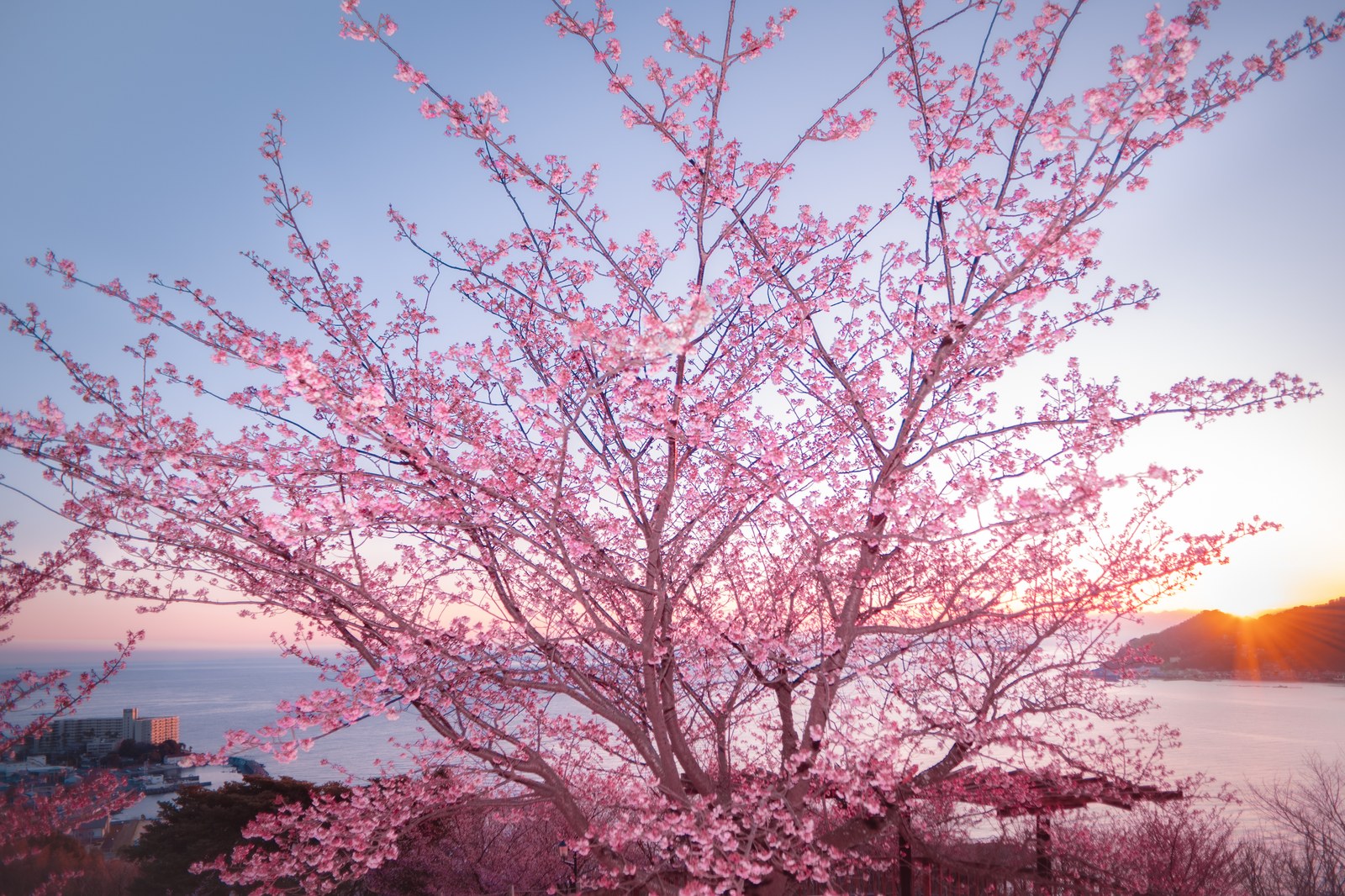
This frame of the atami cherry glowing at sunrise is delivered as a true silver-halide print on FUJICOLOR's finest photographic paper. We ship worldwide.
💾 A digital download is also available ($4.00 each). Bundles cost less: 3 for $10.20, 5 for $15.00 ($3.00 each) — mix any photographs you like.
View the print →