
HOW-TO
How to Photograph Winter Landscapes — Winter Flowers, Sunsets and Early Cherries
Winter is short on flowers and short on daylight, and yet some things can only be photographed now: peonies under straw shelters, daffodils on a seaside hillside, tulips coaxed into bloom in midwinter, sunsets and Mt. Fuji on clear days, and the early cherries that begin in late January. This guide goes through each subject in turn, with the camera settings of the prints used as examples.
Winter light — a low sun and early evenings
In winter the sun stays low all day. Even around midday the light comes in at a slant and shadows run long, so the folds of a petal and the small ripples on water show clearly. The kind of angled light that summer only gives you in the early morning and late afternoon lasts well into the middle of the day.
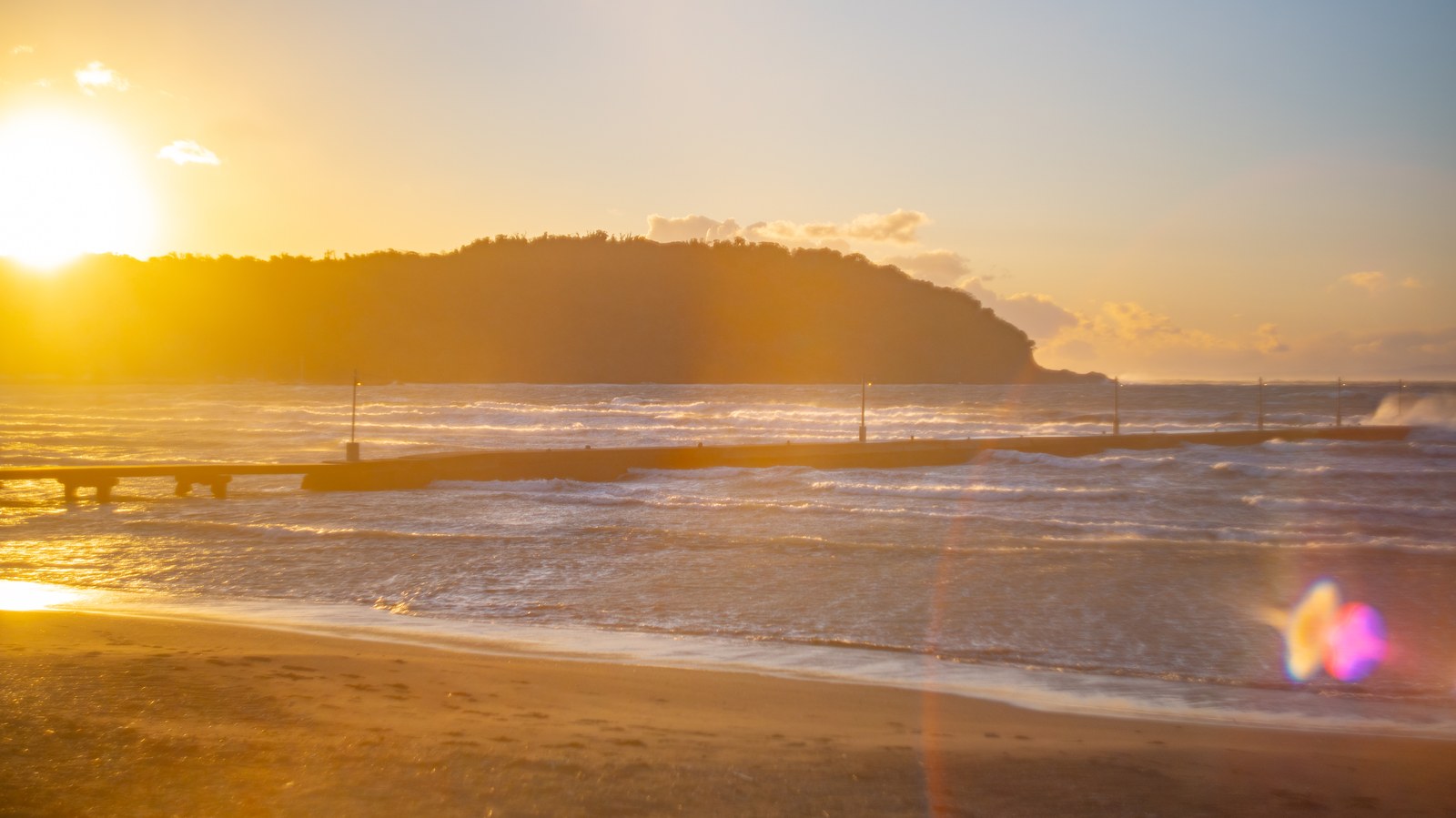
The trade-off is that evening comes early. Every sunset example in this guide was taken between four and a little after five in the afternoon: Tokyo Tower from Marunouchi at 16:16 on 12 December, Haraoka Pier at 16:21 on 11 January, Cape Futtsu at 16:40 on 28 December, and Inage Seaside Park at 17:11 on 15 January. On a sunset day, arrive while it is still light and settle your position and framing first, so you are ready when the colour is deepest.
Winter sunsets can also bring Mt. Fuji into the frame. The Futtsu tourism association says that from the observation tower on Cape Futtsu, Fuji can be seen clearly when the winter air is clear. It is not visible every day, so check before you set out whether the air is clear enough to see far.
Spots shot with this technique
The same gear, the same settings — these guides were actually shot this way.
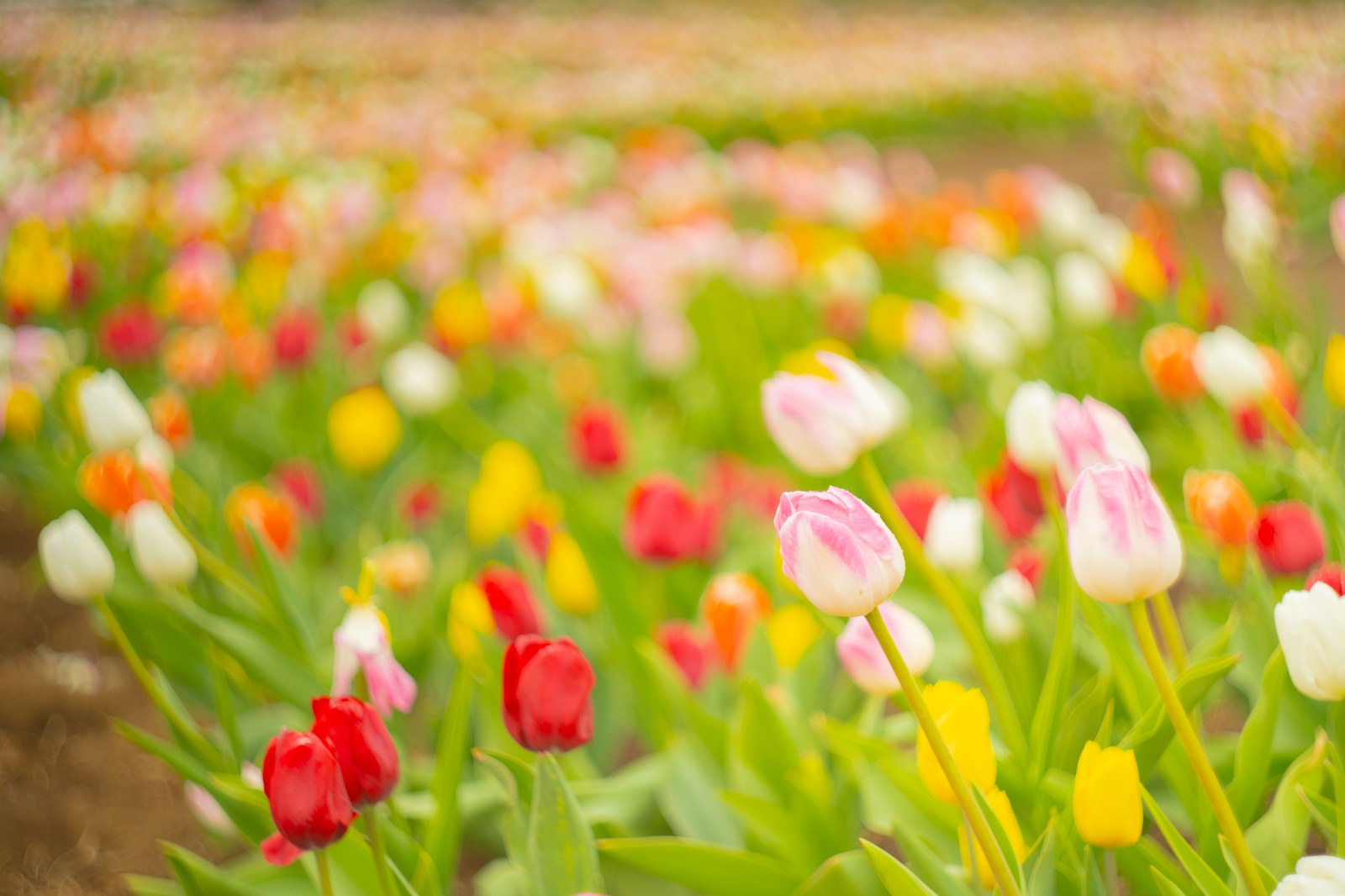 Ice Tulips ― A Spring of Ice in Midwinter📍 Funabashi & UenoRead →
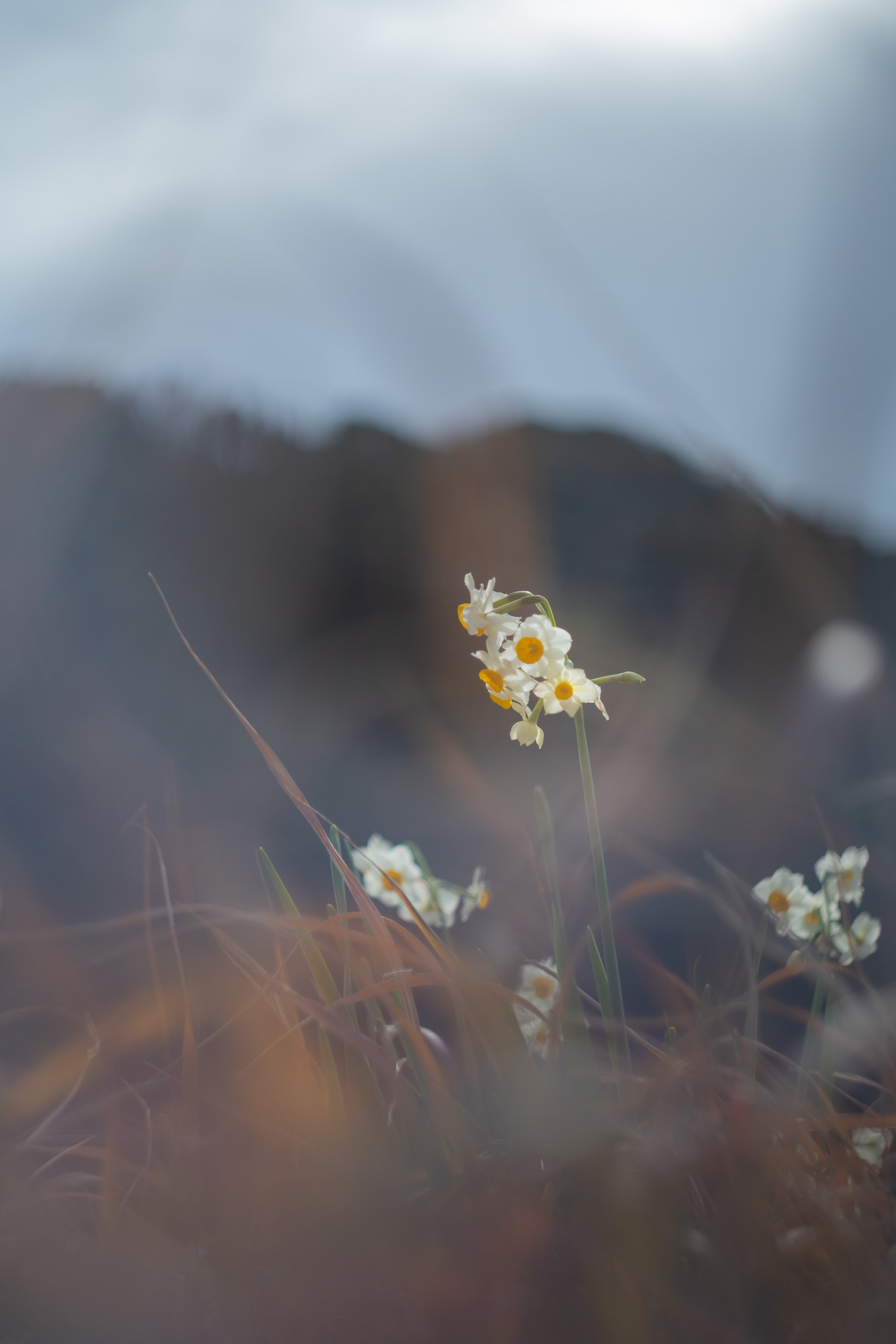 The Daffodils of Kyonan — White Lamps in the Heart of Winter📍 Kyonan, ChibaRead →
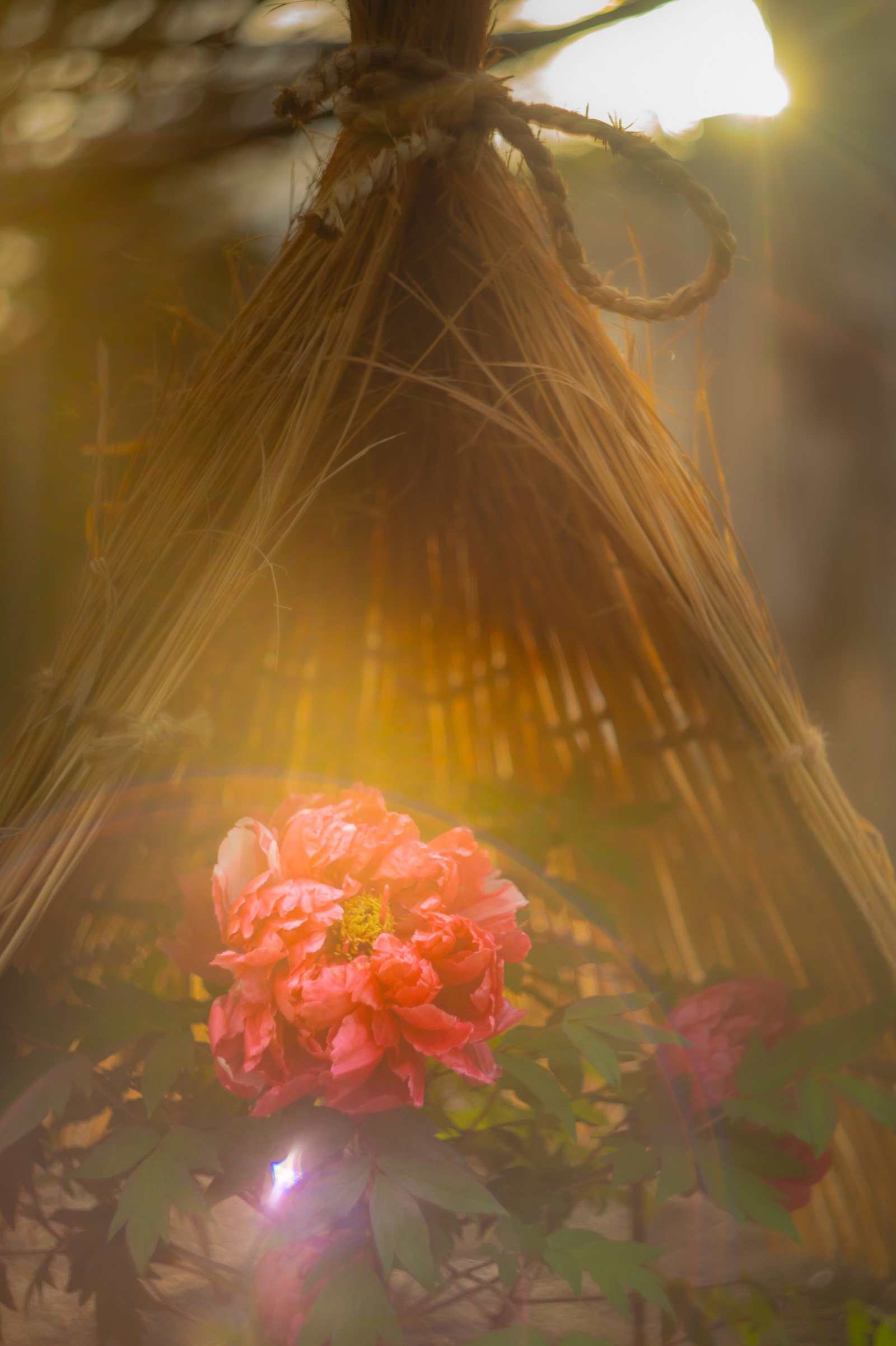 Ueno Toshogu Peony Garden ― Four Seasons of Flowers Beside a City Shrine📍 Ueno, TokyoRead →
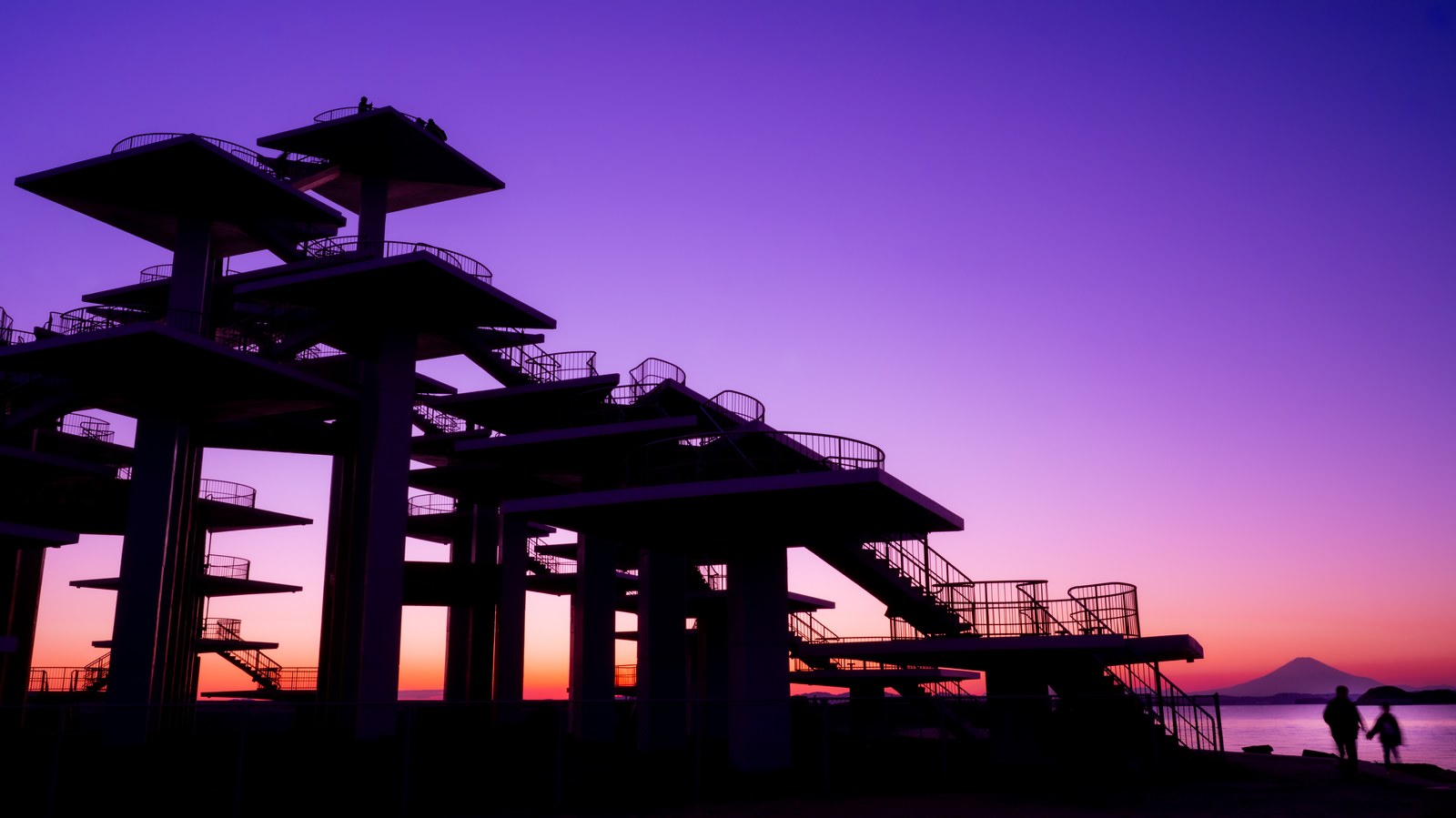 The Tower at Cape Futtsu — The Shape of a Pine, and a Winter Evening Sky📍 Cape Futtsu, ChibaRead →
 Inage Seaside Park — Wisteria Twilight, and a Boardwalk Coming Alight📍 Inage Seaside Park, Mihama Ward, ChibaRead →
 Sunrise over the Atami Cherry — The First Blossom of Spring📍 Atami, ShizuokaRead →
More on technique and gear
The same tools, the same light. Read on and the craft joins up.
Winter flowers
Winter peonies — include the straw
At the Ueno Toshogu Peony Garden, the winter peonies bloom inside straw shelters called warabotchi that keep the frost off. Rather than cropping in on the flower alone, a close frame that holds both the texture of the straw and the petals says more about the season. A softly blurred shrine building or stone lantern behind it tells the viewer this is a shrine in the middle of Tokyo.
In the example, Winter Peony Under Straw Shelter, light breaking through gaps in the straw turned into rays, and a small iridescent bead fell just below the flower. When light through the straw enters the frame, an old lens like this can produce rays and ghosts. If you don’t want them, shade the lens with your hand or a hood.
Daffodils — keep the whites from burning out
Left to the camera’s metering, white flowers come out too bright and the lines and overlaps in the petals disappear. Dial in some negative exposure compensation and stop where the histogram no longer piles up against the right edge; the gradations in the white come back. Daffodils burn out most easily in bright sun, so an overcast or hazy day is easier to work with.
In a large planting, pick one flower in front and let the mass behind it blur, rather than trying to take in the whole slope. The example, Kyonan Daffodil Festival, picks a single bloom through dead grass, with everything before and behind it hazed over. Shooting near wide open on a sunny day pushes the shutter speed very high — this one was 1/4000 s. If you are about to run past your camera’s fastest speed, drop the ISO to its lowest or cut the light with an ND filter.
Ice tulips — get low and let the colours melt
Photographed standing up, a tulip bed mostly shows soil. Crouch until the camera is level with the flowers and the petals overlap into bands of colour, with winter sky or trees behind. In the morning there can still be frost on the flowers and the ground, which makes it plain that they are blooming in midwinter.
The example, Ice Tulip Field, was made with the HELIOS-44-2 wide open at F2, melting both foreground and background into bands of colour. The zone of focus is very thin, so once you have focused on one point — the edge of a petal, say — compose by the placement of colour alone.
Winter sunsets and Mt. Fuji
Silhouettes — the tower on Cape Futtsu
Against a sunset, the sky keeps its colour best when whatever stands on the ground goes black. Meter from the brightest part of the sky and be bold about going dark. The example, Futtsu Cape Twilight, was stopped down to f/22, holding the thin lines of the tower’s stairs and railings and Mt. Fuji across Tokyo Bay. Fine detail softens slightly the further you stop down, so when you don’t need hard edges, start around f/8 to f/11.
The shutter speed here was 1/2 s — long enough to shake in the hand, so around sunset check in advance whether you can use a tripod or a solid surface. To put Fuji in the frame, walk sideways until the tower and the mountain no longer overlap. A few metres changes how the mountain stands.
Putting the sun in the frame — Haraoka Pier
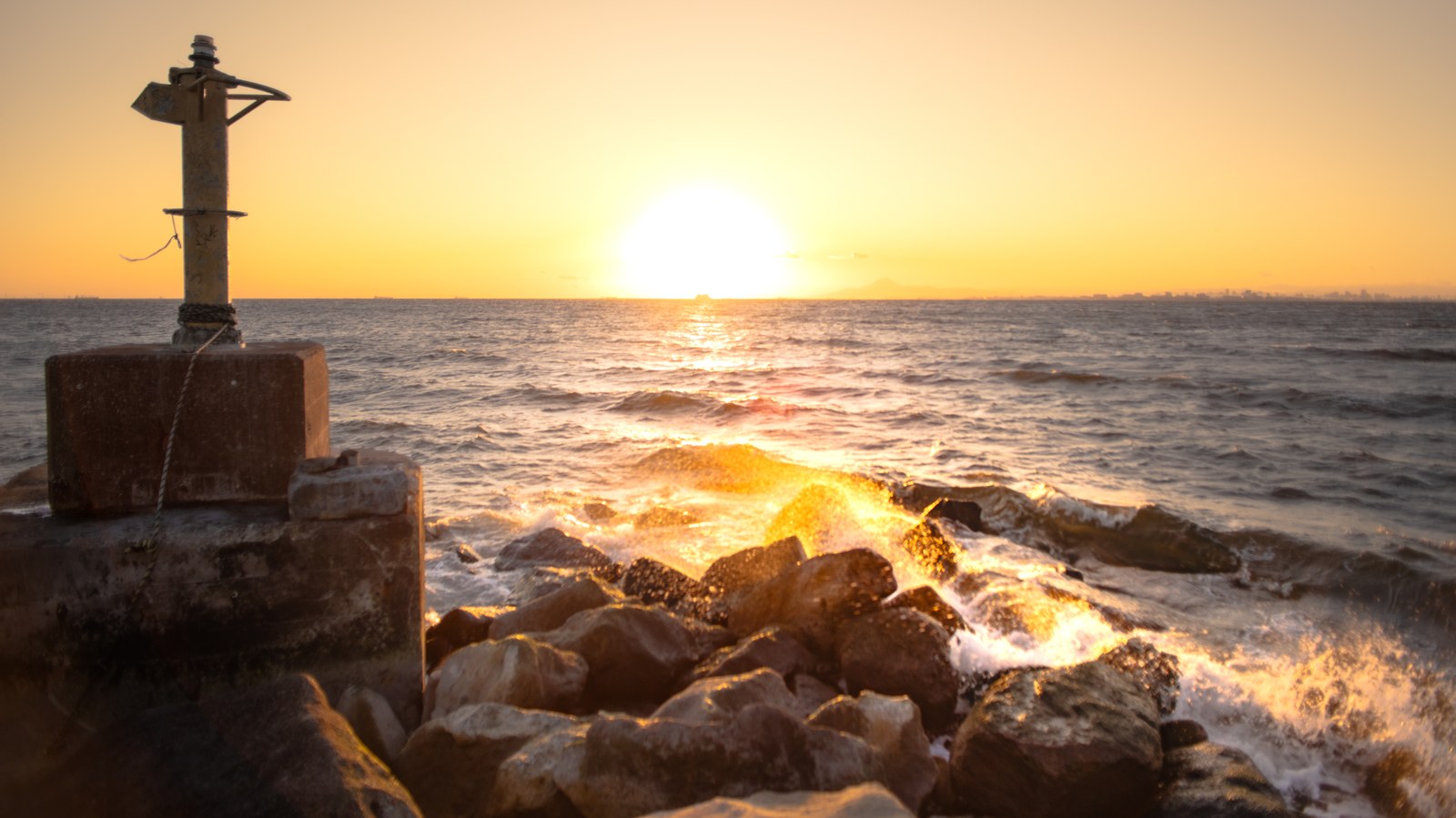
Including the setting sun widens the gap between sky and sea even further. The example, Haraoka Pier at Sunset, was 1/8000 s at ISO100. With the sun in the frame everything else goes dark and only the brightest parts remain; here the edge of the surf is rimmed in gold. The film of light across the frame and the round ghosts come from meeting the backlight head on with an old lens that hides no flare.
From the same spot, leaving the sun out and photographing only the colour of the sky narrows that gap. Remember that whether the sun is in or out changes how you set the exposure entirely, and you won’t hesitate on location.
Smoothing the sea with long exposures — Inage Seaside Park
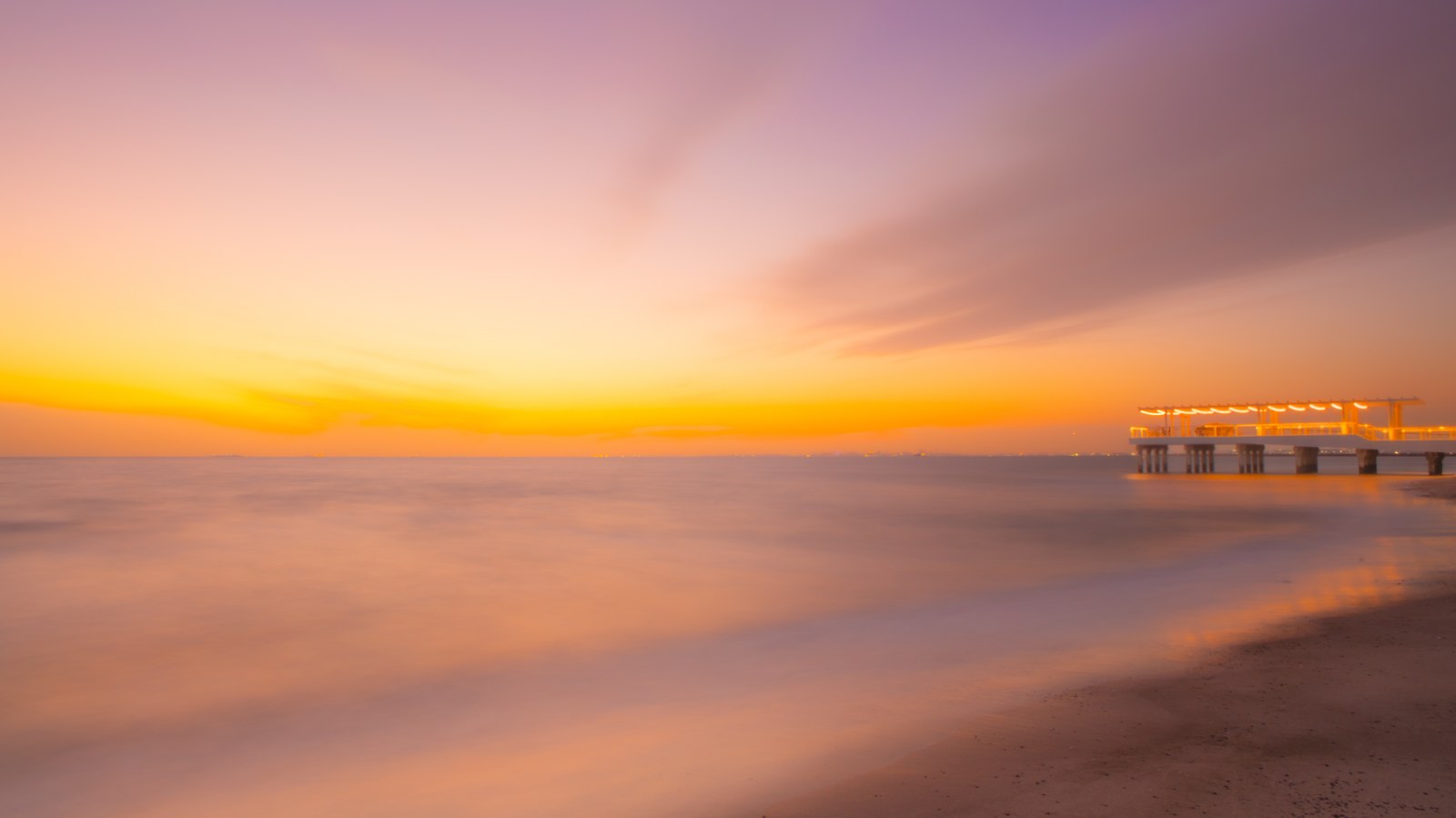
After sunset, the sky reaches its deepest colour. With less light, you can use long exposures to smooth the water. The example, Inage Seaside Park Twilight, was 30 s at ISO100: the waves are smoothed to silk, and the amber of the lit boardwalk and the violet of the sky melt into the water.
A 30-second exposure needs a tripod, and the shutter released with a remote or the self-timer. For white balance, set it by the violet of the sky and stop where the boardwalk lights still look a little warm. To get long exposures while it is still bright, use an ND filter. The basics of long exposures and tripods are in Tripods and Night Photography.
Pulling it closer with a telephoto — Tokyo Tower from Marunouchi
In the city, a telephoto compresses the buildings in front and the tower behind into a dense frame, the tower standing in a canyon of offices. The example, Tokyo Tower at Sunset, was 70mm · f/11 · 1/100 s · ISO100. The sky was still bright, and 1/100 s is easy to hold by hand. As the light fades, the gap between sky and buildings widens.
A graduated ND filter narrows the brightness gap of a sunset sky at the moment of shooting. Where it helps is covered in the Marumi M100 Square Filter System review.
Early cherries and plum blossoms
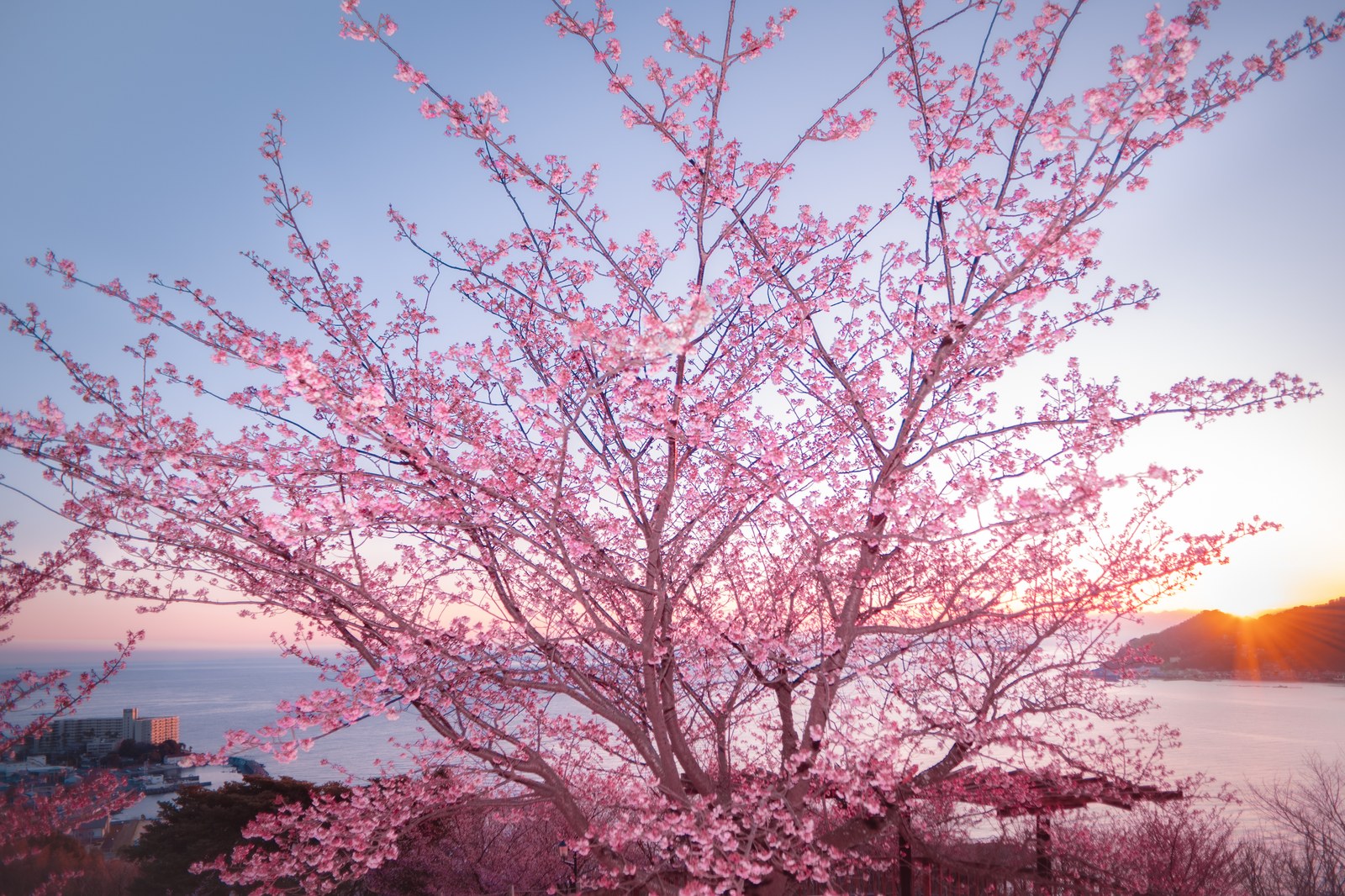
The Atami cherry usually peaks from late January to early February (Atami City), and the Kawazu cherries and plum blossoms follow through February and March. Unlike the spring cherries, these bloom under winter light: early sunrises and sunsets, and slanting light that lasts.
The example Atami Cherry Sunrise was taken at 6:53 on 29 January, in the short time when the sunrise light turns the blossoms pink (1/160 s · ISO100). Morning colour changes within minutes, so arrive and wait before the sky starts to brighten.
The same Kawazu cherry can look completely different depending on the settings. In Kawazu, Kawazu Sakura in Motion used a slow f/22 at 1/6 s to let the blossoms swaying in the wind flow across the frame. At Iwai Weir in Asahi, Iwai Weir Kawazu Cherry was taken with a fast shutter, f/2.8 at 1/500 s. On a windy day, decide first whether to freeze or to let it flow, and the shutter speed follows.
Plum trees have far busier branches than cherries, so clearing the background is the main task. Kairakuen Plum Blossoms in Mito, at f/10, gathers white, pale pink and deep crimson on one old tree against blue sky and green pines.
Six winter prints
Six of the examples in this guide, delivered as silver-halide prints on FUJICOLOR’s finest photographic paper.
Winter Peony Under Straw ShelterTokyo — Ueno ToshoguView print →
Kyonan Daffodil FestivalChiba — KyonanView print →
Ice Tulip FieldChiba — FunabashiView print →
Futtsu Cape TwilightChiba — FuttsuView print →
Inage Seaside Park TwilightChiba — Chiba CityView print →
Atami Cherry SunriseShizuoka — AtamiView print →
Cold weather and your gear
Batteries lose usable capacity as they get colder. In the Z f user’s manual, Nikon advises using fully charged batteries in the cold and keeping a spare warm, swapping the two as needed; a battery that stops working in the cold may recover some charge once warmed. Carry the spare somewhere your body keeps warm, such as an inside jacket pocket.
Condensation forms when a cold camera goes straight into a warm room or car. The same manual says to seal the camera in a bag or plastic case before crossing a temperature boundary and take it out once it has adjusted. Make it a habit to put the camera in its bag before you walk indoors.
Hands and tripod. Cold fingers make for clumsy work on tripod leg locks and dials. Try at home whether you can work everything while wearing thin gloves. Capes and shorelines are windy in winter, so keep one hand free to steady the tripod.
Shorelines in the early morning or after sunset are colder than you expect, and it is easy not to notice while you are absorbed in shooting. Bring an extra layer, take care on icy paths and on dark ground after nightfall, and if you feel thoroughly chilled, don’t push on — calling it a day is part of the plan too. Preparing for pre-dawn shoots is also covered in Shooting Morning Mist and the Magic Hour.
Twelve winter locations
Built around the places where these examples were made, these guides cover winter locations within a day trip of Tokyo, in seasonal order. Check each guide for peak times, access and fees, or compare them side by side in Winter Photo Spots near Tokyo.
Questions photographers ask
What settings were used for the winter sunset examples?
From the camera's records: Futtsu Cape Twilight was taken at 16:40 on 28 December 2025 at 29.5mm, f/22, 1/2 s, ISO100. Inage Seaside Park Twilight was taken at 17:11 on 15 January 2026 at 30 s, ISO100 (the lens and aperture were not recorded).
(From the camera’s record of the photographs in this guide.)
What kind of day should I pick to get Mt. Fuji in a winter sunset?
A day with clear air. The Futtsu tourism association says that from the Meiji Centennial Observation Tower on Cape Futtsu, Mt. Fuji can be seen clearly when the winter air is clear. It is not visible every day, so check before you set out whether you can see a long way.
Source: Futtsu City Tourism Association, Meiji Centennial Observation Tower (in Japanese) (checked 4 November 2026)
Why do batteries run down faster in the cold?
Battery capacity drops at low temperatures. In the Z f manual, Nikon advises charging one battery before use and keeping another in a warm place, ready to swap as needed; once warmed, a cold battery may recover some of its charge.
Source: Nikon, Z f Online Manual: Caring for the Camera and Battery: Cautions (checked 4 November 2026)
How should I bring a cold camera into a warm room?
Moving a camera between cold and warm places can cause damaging condensation inside and outside it. Nikon advises placing the camera in a sealed bag or plastic case before crossing the temperature boundary, and taking it out once it has adjusted to the new temperature.
Source: Nikon, Z f Online Manual: Caring for the Camera and Battery: Cautions (checked 4 November 2026)
The developing approach behind the photographs in this article is gathered into 30 presets for Lightroom / Camera Raw ($15.00 — a ZIP download straight after purchase).
View the presets →
The tower standing black against the dusk, and Fuji beyond Tokyo Bay. Every example in this guide is available as a silver-halide print on FUJICOLOR’s finest photographic paper.
💾 A digital download is also available ($4.00 each). Bundles cost less: 3 for $10.20, 5 for $15.00 ($3.00 each) — mix any photographs you like.
🖼️ Choosing a frame (with inner and outer dimensions)
View the print →