
FEATURE
Flower Landscapes Within Reach of Tokyo ― City and Downtown by Day Trip
Anyone who thinks Tokyo has no flowers is simply looking in the wrong place. Night cherries mirrored on a moat, a lotus pond ringed by towers, a weeping cherry at the foot of skyscrapers, a flower field against the downtown Skytree ― within an easy train ride lie the finest scenes of every season. This is a walk through Tokyo's flower landscapes, camera in hand, in the gaps between shifts.
Spring ― cherry blossoms in the city
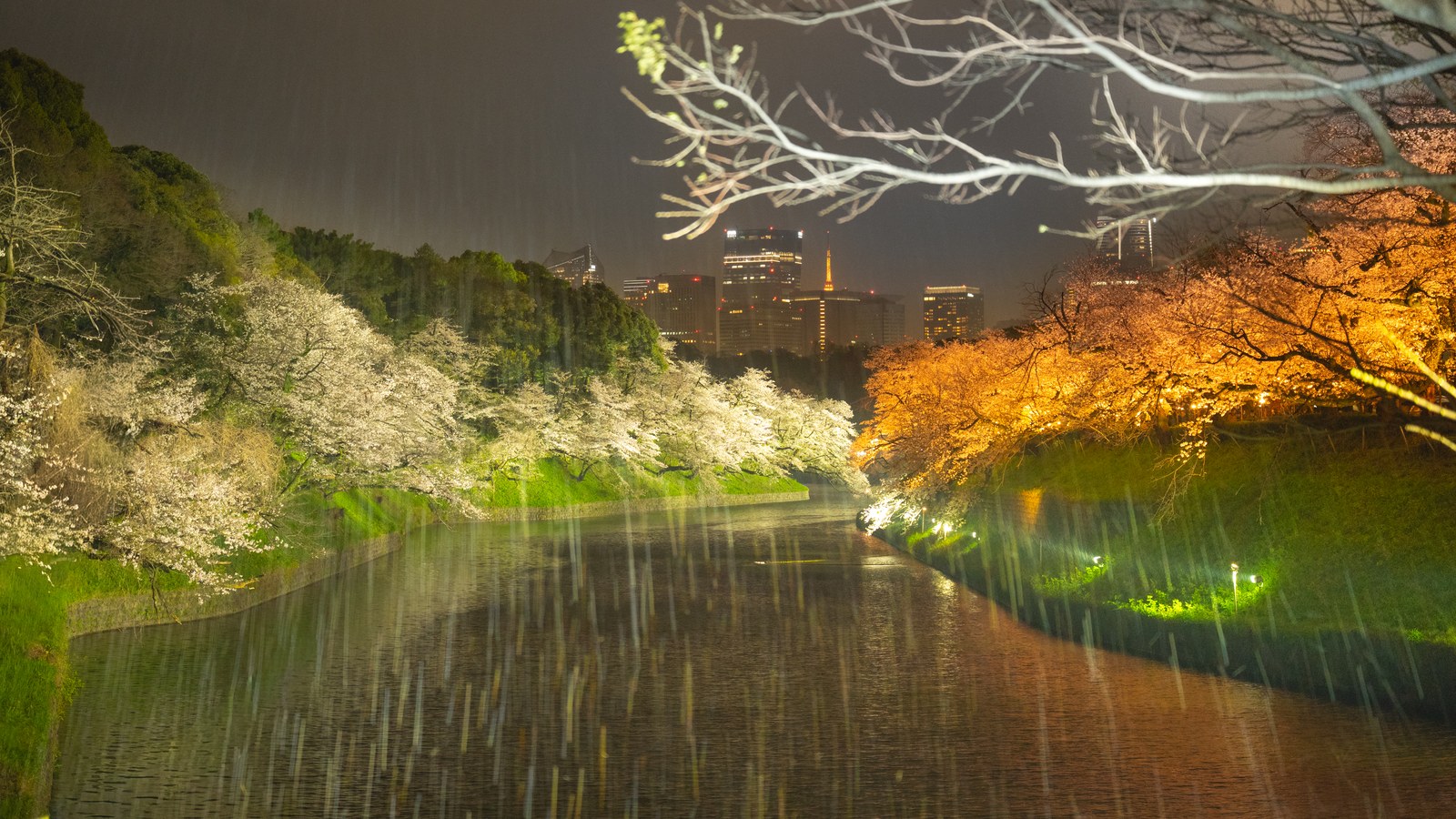
Tokyo's spring begins with the cherries. Night sakura mirrored on the moat at Chidorigafuchi, the weeping cherry of Rikugien garden in Bunkyo, the Edo-higan of Joenji at the foot of the Nishi-Shinjuku skyscrapers. In February you can catch Kawazu cherries against the Skytree at Oshiage and the Old Nakagawa, while at Showa Kinen Park in Tachikawa a pale-blue path of nemophila opens for spring.
A year of Tokyo flowers, at a glance
Tokyo's advantage is not scale but frequency: something is in flower nearly every week of the year, and almost all of it is within a short walk of a station. The table runs through the calendar from midwinter to late autumn, so you can read down it and find what is out on the week you are here. The last column says whether an official evening opening or light-up has been announced.
↔ The table scrolls sideways on a narrow screen.
| Spot | Flower | Peak | From the nearest station | Evening opening |
|---|---|---|---|---|
| Ueno Toshogu Peony Garden | Peony | Winter peony early Jan – late Feb / spring peony early Apr – early May | About 5 min on foot from the Park exit of JR Ueno Sta. | None announced |
| Ice tulips (Ueno Park & Funabashi Andersen Park) | Tulip | Roughly Dec – Feb | Ueno Park is a short walk from JR Ueno Sta. | None announced |
| Tobu Bridge, Oshiage | Kawazu cherry | Late Feb – mid Mar | A short walk from Tokyo Skytree Sta. or Oshiage Sta. | None announced |
| Kyu-Nakagawa, Hirai | Kawazu cherry | Late Feb – mid Mar | 13 min on foot from Hirai Sta. (JR Sobu Line) | None announced |
| Rikugien | Weeping cherry | Usually late Mar | About 7 min on foot from Komagome Sta. | Yes — evening viewing, charged separately |
| Joenji, Nishi-Shinjuku | Weeping Edo-higan cherry | Usually late Mar | About 1 min on foot from Nishi-Shinjuku Sta. | None announced |
| Chidorigafuchi | Yoshino & Oshima cherry | Late Mar – early Apr | About 5 min on foot from Kudanshita or Hanzomon Sta. | Yes — Chiyoda Sakura Festival, sunset to about 21:00 |
| Showa Kinen Park, Tachikawa | Nemophila | Mid – late Apr (into mid-May some years) | A few minutes on foot from Nishi-Tachikawa Sta. (Nishi-Tachikawa gate) | None announced |
| Hirai, Edogawa | Poppies | Around May (peak mid-month) | About 15 min on foot (900 m) from Hirai Sta. | None announced |
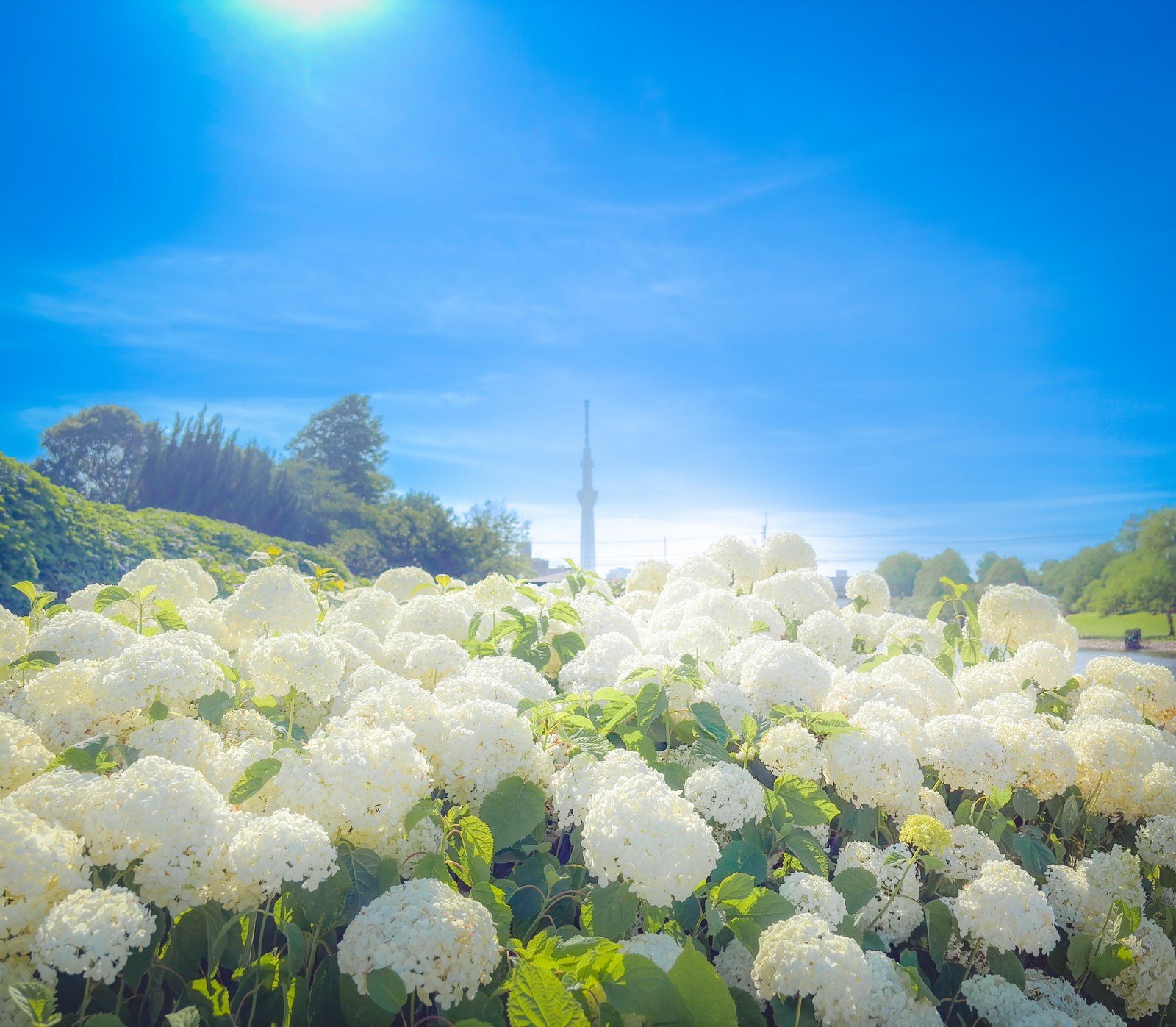
| Koto City | Annabelle hydrangea | Around June | Within Koto City — check the current information for the nearest station | None announced |
| Shinobazu Pond, Ueno | Lotus | Mid Jul – mid Aug (flowers open about 7–9 a.m.) | About 8 min on foot from the Shinobazu exit of JR Ueno Sta. | None announced |
| Showa Kinen Park, Tachikawa | Golden cosmos / autumn cosmos | Late Jul – Sep / around Oct | A few minutes on foot from Nishi-Tachikawa Sta. | None announced |
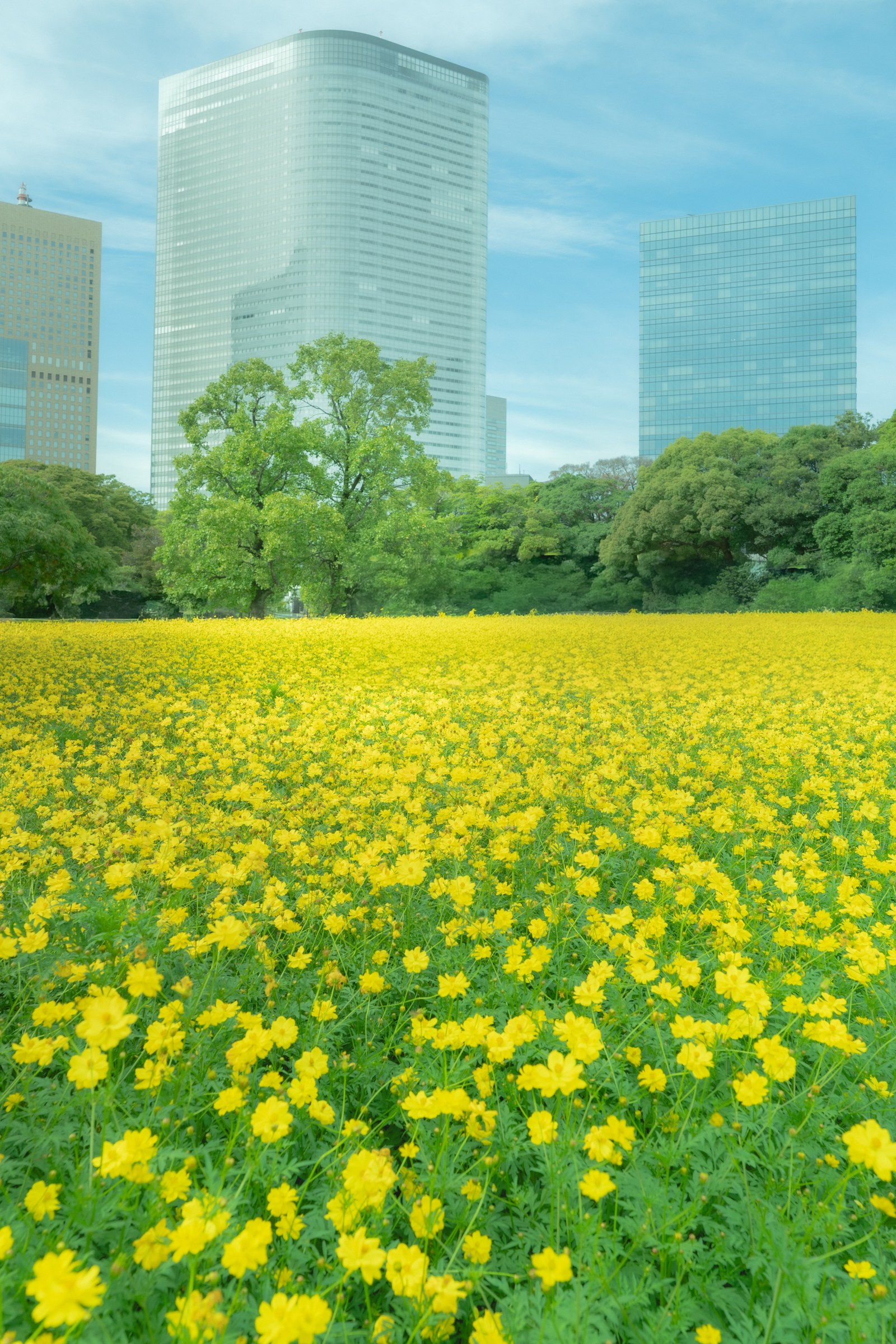
| Hama-rikyu Gardens | Yellow cosmos / autumn cosmos | Aug – Sep / around Oct | A short walk from Shiodome or Tsukijishijo Sta. (Toei Oedo Line); also reachable by water bus | Extended evening openings in autumn — see the tripod note below |
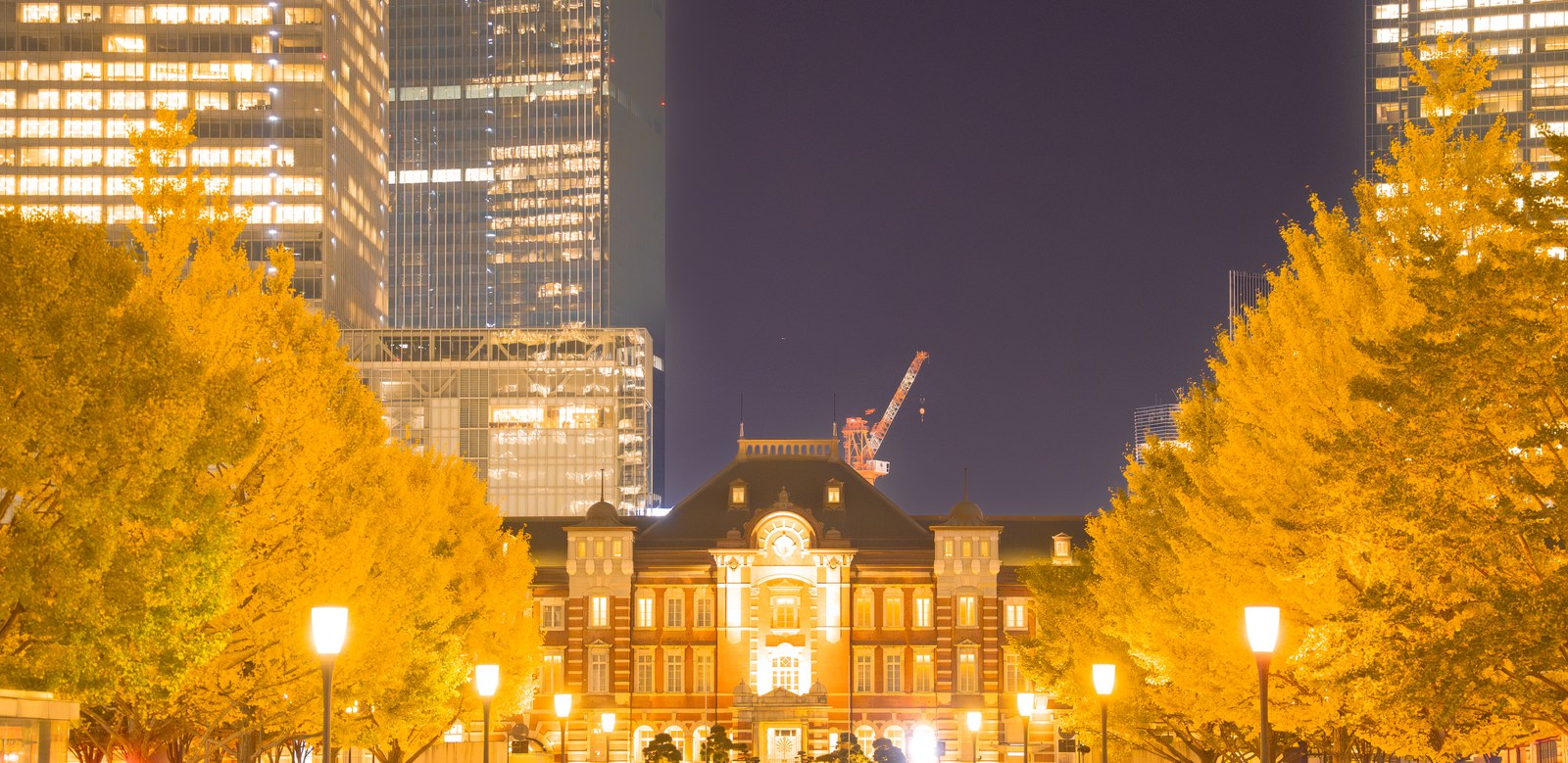
| Gyoko-dori, Marunouchi | Ginkgo | Late Nov – early Dec (peak about 1–2 weeks) | Right outside the Marunouchi exit of Tokyo Sta. | None announced |
Admission, opening hours and event dates are re-set each year, and the metropolitan gardens routinely publish extra rules for their busiest weeks. Please check each garden's own information before you go.
Bring a scene from this guide home
Each is a real photograph from this guide’s season, printed in Japan on FUJICOLOR professional paper.
Summer ― lotus and hydrangea at dawn
Summer rewards the early riser. At Shinobazu Pond in Ueno, pale-pink lotus open at dawn across a pond ringed by high-rises. In Koto bloom the white Annabelle hydrangeas with the Skytree, and on the Arakawa riverbank in Edogawa the Hirai poppies and Skytree stand in silhouette at dusk. Cool scenes of morning and evening that make you forget the city's heat.
Autumn and winter ― flower fields and golden avenues
Autumn is the season of fields and avenues. Showa Kinen Park in Tachikawa turns to millions of yellow cosmos, and at the shogunal garden of Hamarikyu cosmos bloom against the towers of Shiodome. In late autumn the avenue before Tokyo Station becomes a road of golden ginkgo before the red-brick facade. In winter, the straw-wrapped peonies of Ueno Toshogu's peony garden and the ice tulips bring a day with flowers even in the cold.
Tokyo has its four seasons too ―
you need only change where you look.
When the tower gets into the picture
What makes a Tokyo flower photograph a Tokyo photograph is usually the thing standing behind the flowers. Four of the places in this guide are built on that. At the Tobu Bridge in Oshiage the Kawazu cherries grow tall enough to look up through, with Tokyo Skytree rising straight out of the blossom. A little further east along the Kyu-Nakagawa in Edogawa, thirty-six Kawazu cherries line a river that was severed from the Nakagawa when the Arakawa floodway opened in 1924, and on a windless morning the tower comes back a second time in the water. In May the same ward gives you poppies at Hirai, best at dusk when the flowers glow orange and the tower goes to silhouette, and in June the white Annabelle hydrangeas of Koto do the quiet version of the same trick.
The other tower works differently. From the rooftop terraces of Marunouchi ― the Marunouchi Building, the KITTE Garden and similar spots, many of them free ― Tokyo Tower stands in a canyon of high-rises and turns amber once it is lit. It is a few minutes' walk from the ginkgo of Gyoko-dori, which makes late November the one week of the year when you can photograph gold leaves and an orange tower on the same evening without moving stations.
Gardens with gates ― admission, hours and the tripod question
Roughly half of this guide is free public ground and the other half is a garden with a ticket gate, and the difference decides how you plan the day. Hama-rikyu charges ¥300 for general admission, with a reduced rate for visitors aged 65 and over and free entry for elementary-school children. Rikugien is around ¥300, with a separate fee for its evening viewings. Showa Kinen Park is around ¥450 for adults, and the Ueno Toshogu Peony Garden around ¥1,000. Shinobazu Pond, Chidorigafuchi and Gyoko-dori cost nothing at all.
One rule is worth knowing before you carry a tripod across town. Hama-rikyu's year-round garden rules do not prohibit tripods, but for the autumn 2026 extended-evening openings the designated manager published a restriction: on the event dates (21–23 October and 30 October – 3 November), after 17:00, around the tidal pond, the moon-viewing platform and performing-arts stage, and on the bridges including Otsutai-bashi, visitors are asked to refrain from using tripods, monopods, selfie sticks and similar supports, from shooting from one spot for a long time, and from livestreaming or filming while walking. In other words, the hours in which that garden is most photogenic are exactly the hours in which the tripod stays in the bag. The metropolitan gardens issue this kind of notice by individual announcement in their busy seasons, so check the current one rather than last year's.
Timing the day ― dawn, dusk and the crowd
Central Tokyo's flower spots are busy, so the two hours that matter are the ones most people miss. The lotus at Shinobazu sets the strictest appointment of the year: the flowers open between roughly seven and nine in the morning and have closed again by midday, which means the picture only exists before breakfast. Cherry blossom rewards the same hour for a different reason ― the light is soft, and the promenade at Chidorigafuchi is walkable rather than shuffling. At the other end of the day, the poppies at Hirai, the Annabelle in Koto and Tokyo Tower from Marunouchi all belong to the twenty minutes either side of sunset.
Weekday mornings beat weekend mornings everywhere in this guide. Where an evening light-up or a rooftop terrace is involved a tripod helps, but in a crowd it is often faster and more courteous to raise the ISO and shoot handheld. The mechanics are in how to photograph flower landscapes, the dusk and dawn light in morning mist and the magic hour, and the night side of it in shooting at night with a tripod.
Shooting in Tokyo ― crowds and light
The famous spots draw crowds, so aim for weekdays and early mornings. Lotus and cherry blossoms are loveliest in the soft morning light, when there are fewer people about. A tripod helps for dusk and illuminations, but where it is busy, raise your ISO so you can shoot handheld. Set a tower or skyline behind the flowers and a story only Tokyo can tell appears ― the city and the bloom. For the basics see how to photograph flower landscapes, and for dusk and the magic hour, shooting morning mist and the magic hour.
From the night sakura of Chidorigafuchi to the golden avenue at Tokyo Station, bring home the story of the city and the bloom as a true silver-halide print on FUJICOLOR's finest professional paper. Framed-ready, shipped worldwide.
💾 A digital download is also available ($4.00 each). Bundles cost less: 3 for $10.20, 5 for $15.00 ($3.00 each) — mix any photographs you like.
See the 21 prints shot in Tokyo →