
PHOTO SPOT GUIDE
Haraoka Pier — A Jetty Reaching Out to Sea, and Fuji in Winter
Minamiboso, in southern Chiba. There is an old wooden pier here that reaches thin out into the sea. The plank path runs straight for open water, and far beyond the end of it — only on the clear evenings of winter — Fuji stands small. At the end of a narrow path made by human hands, a distant mountain wholly beyond the reach of human hands is quietly there. It is a breathtaking pairing, and it lasts barely ten or fifteen minutes.
A Distant Mountain at the End of the Plank Path
A sunset over Tokyo Bay — the image may not come easily at first. This is an inland sea: the water is calm, and city lights glimmer on the opposite shore. Yet on a clear winter evening, that quiet surface turns to a single sheet of gold, and the silhouette of Mt. Fuji rises above the horizon. Haraoka Pier was the stage that suited it best of all. An old wooden pier, reaching thin out to sea. At the far end of the plank path running straight for open water, Fuji stands small. One by one the pilings of the pier turn into a shadow play, and through the gaps between the boards at your feet you can see the shimmer of moving water. Why should a single frame like this move us? Because, I think, at the end of a narrow path made by human hands, a distant mountain wholly beyond the reach of human hands is quietly there.
According to Chiba Prefecture's tourism guide, the pier was laid out for the fishing trade in 1921, and it is one of very few wooden sea piers anywhere in the country. A plank path that has gone on standing in the sea for more than a hundred years. Knowing that, I looked down at my feet, and even the way each single board had faded became suddenly dear to me.
Neither Flare nor Ghosting Hidden
This dusk was photographed with an old lens that hides neither flare nor ghosting: the HELIOS-44-2 58mm F2. A veil of light spread right across the frame, and a row of round ghosts at the lower right. That is what comes of taking the backlight head-on instead of stepping aside from it. Photographing something beautifully is not always the right answer. The sun beginning to fall beyond the shadow of the hills, the pier lamps quietly coming on — that changing from one moment to the next, where the sound of the sea and the light mix together, was far more what I wanted to photograph. In the emergency room, time is measured, pressing, never still. Here on the shore, for once, there is nothing to do but wait for the sun to fall. It always surprises me a little, how differently the same passing of time can feel.
At the end of the plank path reaching out to sea,
the setting sun and Fuji become one.
Planning your visit — best time
It is on dry winter evenings that the view carries all the way to Fuji on the far shore.
From around December through February, look for a clear day when the wind has settled. The view of Fuji from Haraoka Beach is one of the Hundred Fuji Views of the Kanto Region selected by the Kanto Regional Development Bureau of the Ministry of Land, Infrastructure, Transport and Tourism, which describes it as a superb view of Mt. Fuji floating on the horizon above a blue sea. Even so, whether Fuji shows itself depends entirely on the day's weather, so it is worth confirming clear skies and clean air before you set out.
Getting there
Chiba Prefecture's tourism guide gives it as about a fifteen-minute walk from JR Tomiura Station on the Uchibo Line, about seven minutes from the Tomiura interchange on the Futtsu-Tateyama Road, with parking for ten cars, free of charge. By highway bus, get off at Tomiura Biwa Club, about a fifteen-minute walk away.
If you are driving, though, there is one thing to keep in mind. Minamiboso City has issued a request that visitors use the detour route to Okamoto (Haraoka) Pier: the roads around the pier are very narrow, congestion and accidents are to be expected, and these are also residential lanes used daily by the people who live there. The Minamiboso City Tourism Association likewise asks visitors to slow down and take great care, as the road closest to the pier is narrow with poor visibility. A map of the detour route is published on the official Minamiboso City website, so do look at it once before you leave.
Tips for photographers
A sunset is a subject whose light changes very fast. From the moment the sun nears the horizon, review your exposure often. To set the pier out as a clean silhouette, meter from the brightest part of the sky and let the frame run a touch darker; to keep the shimmer on the water, open up slightly instead. When you compose with Fuji in the frame, look for a height at which the mountain does not overlap the line of the pier or the horizon, and the distant peak will rise clear of them. And the magic hour after the sun has gone — those ten or fifteen minutes as the sky sinks from indigo to violet — is the time of deepest colour of all.
A tripod is a reassuring thing to have here, but this pier is popular, and people gather at dusk. On the narrow boards, do not spread the legs wide, and do not block the way past. Keep your tripod manners, and keep an eye on the people around you. This is a beauty spot, and it is at the same time a place that sits right beside the daily life of the people who live here.
While you're in the area
If you travel as far as Minamiboso, Mt. Nokogiri is close at hand, known for its sheer rock faces and the sweeping view from the summit. In midwinter, the daffodils of Kyonan, which fill the hillside slopes with white, come into season too. Pair the dusk with local seafood, flower fields and a hot spring, and an overnight stay lets you take in the evening light twice over. Coming from the Kanagawa side, the Tokyo Bay Ferry between Kurihama and Kanaya offers a chance to look out at the sunset and Fuji from the water itself. Take one route by land and the other by sea, and the same Tokyo Bay will look new again on the way home.
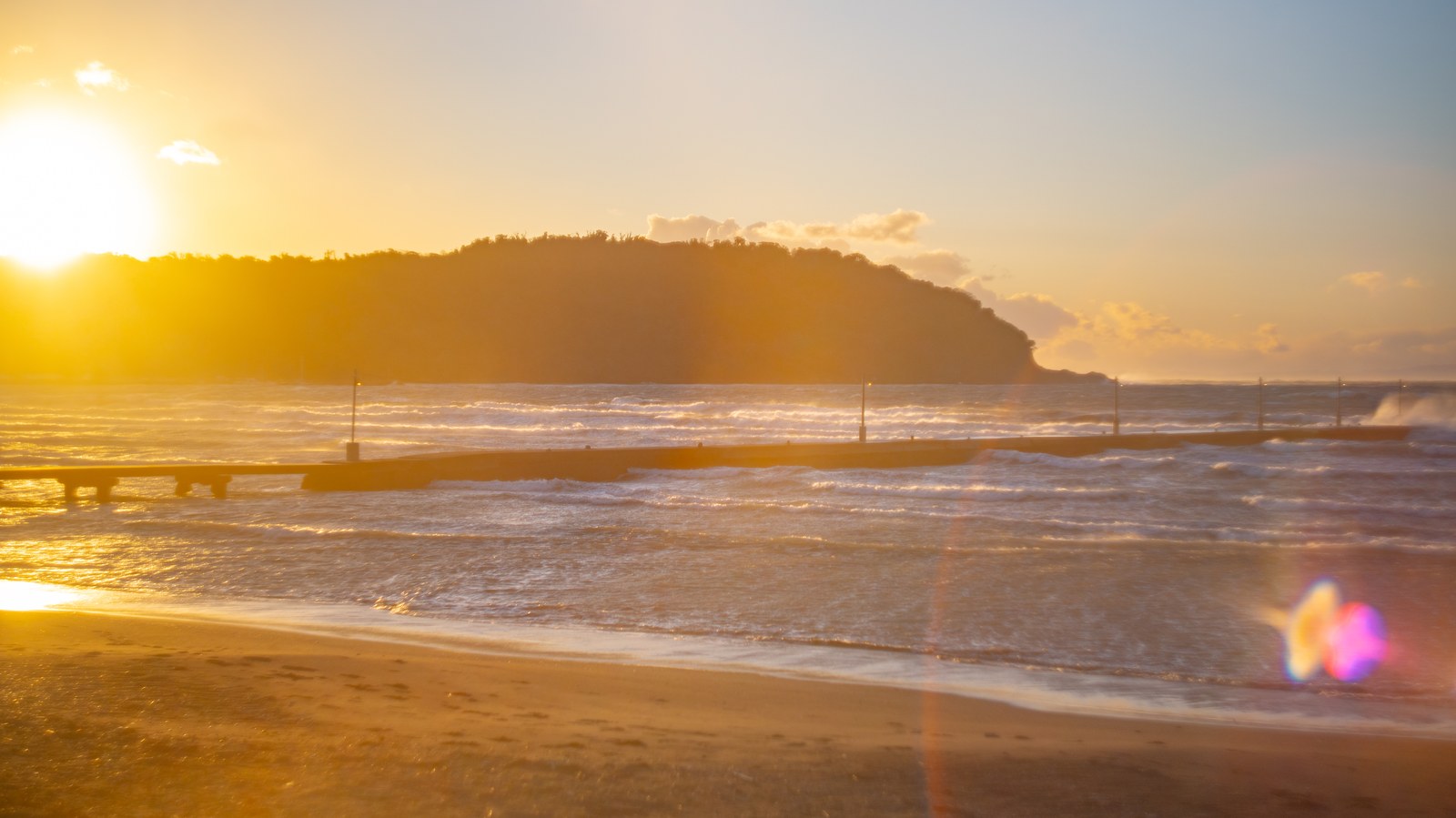
That winter dusk, with Fuji standing at the far end of the plank path, delivered as a true silver-halide print on FUJICOLOR's finest photographic paper. Framed for your wall, and shipped anywhere in the world.
💾 A digital download is also available ($7.00 each). Bundles cost less: 3 for $17.84, 5 for $26.23 ($5.25 each) — mix any photographs you like.
View the print →