FEATURE
Japan's Best Cherry Blossom Spots ― From a Thousand Trees to Night Sakura
In Japan, spring arrives with the cherry blossoms. A whole mountainside turned pink, night sakura mirrored on a castle moat, a single old tree standing alone in a tea field ― the word 'sakura' holds a hundred different faces, and each place wears its own. Here, in order of bloom, are the places that moved me most, gathered on the days between shifts in the emergency room.
The first of spring ― February's early cherries
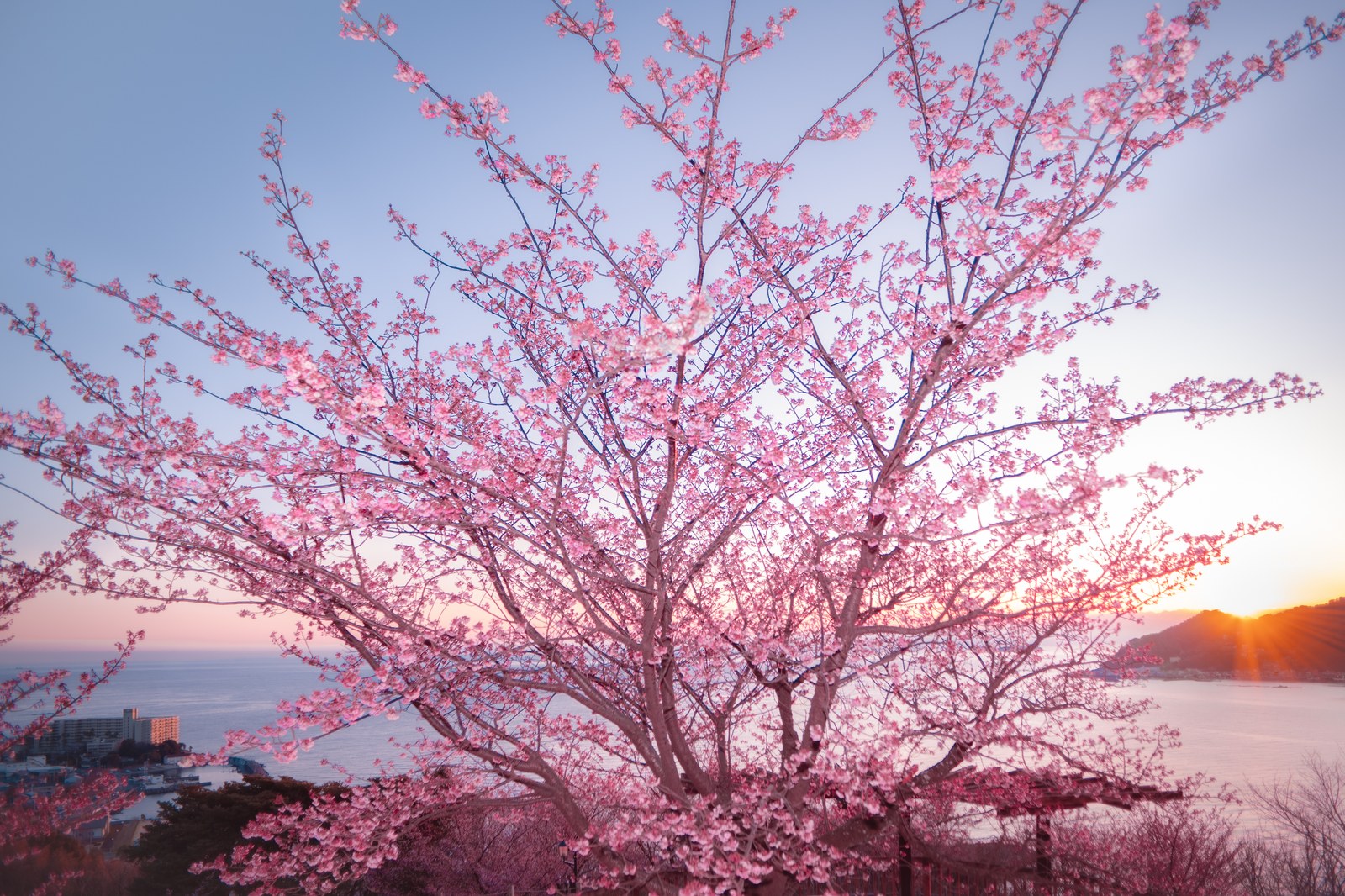
For anyone who cannot wait for the blossom front, the early cherries of February are the place to start. Along the Kawazu River in Izu, Shizuoka, the Kawazu cherry blossoms bloom deep pink beside golden rape flowers, bringing Japan's earliest word of spring. In Atami the Atami cherry catches the sunrise, and along the rivers of Tokyo and Chiba you can frame Kawazu cherries against the Skytree. Blooming a step ahead of the Somei-yoshino, these February blossoms feel like a reward for surviving the long winter.
Every place in this guide, at a glance
Cherry blossom is not one season but three: the early cherries of late winter, the Somei-yoshino fortnight at the end of March, and the mountain cherries that climb into April. The table runs in bloom order, so you can read down it and find what will be open on the week you can travel. Journey times are from the nearest station or bus stop, and the last column says whether an official evening light-up has been announced.
↔ The table scrolls sideways on a narrow screen.
| Spot | Prefecture | Peak | From the nearest station | Night illumination |
|---|---|---|---|---|
| Itokawa promenade, Atami | Shizuoka | Late Jan – early Feb | About 10 min on foot from JR Atami Sta. | Yes — Itokawa Cherry Festival, with evening illumination |
| Kawazu River, Izu | Shizuoka | Late Feb – early Mar | About 3 min on foot from Kawazu Sta. (Izukyu Line) | Yes — Kawazu Sakura Festival, with an evening light-up |
| Tobu Bridge, Oshiage | Tokyo | Late Feb – mid Mar | A short walk from Tokyo Skytree Sta. or Oshiage Sta. | None announced |
| Kyu-Nakagawa, Hirai | Tokyo | Late Feb – mid Mar | 13 min on foot from Hirai Sta. (JR Sobu Line) | None announced |
| Iwai Weir, Asahi | Chiba | Late Feb – mid Mar | About 5 min on foot from the Iwai-Fudoshita stop (Asahi community bus) | None announced |
| Rikugien weeping cherry | Tokyo | Usually late Mar (earlier than Somei-yoshino) | About 7 min on foot from Komagome Sta. | Yes — evening viewing, charged separately |
| Joenji, Nishi-Shinjuku | Tokyo | Usually late Mar (an Edo-higan) | About 1 min on foot from Nishi-Shinjuku Sta. | None announced |
| Chidorigafuchi | Tokyo | Late Mar – early Apr | About 5 min on foot from Kudanshita or Hanzomon Sta. | Yes — Chiyoda Sakura Festival, sunset to about 21:00 |
| Ushijiro mizume cherry, Shimada | Shizuoka | Late Mar – early Apr | About 15 min by car from Iyeyama Sta. (Oigawa Railway) | Varies by year — check before you go |
| Mount Yoshino | Nara | Early – late Apr (lower slopes first) | Kintetsu Yoshino Sta., then about 3 min by ropeway or about 20 min on foot | None announced |
Cherry blossom is the least predictable season in this guide: flowering is driven by temperature, and full bloom lasts only a few days. Peak weeks and festival dates are re-set every year, so read the table as the order of the season and confirm the current dates with each location before you set out.
Bring a scene from this guide home
Each is a real photograph from this guide’s season, printed in Japan on FUJICOLOR professional paper.
Full bloom ― mountains and old capitals in pink
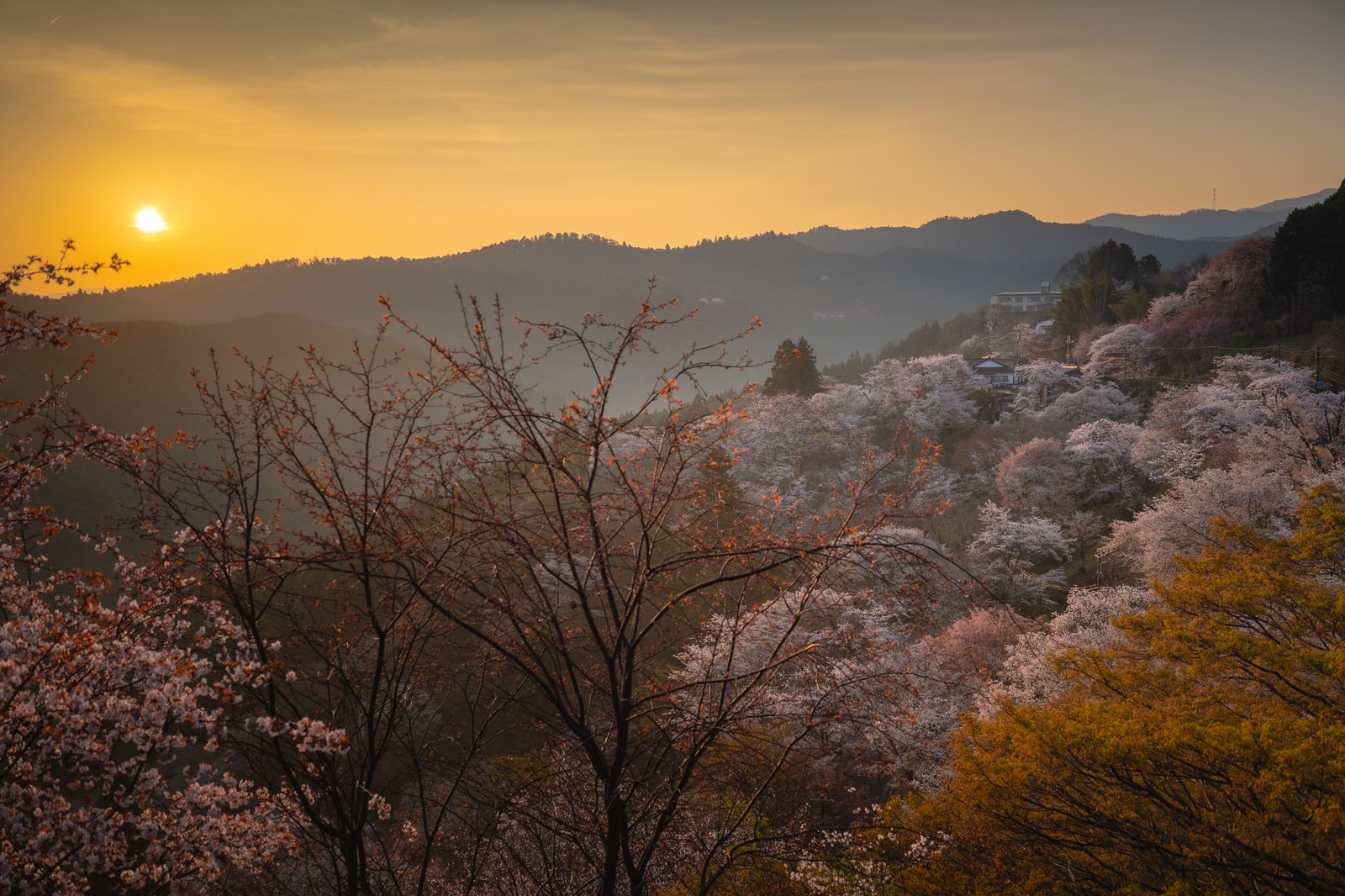
From late March into April the cherries reach their peak. On Mount Yoshino in Nara, some thirty thousand wild cherries climb the slopes, and together with the World Heritage shrines and temples they earn the old name hitome-senbon, 'a thousand trees at a glance.' For a story in a single tree, seek out the Ushijiro Mizume cherry, standing alone on a tea-field slope in Shimada, Shizuoka. A three-hundred-year-old tree floating in the dawn mist is the living spirit of the cherry itself.
Blooming after dark ― the night sakura
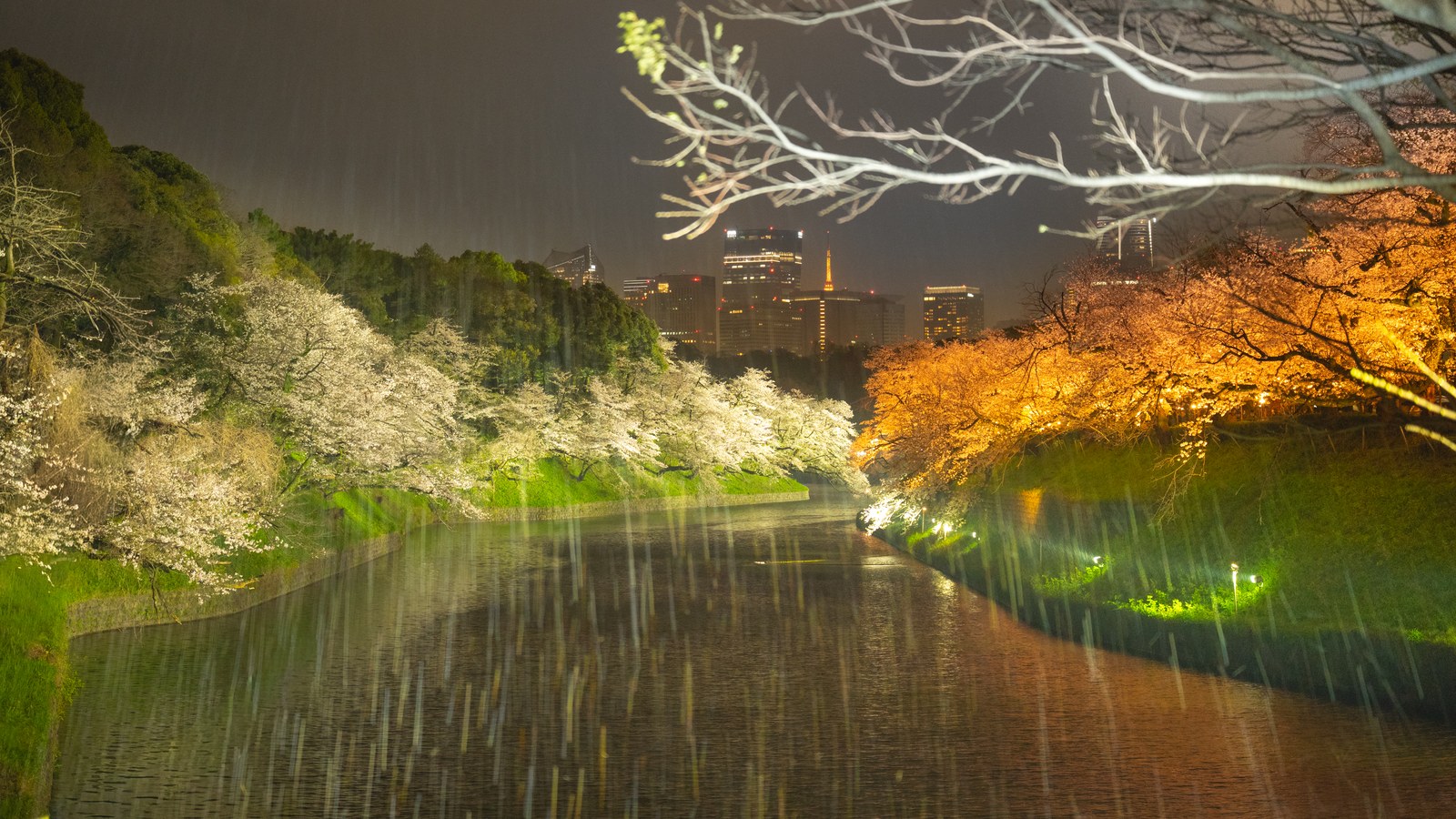
Some cherries only begin once the sun has set. At Chidorigafuchi in central Tokyo, blossoms lit on a rainy night are mirrored on the moat, an unreal scene for the heart of the city. In the celebrated garden of Rikugien a weeping cherry some fifteen metres tall hangs in the dark like a pale-pink waterfall, while the weeping cherry of Joenji in Nishi-Shinjuku sets an old Edo-higan tree against the skyscrapers ― a frame only Tokyo could offer.
One word, sakura ―
yet the colour of spring changes with the place.
Three riversides, one early spring
The Kawazu cherry is worth following away from Izu, because the same deep-pink flower gives a completely different picture depending on what stands behind it. At the Tobu Bridge in Oshiage the trees are tall enough to look up through, and Tokyo Skytree rises straight out of the blossom. A little further east, along the Kyu-Nakagawa in Edogawa, thirty-six Kawazu cherries line a river that was cut off from the Nakagawa when the Arakawa floodway was opened in 1924; on a morning when the wind has dropped, the tower comes back a second time in the water. In Chiba, Iwai Weir rings a whole field of rape flowers with cherry trees, pink around yellow, with evergreen hills behind. All three peak in the same three weeks in late February and March, which makes them a single trip rather than three.
One thing worth saying about the Kyu-Nakagawa and Iwai Weir: both are ordinary places people live around, not managed sightseeing grounds. Drone flying is prohibited in the metropolitan parks along the Kyu-Nakagawa, and at Iwai Weir the city of Asahi asks visitors not to enter the rape field, pick flowers or branches, or go near the reservoir pond. Neither has an official light-up, so both are daylight photographs.
What a single tree can carry
A thousand trees at a glance is one kind of spring; one tree is another. The Ushijiro mizume cherry stands alone in the tea fields above the Oi River in Shimada, an Edo-higan said to be over three hundred years old, about twenty metres tall with a trunk some 4.2 metres round, and designated a natural monument by the city. Parking there is limited and the roadside is a working local road, so the courtesy of not blocking it matters. In the city the same idea appears twice: the weeping cherry at Rikugien, roughly fifteen metres tall and twenty across and around seventy years old, falling through the spring night like water, and the Edo-higan of Joenji, one minute from Nishi-Shinjuku station, blooming against the skyscrapers. None of the three needs a mountain to be worth the trip.
Practical notes ― admission, light-ups and getting there
Very little of the cherry season is free of logistics. Rikugien charges ordinary admission of around ¥300, with a separate fee for the evening viewings and different rates for advance and same-day tickets. Chidorigafuchi is free to walk, but its roughly 700 metres of Yoshino and Oshima cherries are lit only during the Chiyoda Sakura Festival, typically from sunset until about nine, and the city-run boathouse that lets you look up at the night blossom from the water may require a reservation in some years. At Mount Yoshino, where roughly thirty thousand mountain cherries of some two hundred kinds bloom up the slope in turn, the lower areas first, parking is charged and traffic is controlled in season ― the ropeway or your own legs are the sensible way up.
For the craft rather than the logistics, the light matters more than the lens: soft overcast and the hours around dawn and dusk sink the pink in, while a hard blue sky bleaches the petals towards white and gives you brightness instead of colour. Those choices are set out in how to photograph flower landscapes, and for the mist and the last light there is morning mist and the magic hour. For night sakura specifically, shooting at night with a tripod covers the part most people get wrong.
Photographing the cherries ― season and mindset
Cherry season shifts widely with region and altitude: the early February blooms, the Somei-yoshino of late March to early April, and the late mountain cherries beyond. Blooming follows the temperature, and full bloom lasts only a few days, so always check local forecasts before you set out. Soft morning and evening light, or a lightly overcast 'blossom-cloud' sky, lets the pink sink in deep; clear blue skies render the flowers bright and white. For settings and craft see how to photograph flower landscapes, and for misty or golden-hour days, shooting morning mist and the magic hour.
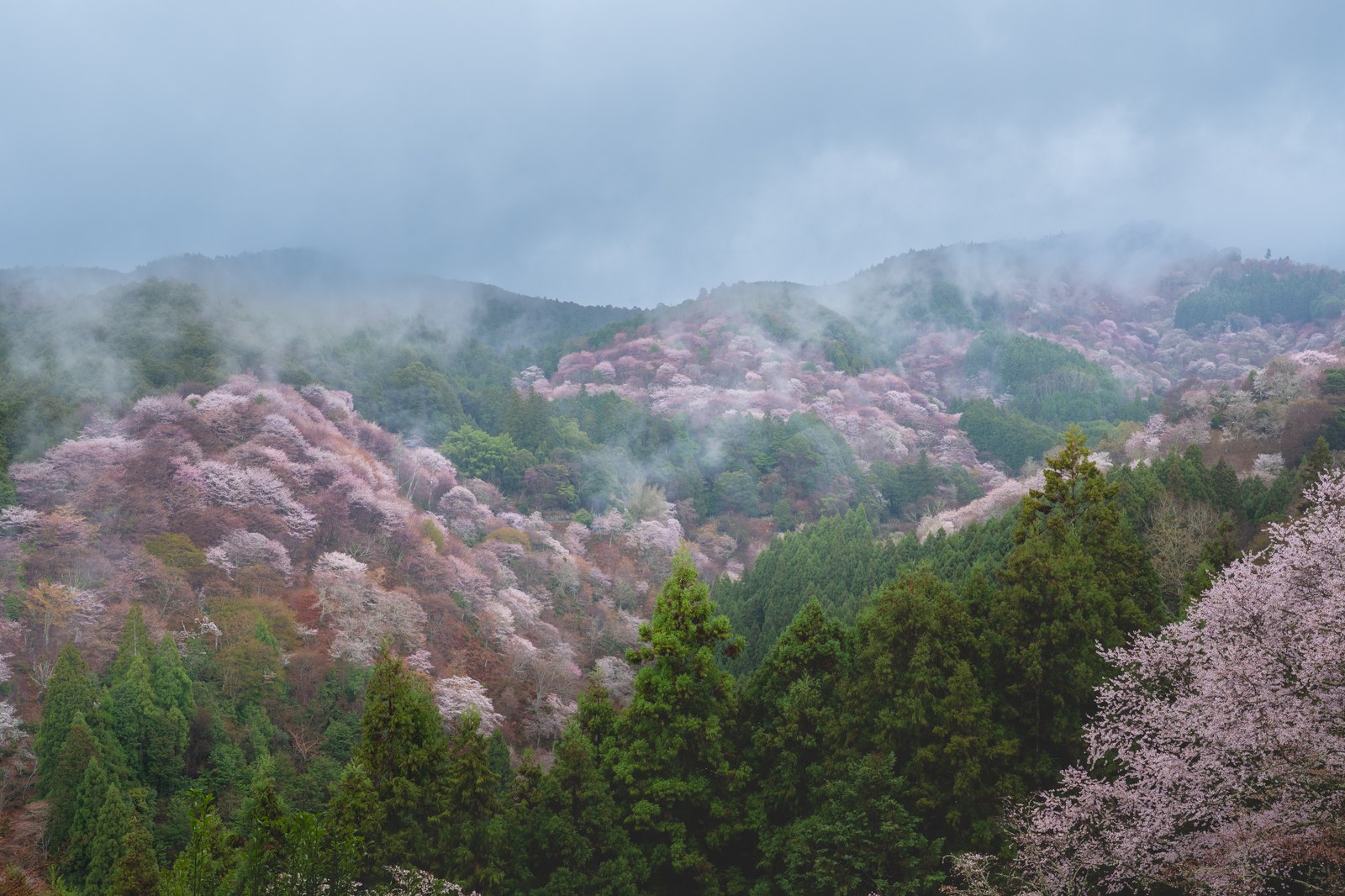
From Yoshino's mountain cherries to the night sakura of Chidorigafuchi, bring home the blossoms that stay with you as a true silver-halide print on FUJICOLOR's finest professional paper. Framed-ready, shipped worldwide.
💾 A digital download is also available ($7.00 each). Bundles cost less: 3 for $17.84, 5 for $26.23 ($5.25 each) — mix any photographs you like.
View the cherry-blossom prints →