
PHOTO SPOT GUIDE
Ginkgo Gold in Tokyo — From Gyoko-dori to the Tunnels of Tachikawa
Autumn in Tokyo begins with ginkgo rather than maple. At the end of November the broad avenue running straight out from Tokyo Station turns gold, and out in Tachikawa, at Showa Kinen Park, a three-hundred-metre tunnel of yellow leaves opens. What follows are the places I have walked and photographed myself, set out in the order they turn colour. Seasons, opening hours and admission change from year to year, so please check each official site before you go.
Gyoko-dori — a straight line of gold behind Tokyo Station
Step out of the Marunouchi exit of Tokyo Station and a wide, unhurried avenue runs ahead of you towards the Imperial Palace. This is Gyoko-dori. In late autumn the four rows of ginkgo along its sides turn gold all at once, until even the pavement seems filled with light. Turn around and there is the red-brick station building: deep russet walls edged in white stone, against which the yellow reads clearer still. The trees are usually at their best from around late November to early December. The peak is short — one to two weeks — and after it the fallen leaves become a carpet of gold from kerb to kerb. There is no charge to walk it. I have written about this one avenue in more detail in the golden ginkgo of Gyoko-dori.
One more step in Marunouchi — Tokyo Tower in the last of the light
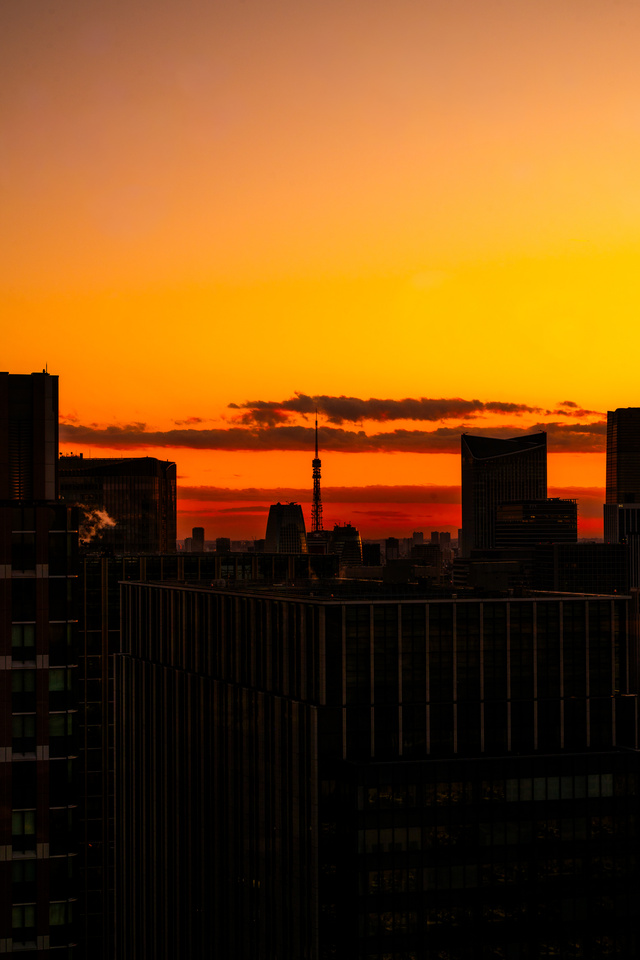
In the same district, one more frame after the sun goes down. From the rooftop terraces of the Marunouchi Building and KITTE Marunouchi you can look across to Tokyo Tower standing in the valley of the office blocks. Autumn into winter, when the air is clearest, is the loveliest time: after the lights come on, their orange rises slowly out of a sky turning indigo. The gift of this part of the city is that you can photograph the ginkgo and then simply wait for dusk. Many of the terraces are free to enter, but opening times differ from building to building, so check each one. More in Tokyo Tower at sunset from Marunouchi.
Showa Kinen Park — a 300-metre tunnel, and 106 trees along a canal
A little way out of the centre, to Showa Kinen Park in Tachikawa. According to the park's official site, the Katarai Ginkgo Avenue runs about three hundred metres, and at the height of the yellow in November a golden tunnel appears — the most popular spot of the season. There is a second avenue too: the Canal, where 106 ginkgo are planted symmetrically in two rows on either side of the water. Together these are described as the park's two great places for yellow leaves. Admission is 450 yen for adults, 210 yen for visitors aged 65 and over, and free for junior-high age and under; from 1 November to the end of February the park is open 9:30 to 16:30 (all figures as listed on the official site). What I have photographed here myself is the autumn flower hill, which is written up in the cosmos of Showa Kinen Park.
The gold does not arrive all at once.
From September's flowers to December's fallen leaves, Tokyo's autumn comes down slowly.
Tokyo's autumn starts in September — Hama-rikyu and Ueno
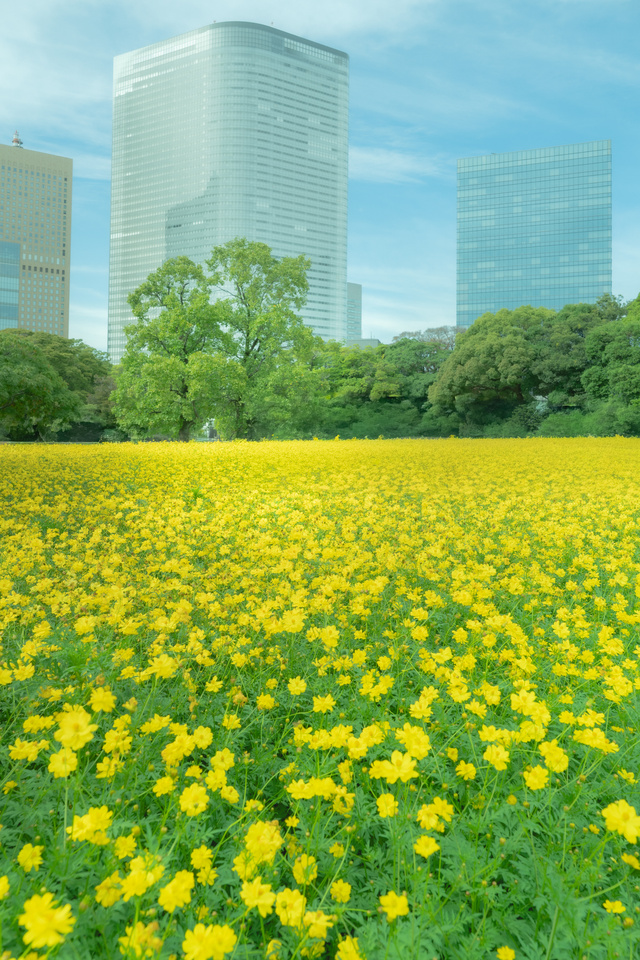
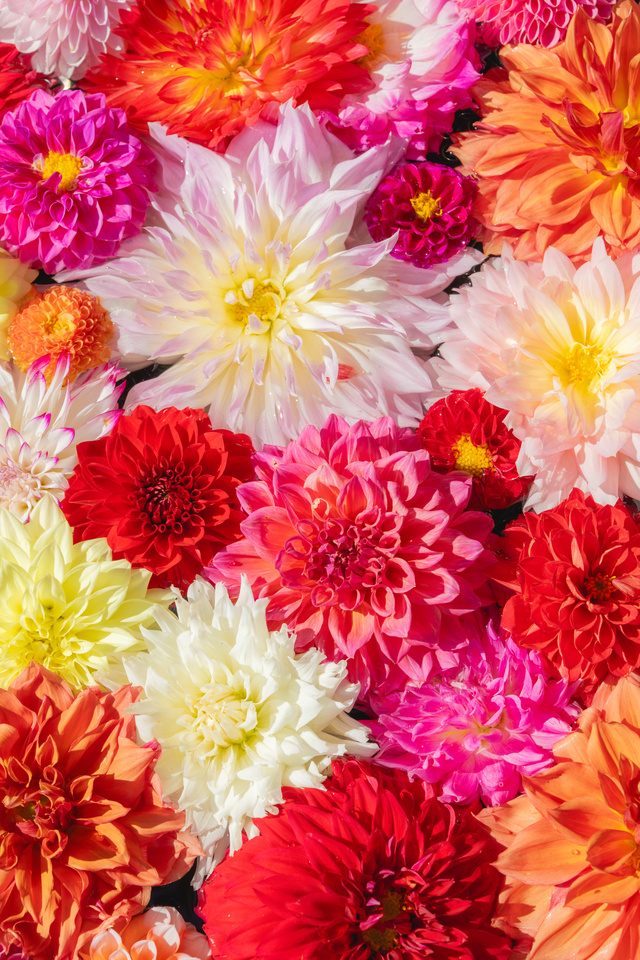
Before the ginkgo there is another autumn in this city. Hama-rikyu Gardens, in Chuo City, keeps a flower field with the towers of Shiodome behind it: yellow cosmos usually from August into September, and the autumn cosmos around October. Admission is 300 yen general, 150 yen for visitors aged 65 and over, and free for elementary-school children and younger. At the Ueno Toshogu Peony Garden in Taito City, the official site lists "Dahlias — the Garden Woven in Autumn" from late September to late October. There I photographed dahlias floating in a water basin, and a spindle tree hung with red fruit. A quiet autumn, inside a shrine in the middle of the city. More in the cosmos of Hama-rikyu and the Ueno Toshogu Peony Garden.
Planning your visit — season
Followed in the order it turns, Tokyo's autumn lasts about three months.
Late September into October belongs to the cosmos and dahlias of Hama-rikyu and Ueno. Mid to late November is the ginkgo of Showa Kinen Park. Late November into early December is Gyoko-dori, and after that, from November through February, the Marunouchi dusk is at its clearest. All of it shifts with the weather of the year, so it is worth checking the official bloom and foliage updates before setting out. For the other months, see the flower and foliage calendar.
Getting there
Gyoko-dori begins right outside the Marunouchi exit of Tokyo Station on the JR and Tokyo Metro lines, and is a few minutes from Nijubashimae Station on the Chiyoda Line. Showa Kinen Park is a few minutes' walk from Nishi-Tachikawa Station on the JR Ome Line to the Nishi-Tachikawa Gate, or about ten minutes from the north exit of JR Tachikawa Station to the Tachikawa Gate. Hama-rikyu Gardens is walkable from Shiodome or Tsukijishijo Station on the Toei Oedo Line. The Ueno Toshogu Peony Garden is about five minutes from the Park Exit of JR Ueno Station. All of it is reachable by train, and two of these fit comfortably into one day.
Tips for photographers
On Gyoko-dori, begin in the middle of the road with the station building square in the frame: the four rows of trees and the red brick balance neatly left and right. Yellow leaves blow out easily, so pulling the exposure down a little keeps depth in the gold. Once the leaves have fallen, drop the camera almost to the ground and take carpet and avenue in one frame. A polariser used gently settles the shine on wet asphalt and leaves, and the yellow reads deeper for it. A telephoto compresses a ginkgo tunnel and makes it denser; a wide lens, pointed up, lets in the blue of the sky and lightens it. Bring a tripod for dusk and for illuminations — and in crowded places, I try not to spread its legs too far.
While you're in the area
Walk Gyoko-dori towards the Imperial Palace and you reach the pine avenues of the Outer Gardens. Turn back towards the station and the rooftop garden at KITTE Marunouchi looks down on both the avenue and the station roof. Go a little further and Ueno Park runs down to Shinobazu Pond, while Hama-rikyu opens onto Tsukiji and Shiodome. In Tokyo, autumn changes character every stop along the line.
Photographs from the spots in this guide
Dates and times come from the camera’s own record of each shot. Tap a photograph to open its print page.
The developing approach behind the photographs in this article is gathered into 30 presets for Lightroom / Camera Raw ($15.00 — a ZIP download straight after purchase).
View the presets →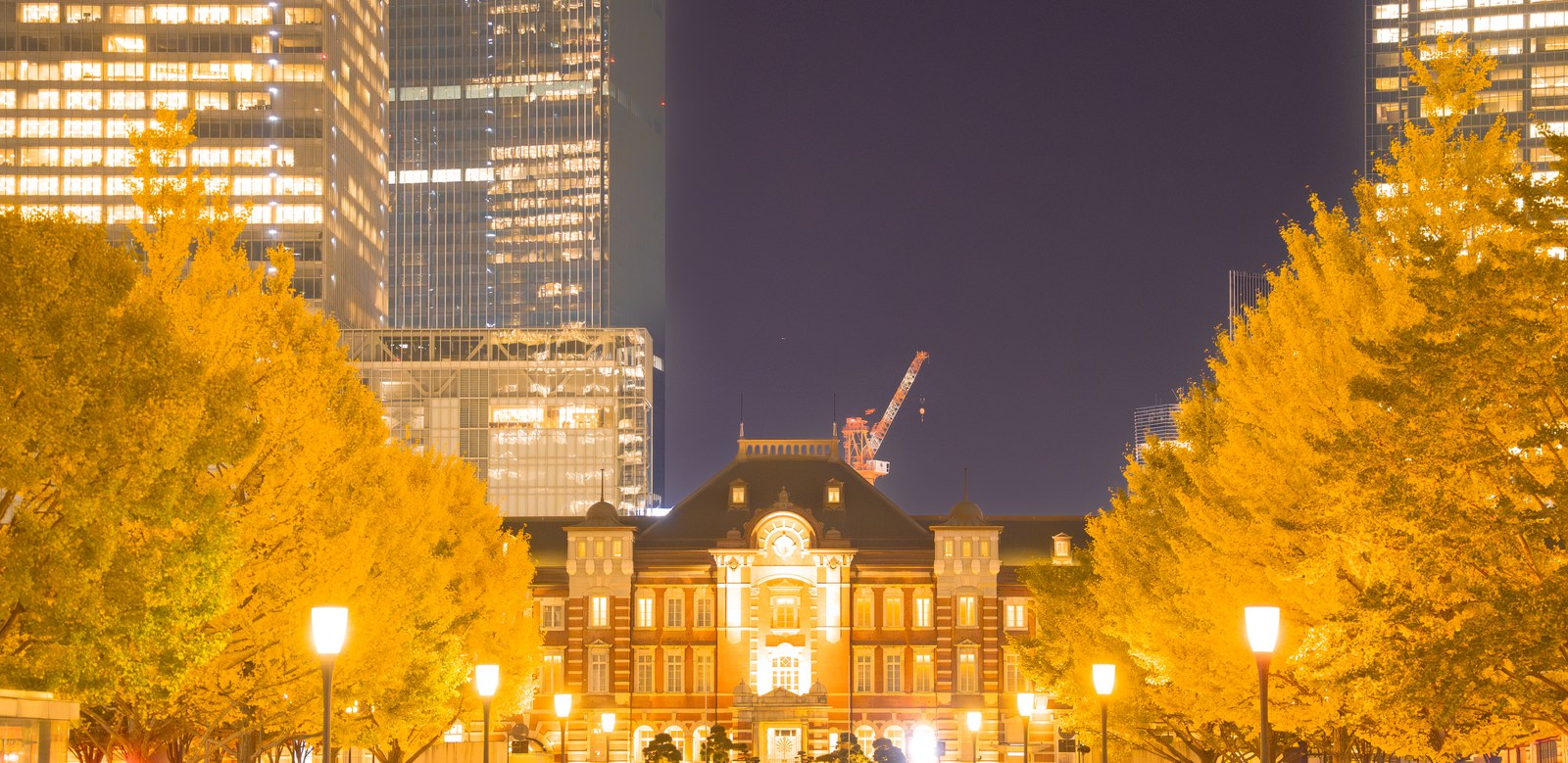
Gyoko-dori in late autumn, available as a fine-art silver-halide print on premium FUJICOLOR paper, hand-printed in Japan and shipped worldwide.
💾 A digital download is also available ($4.00 each). Bundles cost less: 3 for $10.20, 5 for $15.00 ($3.00 each) — mix any photographs you like.
View the print →