
GEAR ・ HOW-TO
How to Photograph Autumn Leaves — Backlight, Rain and the Polariser
Autumn leaves may be the most photographed subject in Japan, and the most common complaint is that the red never comes out the way it looked. Almost always the problem is the direction of the light. Maple leaves are thin, and they transmit light. Autumn colour is not something you illuminate — it is something you shoot through. Change that one thing and the same tree becomes a different picture.
Shoot through the leaf, not at it
With the sun behind you, leaves reflect light off their surface. You get colour, but a dull, flat sort of colour. Turn into backlight or side-backlight and the thin leaf transmits instead, glowing like stained glass — the same red, but lit from inside. Nearly every autumn photograph that works is a transmitted-light photograph.
In the field this means the first thing to change is the geometry between the sun, you and the tree. A few steps around can transform the colour. Plant the tripod afterwards. Tofukuji Tsutenkyo Autumn in Kyoto sets a ravine of roughly 2,000 maples in vermilion, orange and yellow against deep green cedar; Maple Corridor at Lake Kawaguchi is a tunnel where reds, oranges, yellows and greens layer into a corridor of light.
More on technique and gear
The same tools, the same light. Read on and the craft joins up.
The day after rain is the richest
For autumn colour, a clear sky is rarely the best forecast. The morning after rain, or thin overcast, is worth planning for. Three reasons.
Noon under a cloudless sky is close to the worst case: hard light, black shadows, and colour washed out by surface glare. Given the choice, take the morning after rain. Rather than cancelling because rain is forecast, arrange to arrive as it clears.
Where the polariser earns its place
A circular polariser is the filter whose effect is easiest to see in autumn. It removes light vibrating in one particular orientation — mostly what has bounced off leaf surfaces and water — so glare disappears and the colour underneath emerges. Rotate it and watch the saturation change through the viewfinder.
It works hardest on wet leaves and water. Suppress the glare after rain and the reds deepen noticeably. Where maples reflect on water, as in Korankei Autumn on the Tomoe River in Aichi, how much reflection you keep is the picture: remove it all and you see the riverbed, keep it and you have a mirror. Think of a polariser as a dial for how much reflection remains, not as a glare-removal switch.
There are times to take it off. With a wide lens and a lot of sky, polarisation across the frame becomes uneven and the blue goes patchy. It also costs one to two stops, which invites shake in a dark ravine or late in the day. As with a soft filter, the skill is in not leaving it mounted.
Why mornings win
Famous autumn sites are crowded. Mornings help not only because the light comes in low and raking, but because there is room to set up at all. At a viewpoint like Akechi Plateau Autumn in Oku-Nikko, a few dozen centimetres change how Kegon Falls and Lake Chuzenji stack up behind each other. Arriving early enough to stand in the right place is itself a technique.
Late afternoon light works too. In compositions that hold a distant mountain and near foliage together — Mt. Fuji & Autumn Maples at Lake Kawaguchi — the near leaves render far better with the sun low and behind them.
Frame it with architecture
Shot wide, autumn colour scatters. Using a building or a window as a frame pulls it back together. Tofukuji from Tsutenkyo Bridge lets carved beams and balustrades cut an aperture into an ocean of maples, with the Kaisando roof beyond. Let the near frame go dark and keep the far foliage bright, and the eye travels inward on its own. Expose for the bright maples and allow the foreground to fall to silhouette.
Six autumn frames
From Kyoto temples to highland brocade, printed on FUJICOLOR professional silver-halide paper.
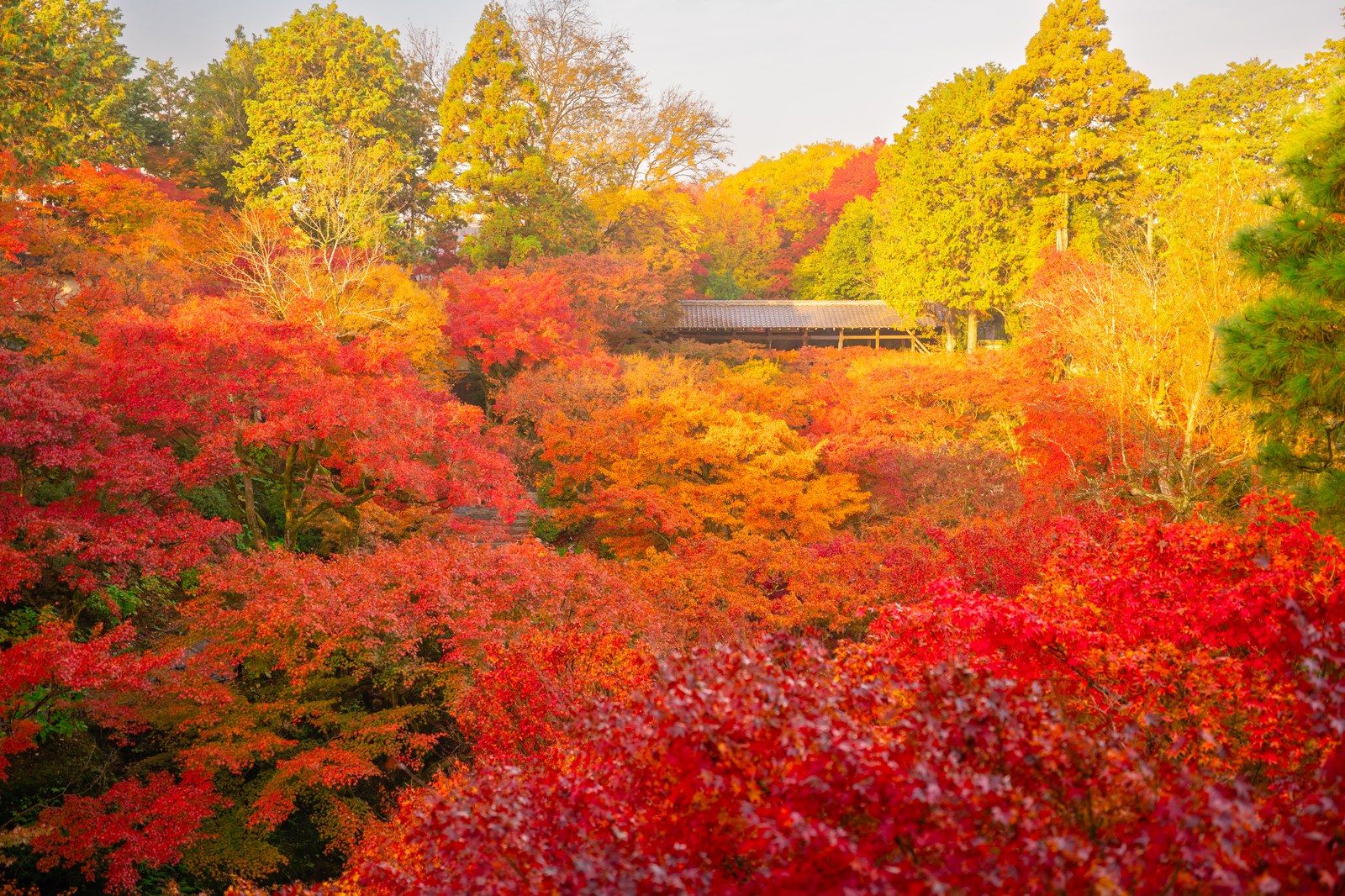 Tofukuji Tsutenkyo AutumnTofukuji, KyotoView print →
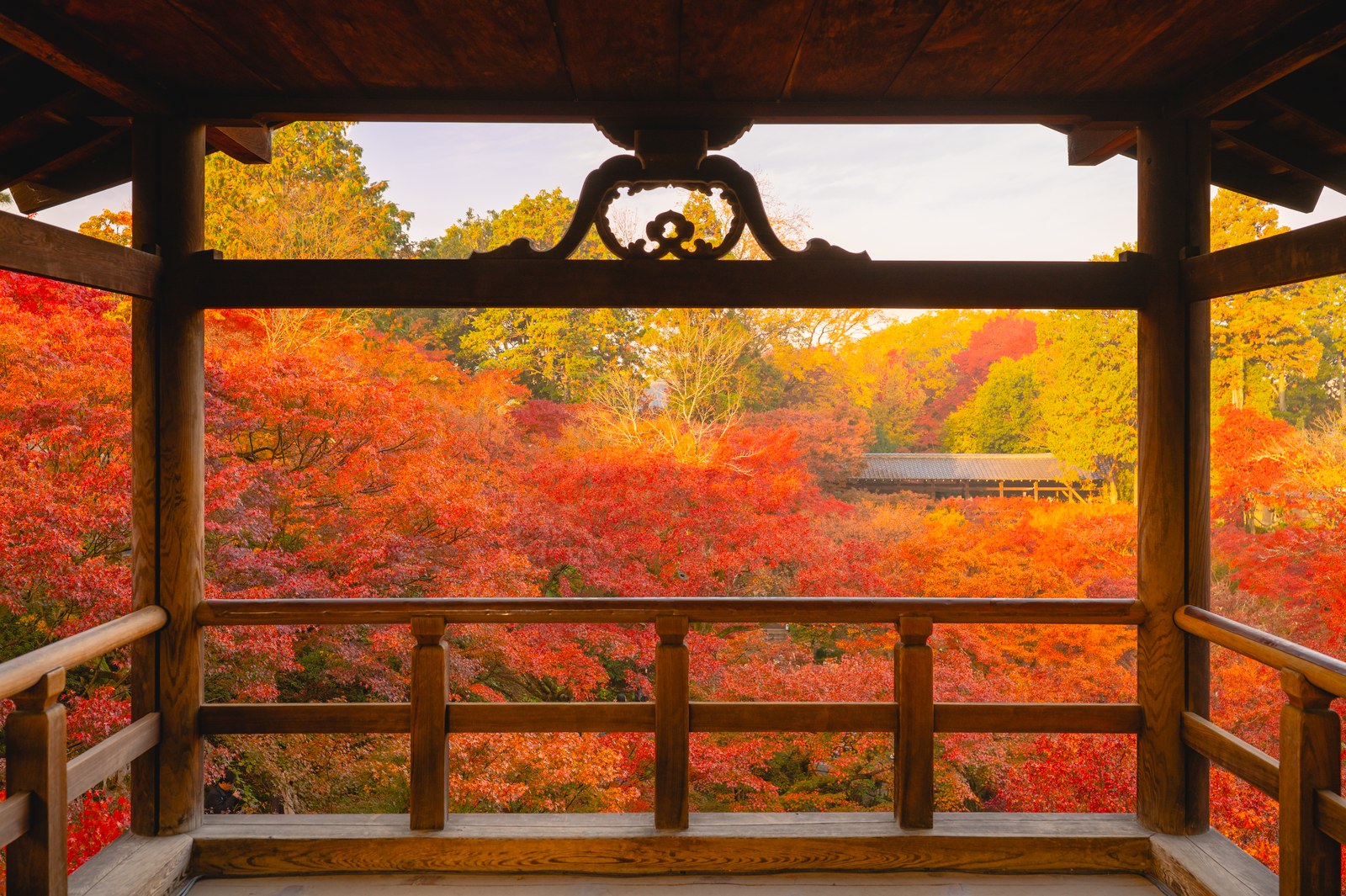 Tofukuji from Tsutenkyo BridgeTofukuji, KyotoView print →
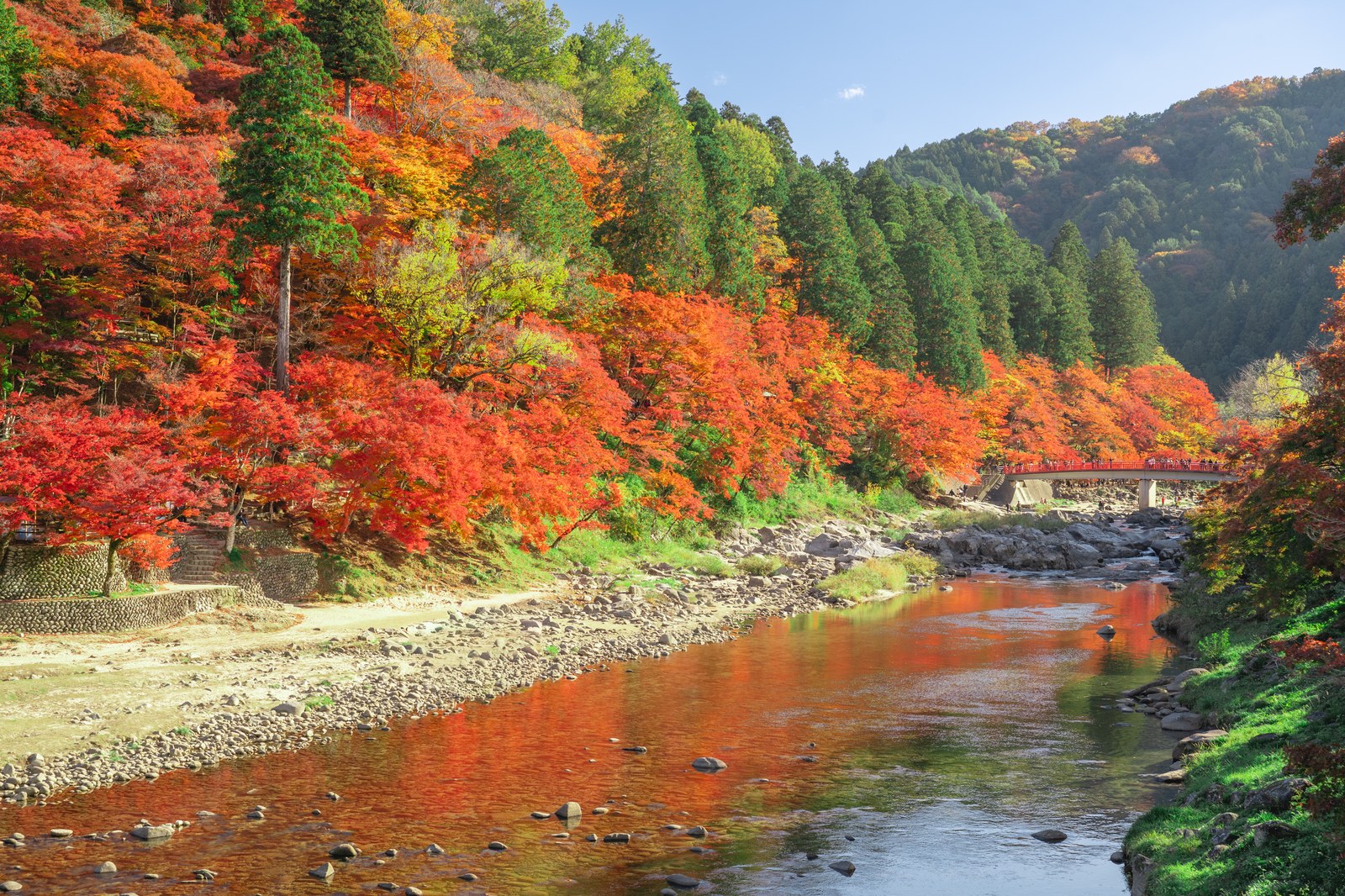 Korankei AutumnToyota, AichiView print →
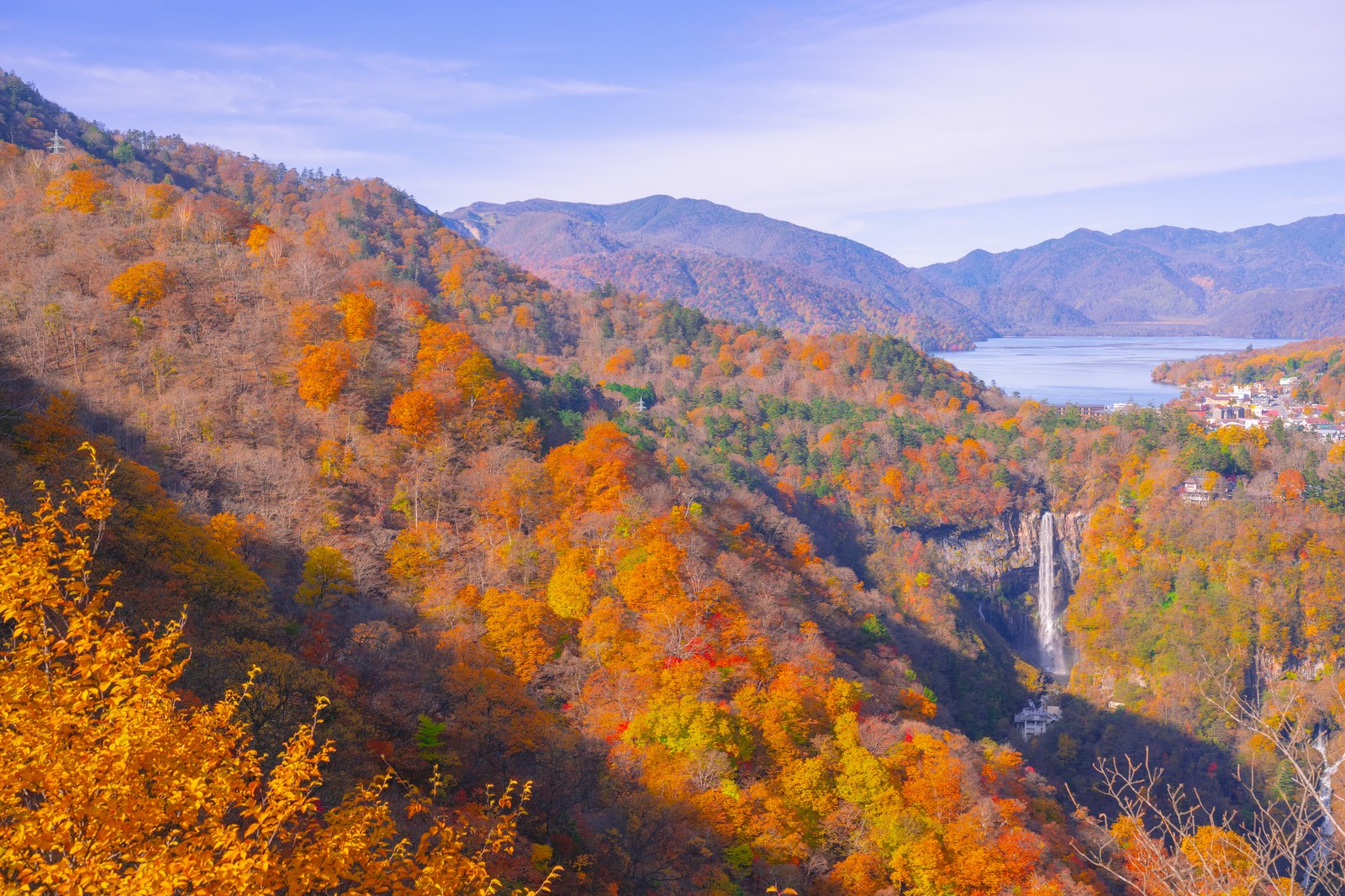 Akechi Plateau AutumnOku-Nikko, TochigiView print →
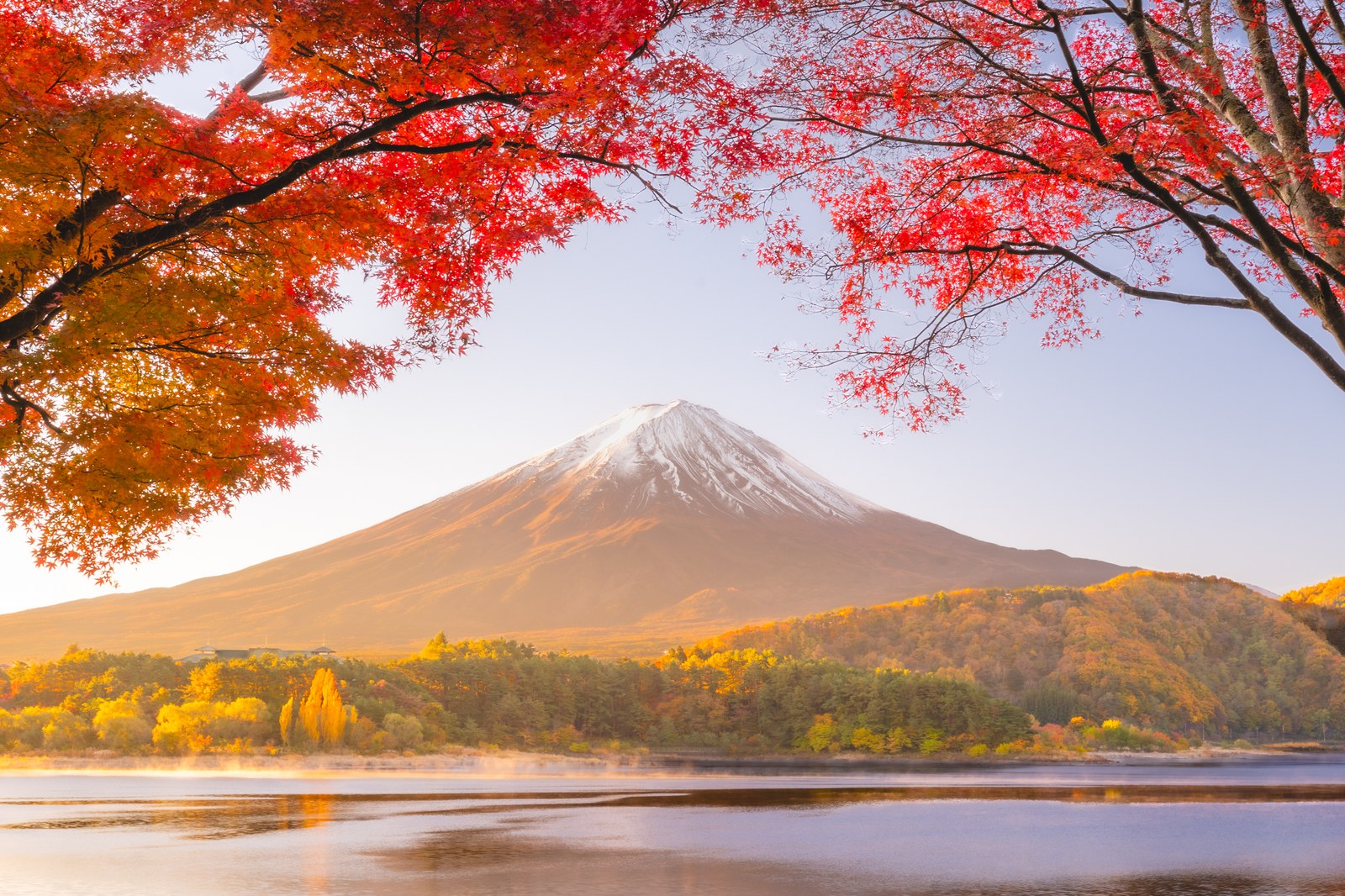 Mt. Fuji & Autumn MaplesLake Kawaguchi, YamanashiView print →
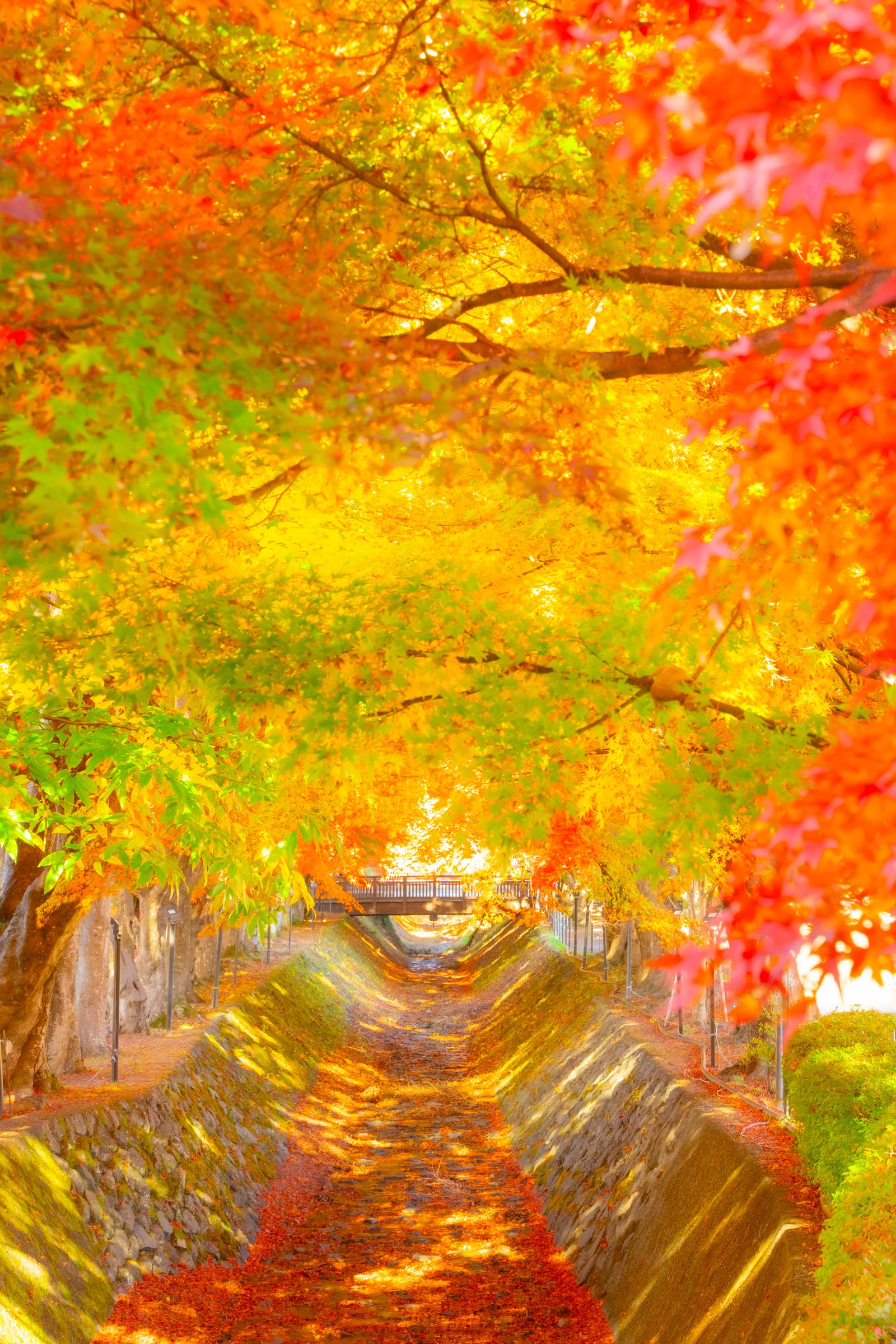 Maple CorridorLake Kawaguchi, YamanashiView print →
Illuminated maples need a different kit
Autumn colour under floodlights is a wholly different exercise. Exposures run from a few seconds into the teens, so a tripod is assumed, and white balance and highlight control matter more than any polariser. How to work scenes like Toji Pagoda Night Maples in Kyoto or Rurikoin Night Maples in Yase is covered in Tripods and Night Photography. Note that temple illuminations often prohibit tripods — check before you go.
The filter I carry in autumn
Kenko ZX C-PL N 77mm
The filter I reach for on days when there is no time to build a square-filter holder — walking days, shooting maples and flowers. Screw it on and glare on leaves and petals drops away while the colour deepens. Kenko’s ZX line is a high-quality circular polariser with minimal effect on rendering.
One line on choosing between filters: a polariser subtracts reflection to deepen colour, while a soft filter adds bloom to soften light. Want saturation in the maples? Polariser. Want the backlight itself to be the subject? Soft. More on that in Two Roads to a Dreamy Look.
As an Amazon Associate, Ikebanadoctor earns from qualifying purchases. If you buy through these links, a small part of the sale helps support our work — at no extra cost to you. We only feature tools we genuinely use and can wholeheartedly recommend. These links point to Amazon Japan, where these items are sold.
Timing beats technique
No amount of craft photographs a tree that has not turned. Peak colour at a single site moves more than a week from year to year, and a few hundred metres of elevation shifts it by weeks. Highlands such as Oku-Nikko peak in October and the Kyoto temples in late November, but the weeks beforehand decide it. Peak-timing notes and access for each site are in the guide to Japan's best autumn leaf spots.
The developing approach behind the photographs in this article is gathered into 30 presets for Lightroom / Camera Raw ($15.00 — a ZIP download straight after purchase).
View the presets →
From the ravine at Tofukuji to Mt. Fuji above Lake Kawaguchi, printed on FUJICOLOR professional silver-halide paper — deep colour and full tonality, in a print that stands up to framing.
🖼️ Choosing a frame (with inner and outer dimensions)
💾 A digital download is also available ($7.00 each). Bundles cost less: 3 for $17.84, 5 for $26.23 ($5.25 each) — mix any photographs you like.
View the 13 autumn prints →