
FEATURE
Summer Flower Photo Spots in Japan — Sunflowers, Lotus & Zinnias
Summer around Tokyo is a treasure chest of flower landscapes. Sunflowers gilding an entire highland, lotus blossoms that open over a downtown pond for a few morning hours only, zinnias turning a whole hill into a rainbow. From the summer places I kept returning to between shifts in the emergency room, here are the five that stayed with me most — with bloom seasons and access to help you plan.
The sunflowers of Akeno — with the Yatsugatake and Southern Alps at their back (Hokuto, Yamanashi)
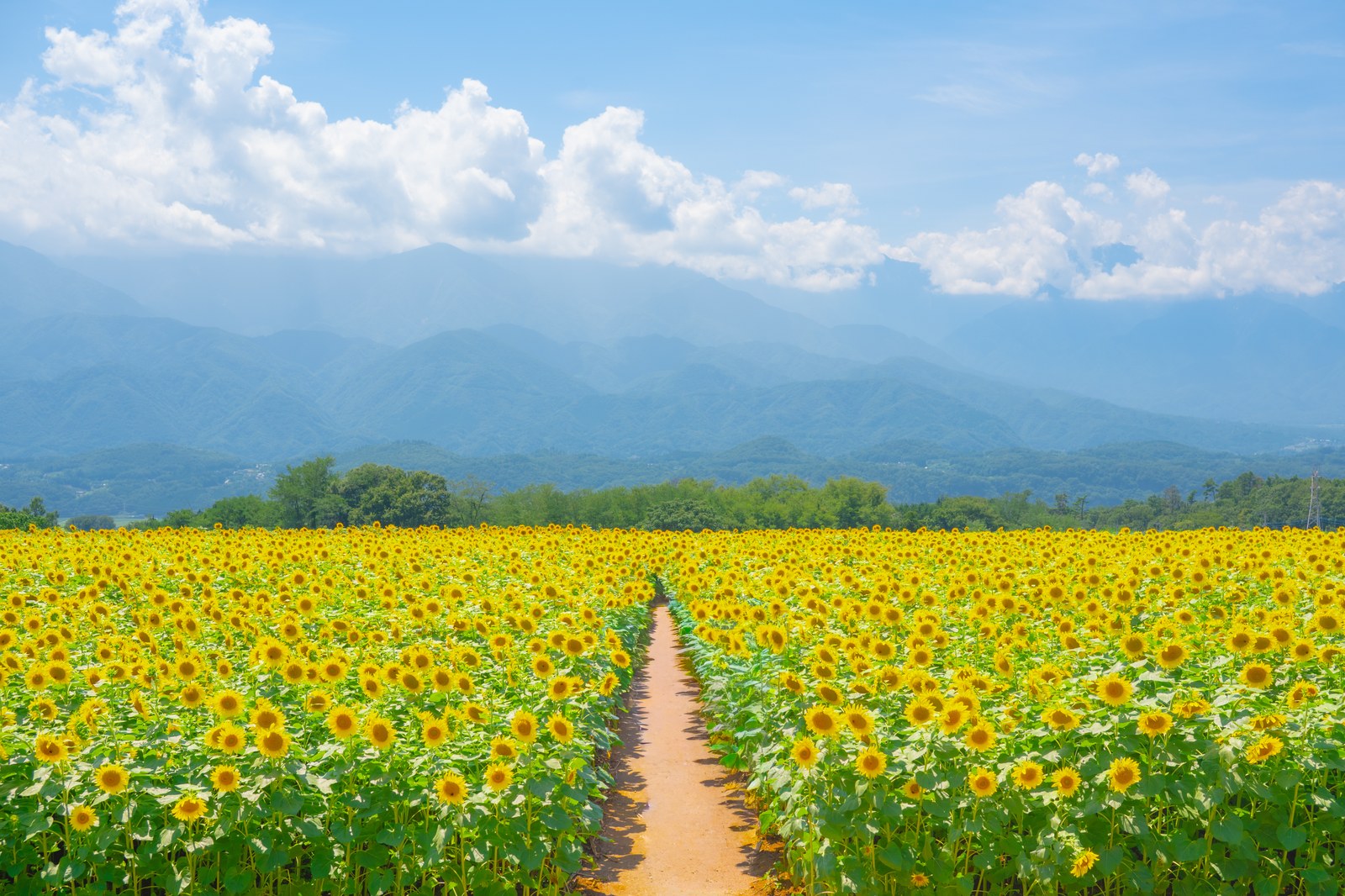
If I could choose only one sunflower field, it would be this one. On a highland said to have the most sunshine hours in Japan, hundreds of thousands of sunflowers bloom together. Behind them rise the Yatsugatake mountains; turn around and you face the Southern Alps, Mount Fuji and the ridgeline of Mount Kayagatake. Standing in a field ringed by mountains on all sides, watching every flower turn toward the sun at once, I felt as if the light itself were rising out of the ground. Simply standing there, looking from the mountains to the flowers, something in me quietly loosened. The fields are planted with staggered varieties and timings, so different areas come into bloom one after another and the season lasts comparatively long.
▶ Full location guide: The Sunflowers of Akeno
Bring a scene from this guide home
Each is a real photograph from this guide’s season, printed in Japan on FUJICOLOR professional paper.
The lotus of Shinobazu Pond — opening in silence at Tokyo's dawn (Ueno, Tokyo)
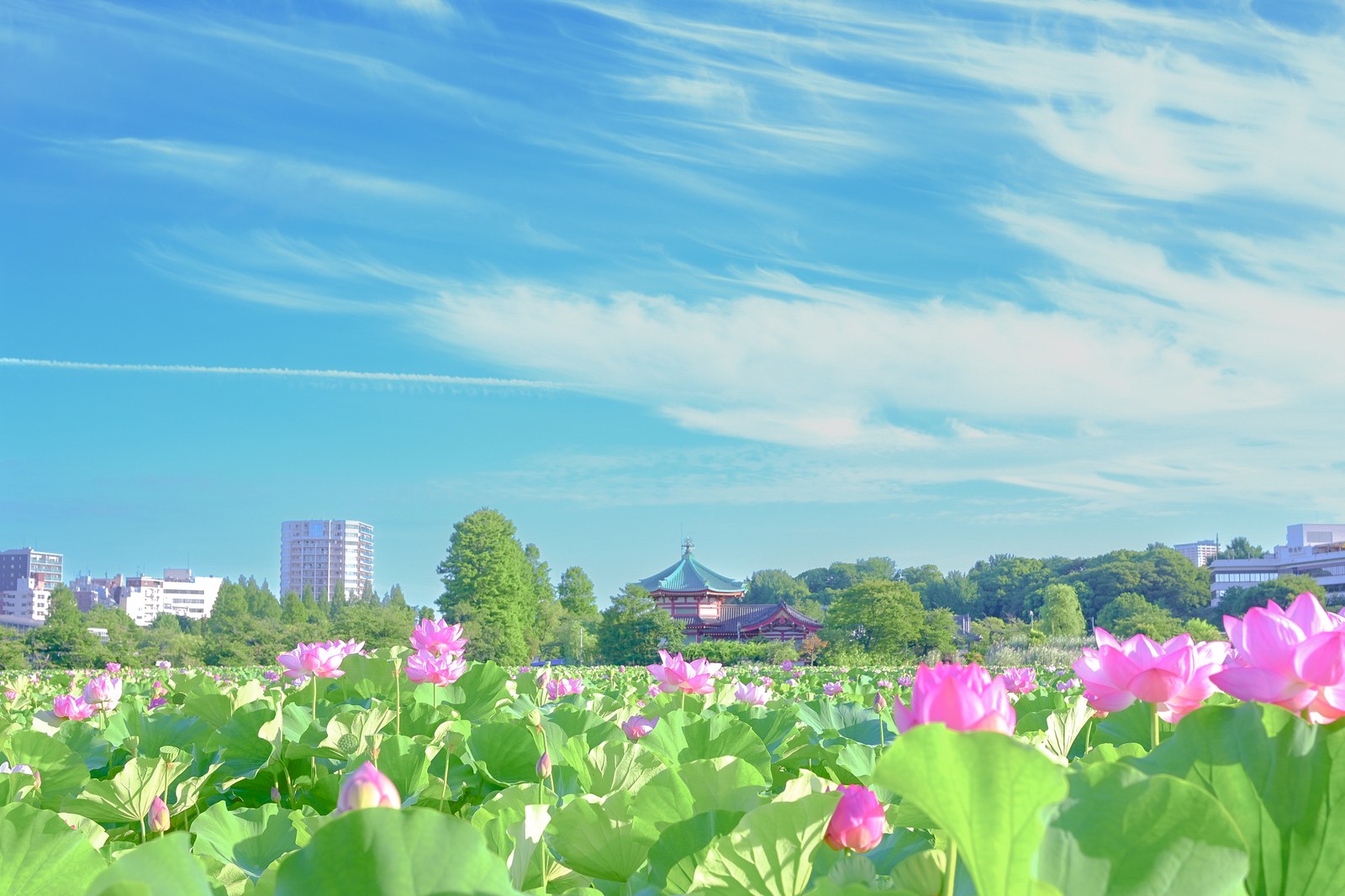
To photograph lotus in Tokyo, the early morning is everything. The lotus of Shinobazu Pond reach full bloom roughly between 7 and 9 a.m., and by midday the petals have already closed. Each blossom opens and closes for only three or four days of its life. One morning after an overnight shift, I walked to the pond while the city was still asleep, and watched the pale-pink flowers unfold without a sound at the feet of the high-rises. On the south side of the pond a lotus-viewing deck extends out over the water, bringing you within arm's reach of the flowers. Admission is free.
▶ Full location guide: The Lotus of Shinobazu Pond
The zinnia hill — a rainbow of a hundred days (Hitachi Seaside Park, Ibaraki)
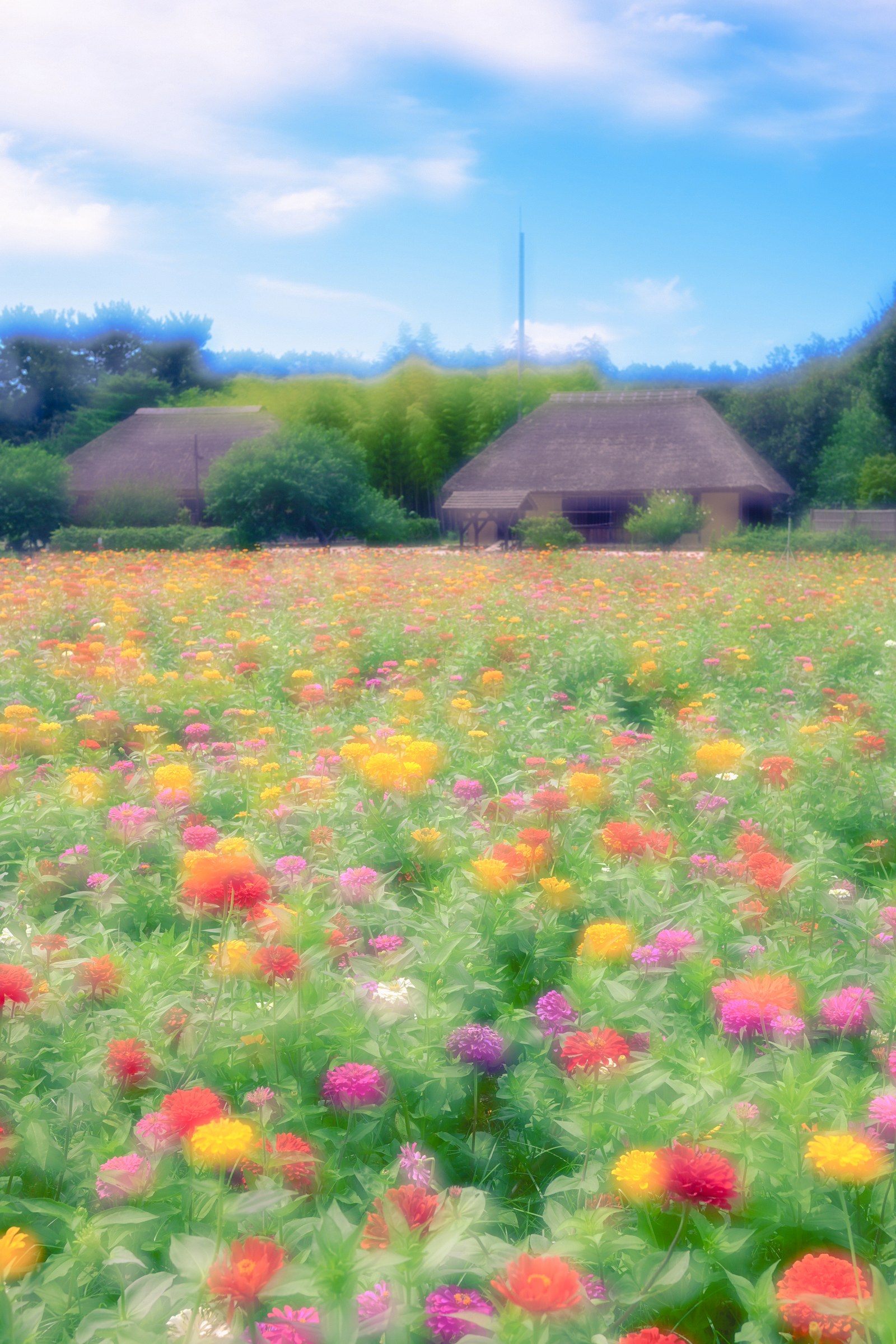
Miharashi Hill is famous for its nemophila in spring and kochia in autumn — but through the summer it becomes a field of zinnias, as if every colour in the world had been gathered in one place. Around thirty thousand flowers cover the slope. Climbing the hill, instead of that famous blue, I found every colour of the rainbow waiting. Arrive at opening time in the morning: the light is still soft, the crowds are thin, and it is by far the best hour for photographs.
▶ Full location guide: The Zinnia Fields of Miharashi Hill
Momoiro Toiki — pale-pink petunias on a hill above Tokyo Bay (Mother Farm, Futtsu, Chiba)
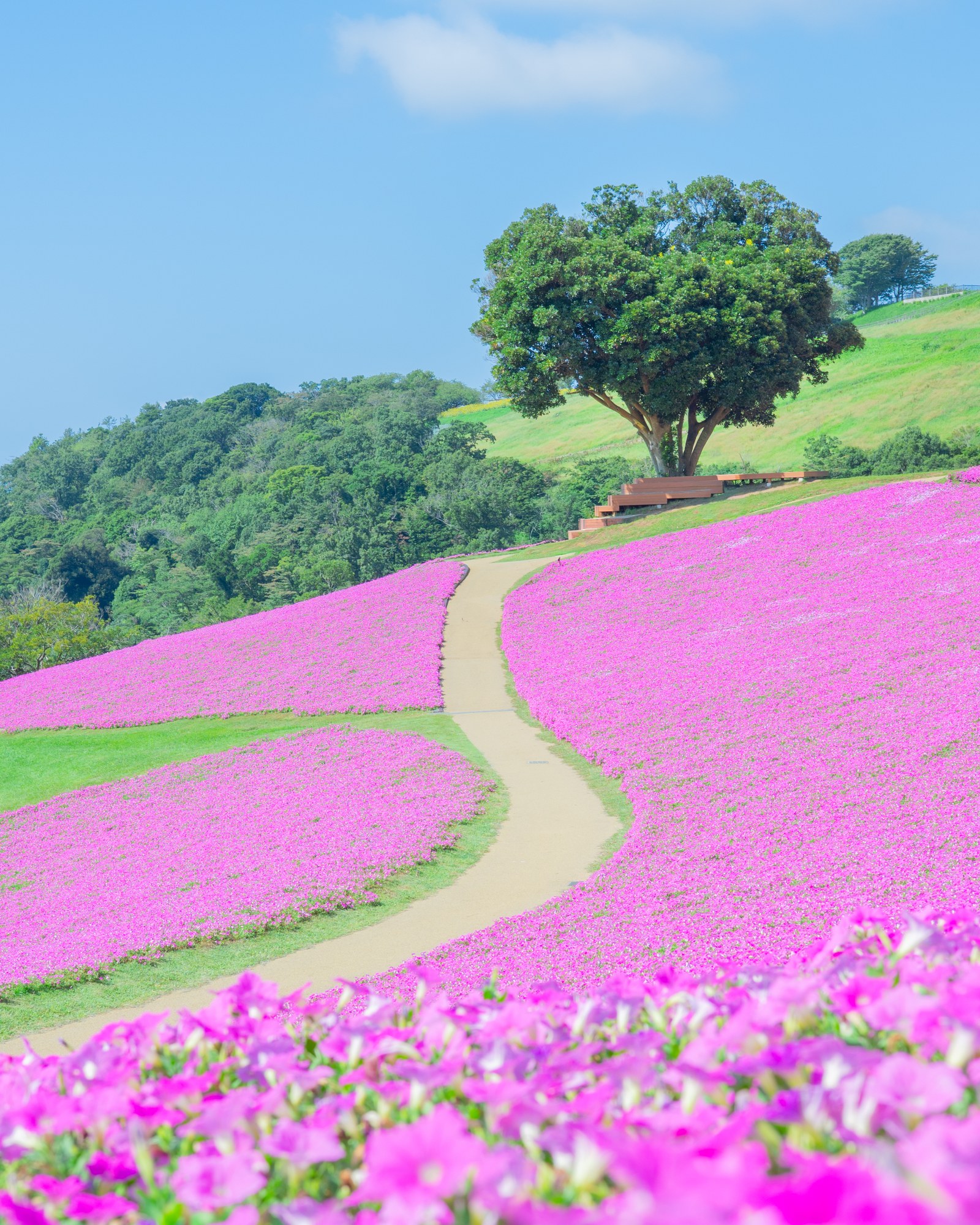
In Mother Farm's "Valley of Flowers," about twenty thousand plants of Momoiro Toiki — a petunia bred in southern Boso whose name means "peach-pink sigh" — follow the rolling contours of the hill as far as the eye can see. Standing on that hill, a sigh escaped me too. The colour is too pale to call pink, too tinted to call white: a flower exactly like its name, a breath of colour. Each time the wind crosses the slope, the whole hill seems to ripple gently. The petals close at night and in the rain, so a bright, sunny day at midday is when the fields are at their fullest.
▶ Full location guide: Momoiro Toiki at Mother Farm
Annabelle hydrangeas and the Skytree — the white of early summer (Koto, Tokyo)
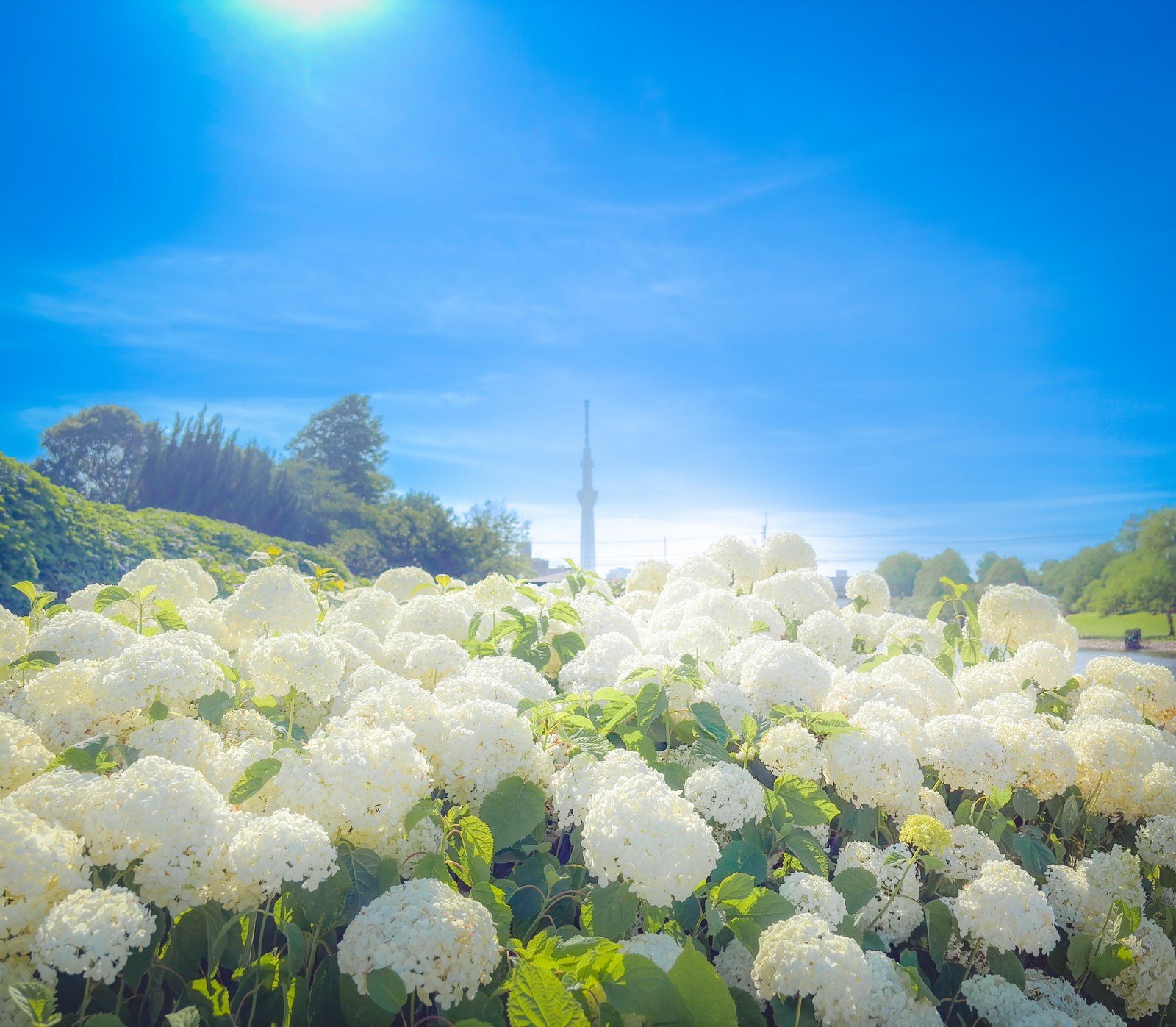
To add one scene from the very start of summer, find the Annabelle hydrangeas massed along a riverside in Koto ward. Waist-high mounds of pure-white blooms spread out like snow that fell in early summer, and beyond that white wave stands Tokyo Skytree. The first time I came upon the place, I simply stopped walking. The flowers shift from pale green as they open, to pure white, and back to green again as the season turns. For the rainy-season hydrangea trail more broadly, see my guide to the Kanto region's hydrangea spots.
▶ Full location guide: Annabelle Hydrangeas and the Skytree
Every summer flower keeps its own appointed hour —
the lotus with the morning, the sunflower with the midday sun.
Photographing summer flowers — seasons and hours
In summer, choosing your hour is almost everything. Lotus must be photographed while the flowers are open, from about 7 to 9 a.m. For sunflowers and zinnias, the clear air of early morning keeps the mountains and hills behind them sharp. Strongly coloured flowers gain depth in the soft, slanting light of morning and evening, while white Annabelles and the pale Momoiro Toiki come alive with the exposure nudged slightly brighter. For tripods, settings and the fundamentals, see how to photograph flower landscapes; for mornings when you chase the early light, shooting morning mist and the magic hour. And it is a hot season — as an ER doctor I will add: bring sun protection and plenty of water.
From the sunflowers of Akeno to the dawn lotus of Shinobazu Pond, bring home the summer landscapes that stayed with me as true silver-halide prints on FUJICOLOR's finest professional paper. Framing-ready, shipped worldwide.
💾 A digital download is also available ($7.00 each). Bundles cost less: 3 for $17.84, 5 for $26.23 ($5.25 each) — mix any photographs you like.
View the summer prints →