
GEAR ・ HOW-TO
Tripods and Night Photography — Reaching What Handheld Cannot
A tripod is usually described as a device for stopping shake. What it really buys you is bigger than that: time you could not otherwise choose. One second, ten, thirty. Change how long the shutter can stay open and you change what can be photographed at all — and how the place looks. Night cherry blossoms, illuminated maples, the blue hour before sunrise: none of the prints in this article were available handheld.
Night begins at one second
There is a hard ceiling on what you can hold still. Even with excellent stabilisation, reliable handheld work ends somewhere around a fraction of a second to one second. Night photography starts on the far side of that line: a few seconds for lit cherry or maple, ten or more to smooth water, past twenty for stars.
You could raise ISO and stay handheld, but it costs you twice: noise, and the inability to photograph time itself. Inage Seaside Park Twilight in Chiba is a long exposure — the waves smoothed to silk, the violet-to-orange gradient of the sky poured into the water. No fast shutter at high ISO will ever produce that. To record time you have to spend it.
More on technique and gear
The same tools, the same light. Read on and the craft joins up.
What to actually look for in a tripod
Choosing a tripod is almost entirely about which compromise you can live with. Heavier is steadier, but a heavy tripod stays home, and a tripod left at home has no specifications at all. Four things matter in practice.
Carbon and aluminium dominate. Carbon is lighter for the same rigidity, stays less painfully cold, and damps vibration faster; aluminium is cheaper and tough. If you want one tripod for both travel and night work, carbon wins. Leg locks come as levers or twist collars — in the dark this is purely personal preference. Fewer sections means more rigidity, more sections means a shorter folded length.
The head is the part people forget. At night you spend real time on fine adjustments, and a head that shifts the framing as you lock it down becomes maddening. A ball head with a generous ball, or a geared head for landscape work, is worth the money.
Vertical framing and the L-plate
Night cherry, pagodas, waterfalls — all of them want a vertical frame. But dropping the camera into a ball head's notch shifts the optical axis sideways and changes the height, so you rebuild the composition from scratch. In the dark that costs minutes every time.
An L-plate lets you re-mount vertically without tipping the camera at all. The optical axis stays over the tripod, the balance holds, and it stands up better to wind. Arca-Swiss compatible plates fit most heads. It is an unglamorous part, and possibly the one that changes a night shoot the most.
Small habits that remove shake
When a tripod-mounted camera still shows blur, the cause is usually one of a short list. Work through it in order.
Night exposure — what to protect
Under artificial light, the fragile part is the highlights on whatever is being lit. Petals and maple leaves clip easily where the spot hits them. Expose for that and lift the shadows afterwards; as long as the right edge of the histogram is not pinned, you will not go far wrong.
Auto white balance drifts toward the colour of the light source, and mixed sodium and LED lighting is where it goes worst. Shoot raw and decide later. In scenes where vermilion, orange and gold carry the picture — Rurikoin Night Maples in Yase or Toji Pagoda Night Maples — where you place the colour changes everything.
The two Chidorigafuchi frames were made on a rainy night. Chidorigafuchi Night Cherry shows lit cherry on both banks of the imperial moat shimmering on the water, falling rain drawn into lines of light, Tokyo Tower glowing faintly beyond. Rain-Soaked Night Sakura is the close view: countless raindrops streaking silver across petals turned gold by the spotlights. Rain adds reflections to every wet surface, so a dark night gains information rather than losing it. With an umbrella and a cloth, rain stops being the enemy.
Six frames from night and twilight
Night cherry, illuminated maples, the blue hour, a long-exposure dusk. None of these were available handheld. Printed on FUJICOLOR professional silver-halide paper.
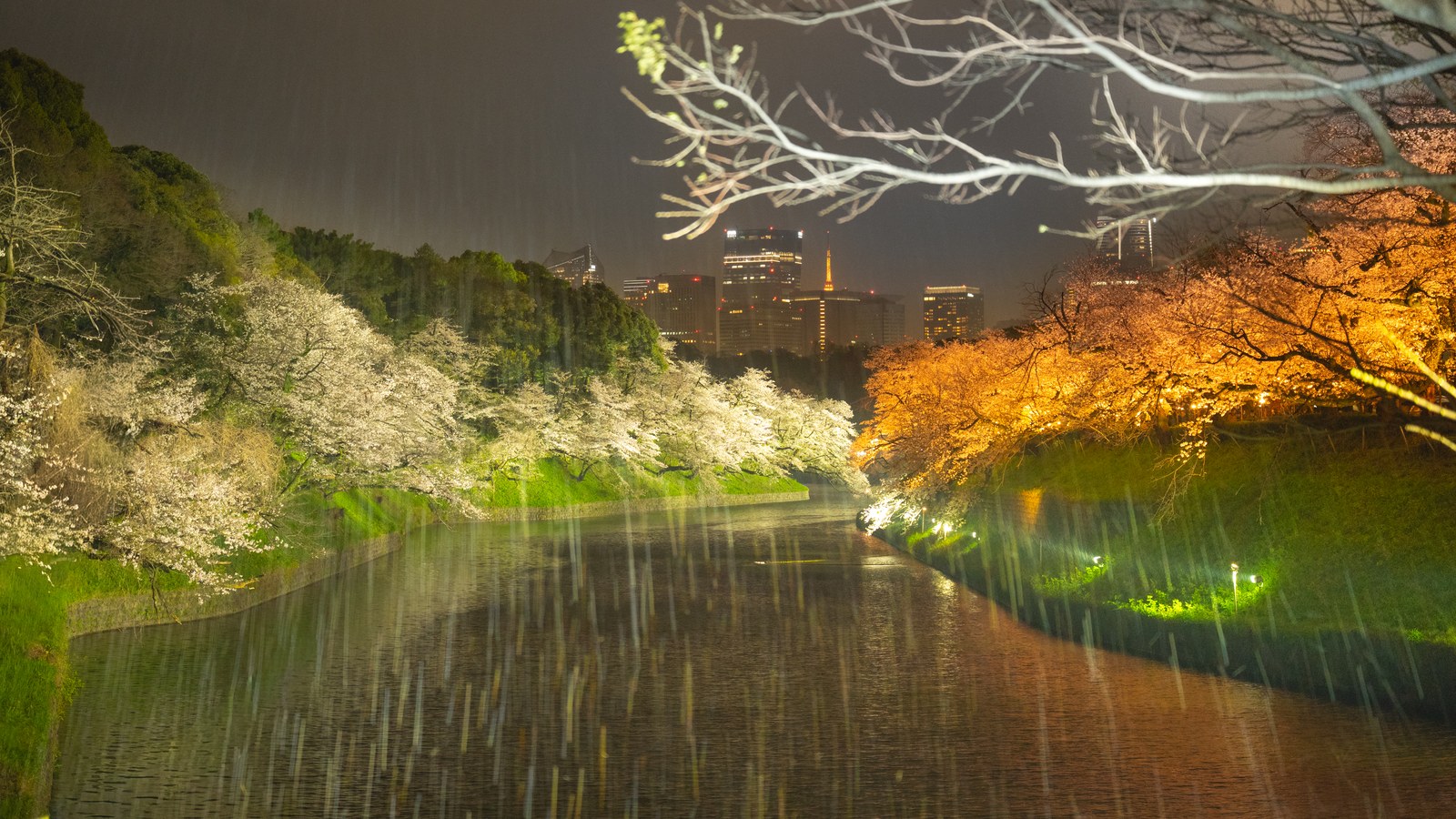 Chidorigafuchi Night CherryChiyoda, TokyoView print →
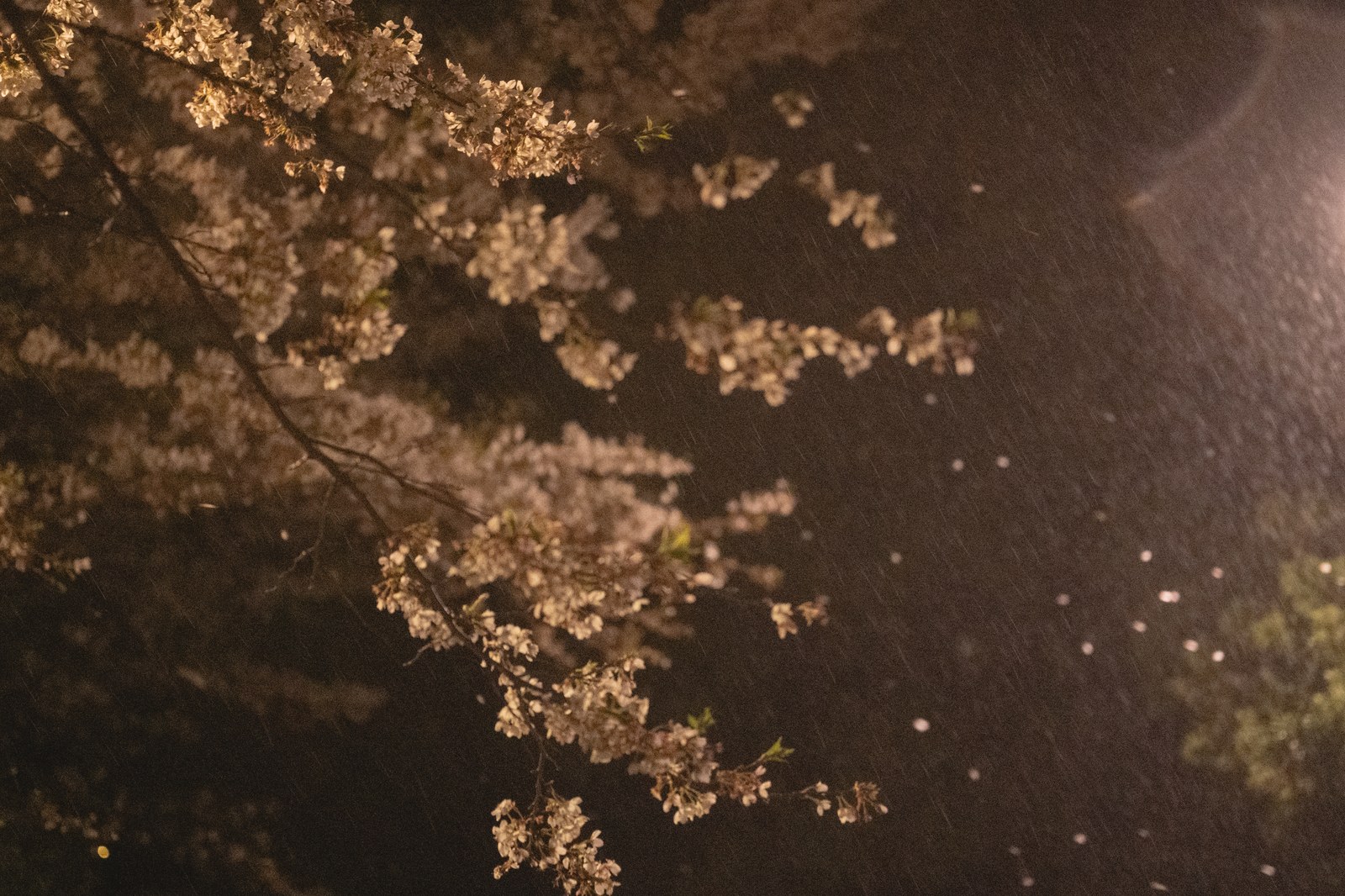 Rain-Soaked Night SakuraChiyoda, TokyoView print →
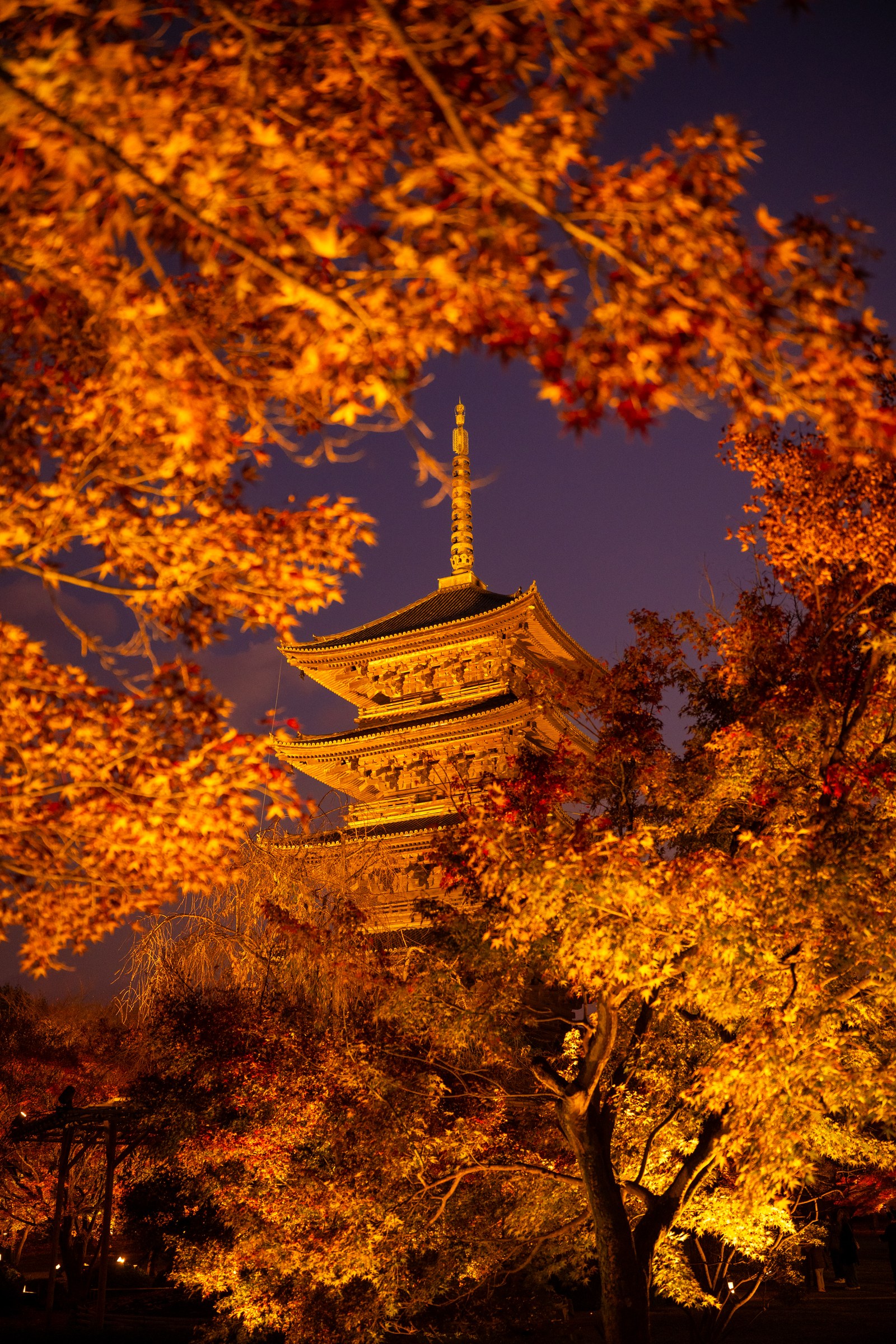 Toji Pagoda Night MaplesToji, KyotoView print →
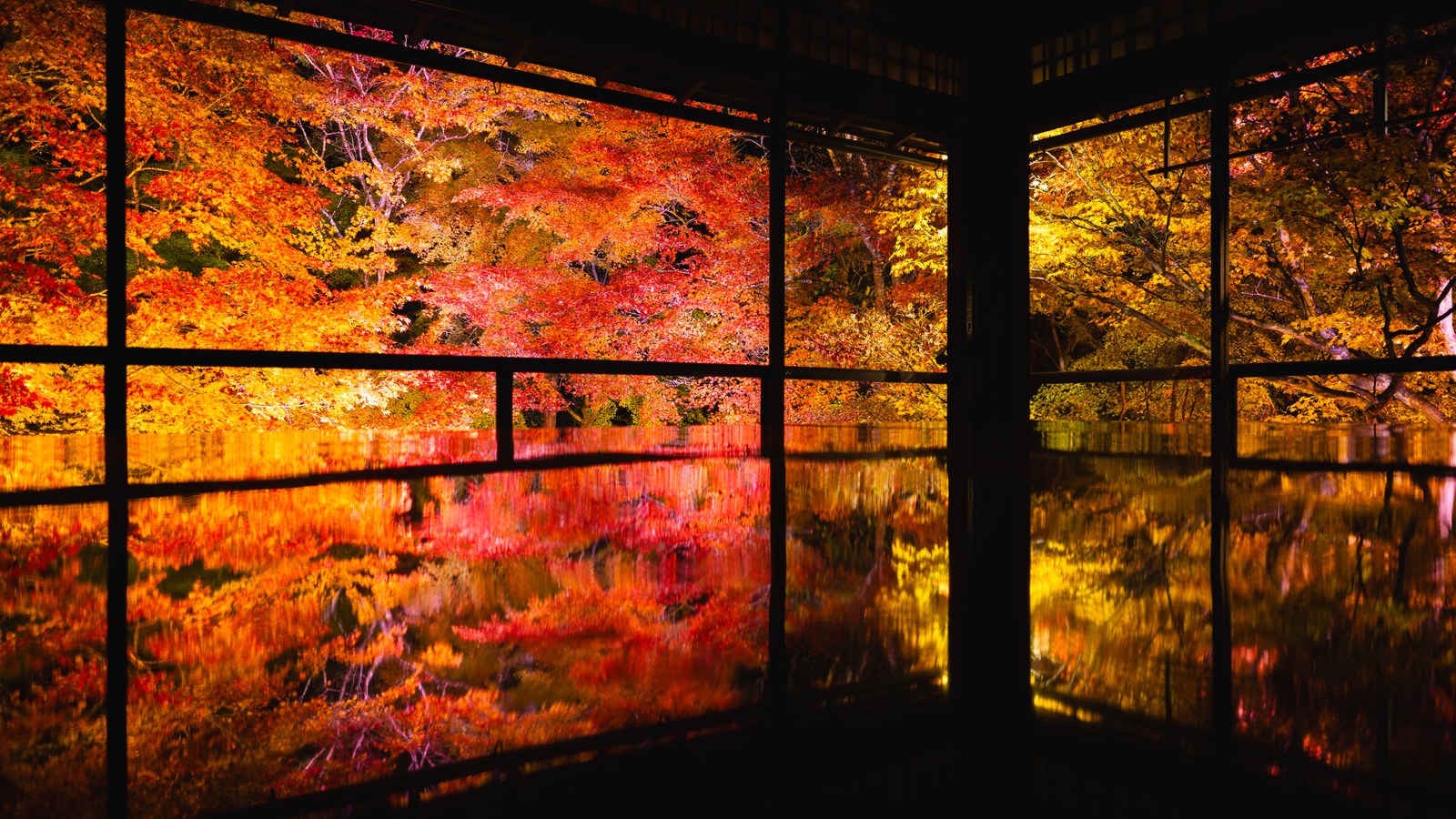 Rurikoin Night MaplesYase, KyotoView print →
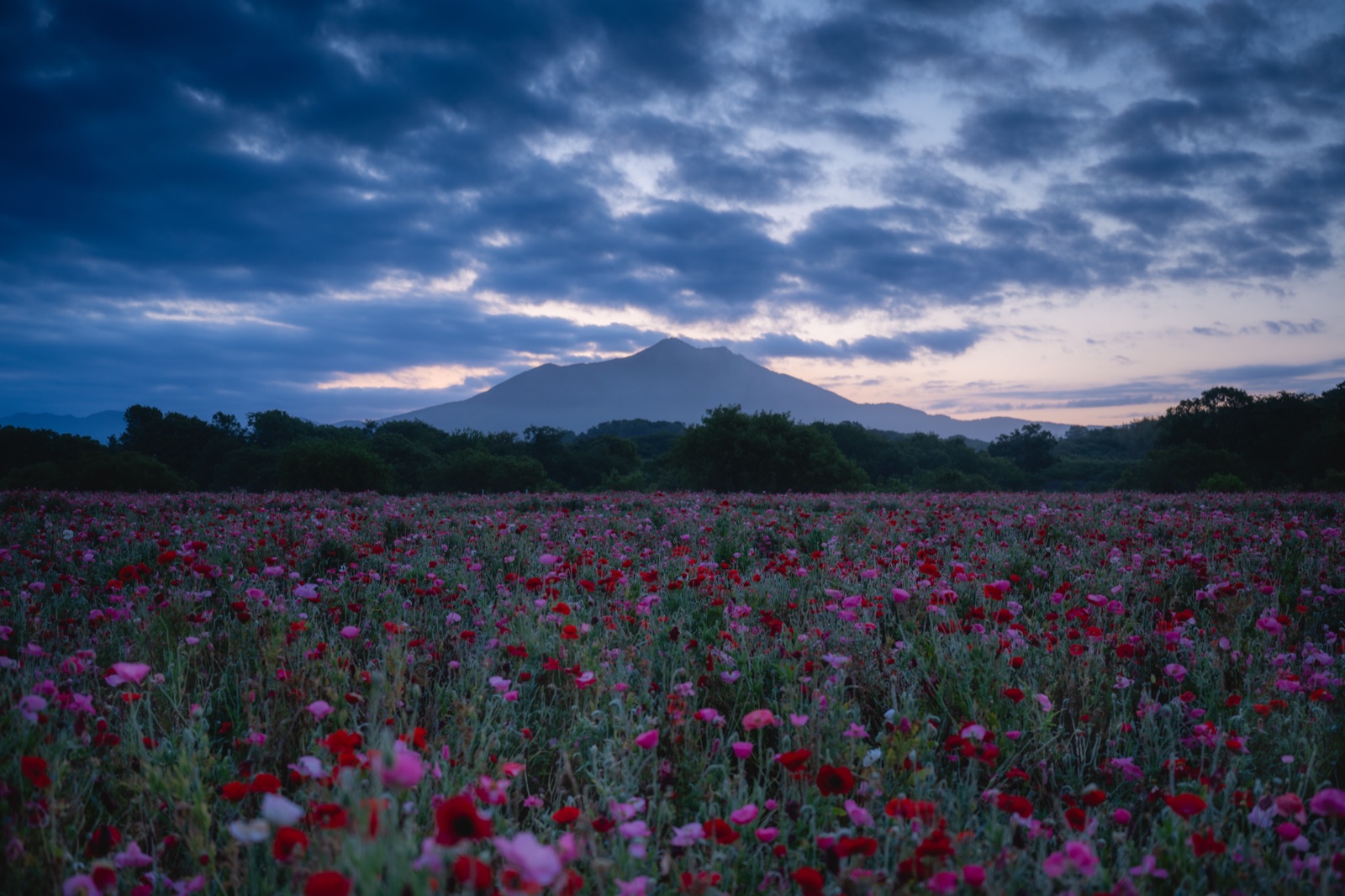 Poppies & Mt. Tsukuba in Blue HourShimotsuma, IbarakiView print →
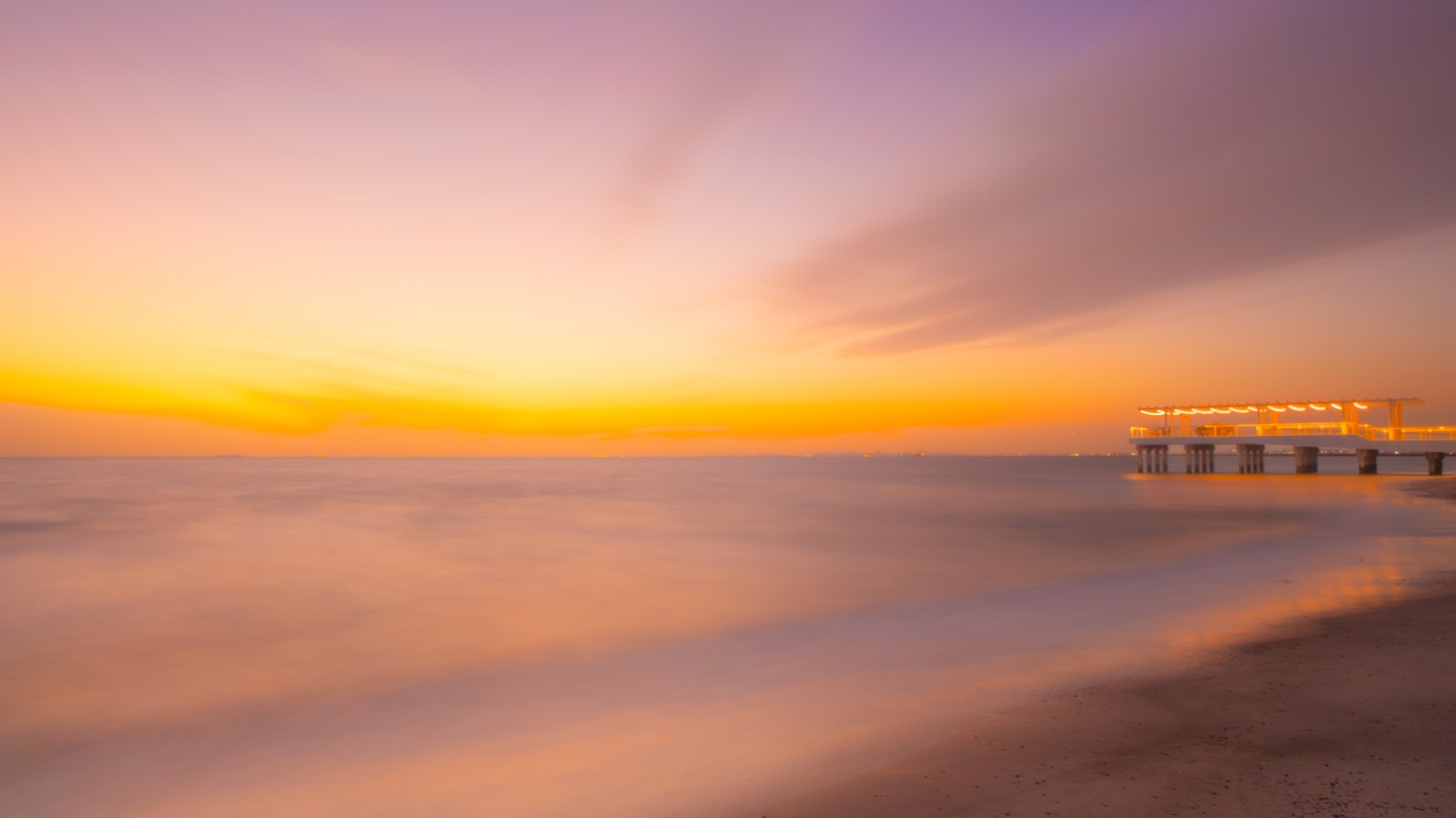 Inage Seaside Park TwilightInage, ChibaView print →
Poppies & Mt. Tsukuba in Blue Hour, at Shimotsuma in Ibaraki, is the indigo sky before sunrise. The blue hour lasts barely fifteen minutes, so you plant the tripod and build the frame while it is still dark, then follow the brightening sky with exposure alone. This is where "set up early" pays. Nanjamonja at Night in Niiza, Saitama, floats white blossom out of the dark and was shot on the old HELIOS-44-2 58mm F2.
Etiquette — some places do not allow tripods
Check this before any technique. Temple, shrine and garden illuminations, and crowded cherry-blossom sites, often prohibit tripods. Even where they are allowed, legs in a walkway obstruct people and cause falls in the dark. Read the official guidance before you travel, and follow the signage and the staff on site.
Where a tripod is not permitted, the alternatives are raising ISO and trusting stabilisation, bracing the camera against a railing or fence, or improving how you hold it. Deciding not to take the picture is also part of photography.
What goes in the bag
SLIK Light Carbon E64 II
The carbon tripod I use. Compact and light enough to actually carry, yet it extends to a usable height — two things that normally pull against each other, balanced well here. For night work the decisive quality is simply that it never feels too heavy to bring.
L-Type Quick Release Plate (Arca-Swiss compatible)
Tipping a ball head sideways for a vertical frame wrecks both composition and balance. With an L-plate you re-mount vertically without tilting the camera at all. Arca-Swiss compatible, so it drops onto most heads — and the darker it is, the more this small part is worth.
Nikon EN-EL15c (genuine)
Long exposures and cold both drain batteries fast, and running out on a riverbank before dawn is the saddest way for a shoot to end. Always carry a spare — and for both performance and safety, buy the genuine one.
As an Amazon Associate, Ikebanadoctor earns from qualifying purchases. If you buy through these links, a small part of the sale helps support our work — at no extra cost to you. We only feature tools we genuinely use and can wholeheartedly recommend. These links point to Amazon Japan, where these items are sold.
Add a small light for your feet and your hands — a red mode saves your night vision — a cloth for condensation, and gloves. Riverbanks before dawn and in midwinter take more body heat than you expect. Reading the light of daybreak itself is covered in Shooting Morning Mist and the Magic Hour.
The developing approach behind the photographs in this article is gathered into 30 presets for Lightroom / Camera Raw ($15.00 — a ZIP download straight after purchase).
View the presets →
All six example photographs are prints we ship worldwide, made one at a time on FUJICOLOR professional silver-halide paper. The rest of the kit is listed in the gear guide.
🖼️ Choosing a frame (with inner and outer dimensions)
💾 A digital download is also available ($7.00 each). Bundles cost less: 3 for $17.84, 5 for $26.23 ($5.25 each) — mix any photographs you like.
View Chidorigafuchi Night Cherry →